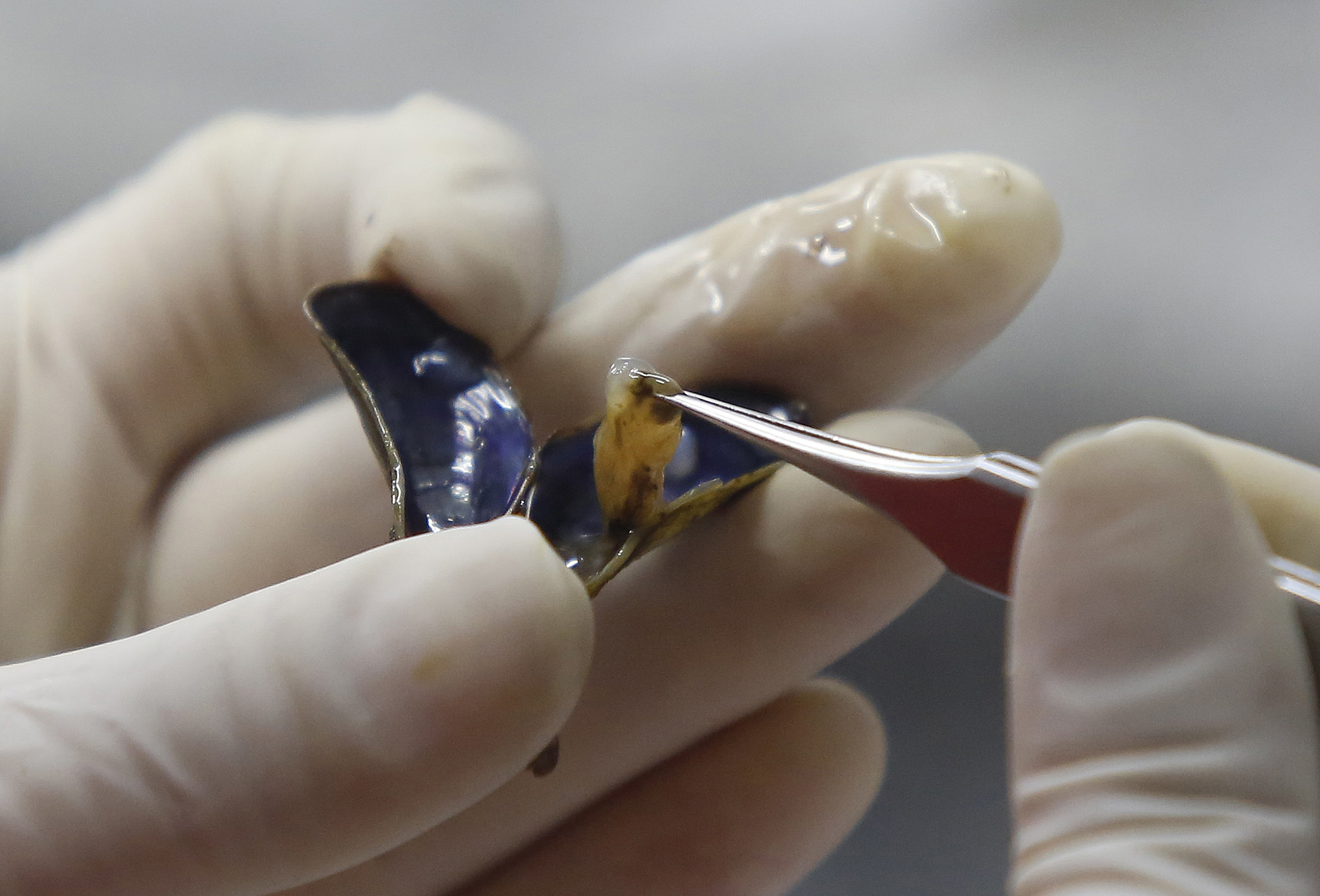
Golden mussels are continuing to spread throughout California, potentially imperiling key water infrastructure and leading Kern County to declare an emergency.
The invasive species was first detected in California in 2024 but has spread widely since then. The mollusks hail from Asia and can spread rapidly by producing up to 1 million offspring a year.
This week, Kern County officials declared a local emergency over the invasive species. Thomas Brown, the intergovernmental affairs officer for Kern County, said during the Board of Supervisors meeting that golden mussels were present in “key parts” of water infrastructure.
“This is no longer a theoretical concern or something happening elsewhere,” Brown said at the session. “The infestation is here.”
The invasive mussels can cause serious damage to both the environment and key infrastructure as they spread rapidly through the water. They can start to build up in pipes or on other hard surfaces, causing damage or a need for costly remediation. The California Department of Fish and Wildlife also warns that they can lead to the loss of native fish and increase the risk of damaging algal blooms happening.
Kern County is the second to declare an emergency due to the invading bivalves. On April 28, the San Joaquin County Board of Supervisors also declared a local emergency, reporting that golden mussels had already affected key infrastructure, including a $100 million floodgate.
And the invasive mussels are also impacting the Bay Area. Earlier this month, water officials in Santa Clara County reported two golden mussels were found for the first time in their water treatment facilities. A juvenile mussel was found in the raw water intake at the Penitencia Water Treatment Plant in early April, according to Santa Clara Valley Water District spokesperson Matt Keller. In late April, an adult mussel was detected in a raw water strainer at the Santa Teresa Water Treatment Plant.
“There is no impact to drinking water quality or treatment performance,” the Santa Clara Valley Water District said in an emailed statement Thursday.
Atlasi Daneshvar, a senior water resources specialist at the district, told SFGATE by phone that the district has been preparing for the arrival of the invasive species since last year by implementing mitigation strategies. Officials are also planning to add a UV treatment at one facility, among other steps to protect water infrastructure. Daneshvar stressed that current protocols at treatment plants will keep any mussels from affecting drinking water quality.
“We knew it was only a matter of time before it reached our system,” Daneshvar told SFGATE.