Gov. Jeff Landry’s administration is pushing to embrace the nuclear power industry and proposing the state build more nuclear plants, components and fuel enrichment sites.
Landry announced the state’s framework for nuclear energy Monday evening at the energy conference CERAWeek in Houston. He’s meeting there with companies and officials from President Donald Trump’s administration in hopes of landing grant funding and nuclear-related projects.
The push comes as data centers and heavy industry are popping up in Louisiana, creating a major need for new power generation. And buyers of chemical feedstocks and other products made here — particularly companies in Europe — are demanding products made using carbon-free energy.
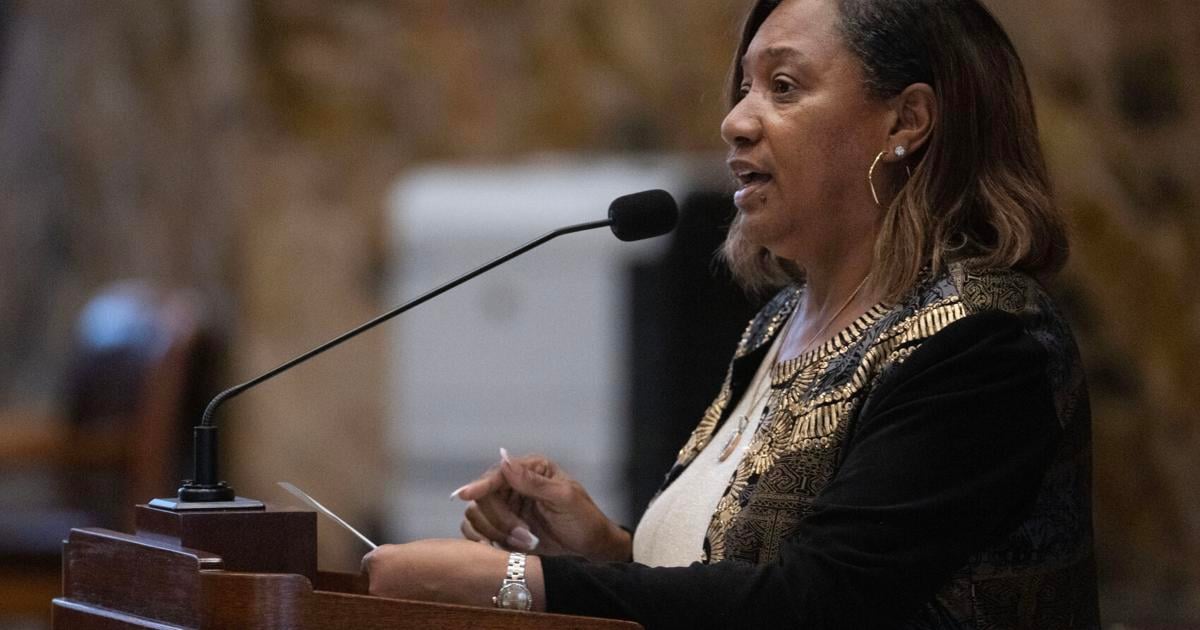
Susan Bourgeois, secretary of Louisiana Economic Development, said in an interview Monday that Louisiana would be “foolish” not to court the nuclear industry when Trump’s administration is spending billions developing nuclear projects and demand is rising for carbon-free energy. Nuclear plants produce no greenhouse gas emissions — the main driver of climate change — while operating.
Still, the mining and radioactive waste required to operate them have raised environmental concerns, and it’s hotly debated whether nuclear is considered a truly clean energy source.
Nuclear plants have long been expensive and time-consuming to build, in part because of high-profile disasters that led to intensive regulations. Bourgeois said Louisiana needs a long-term plan.
“We know the world is demanding clean energy,” she said. “There has to be a really significant strategy and runway to expand this ecosystem in Louisiana.”
If successful, Bourgeois and other state officials said Louisiana would upgrade nuclear plants, build new nuclear reactors, and court manufacturers and other companies who can build modules and components, as well as enrich fuel used in nuclear reactors.
“Do we want to be the state that has the first (small modular reactor) manufacturer domestically in the nation? Yes, we will absolutely try for that,” Bourgeois said.
Tech giants and the federal government have invested in SMRs, or small modular reactors, in hopes of bringing nuclear to market more quickly. Landry signed a bill last year to allow the state to permit small nuclear reactors.
Louisiana has long bet big on natural gas to fuel its electric power sector. That has created relatively low rates when gas is cheap and abundant. But the emerging liquefied natural gas sector has led to rising domestic gas prices, and wild price swings from extreme weather have raised concerns about the cost of utility bills.
Landry has long been a vocal supporter of oil and gas. But the petrochemical industry has increasingly embraced technologies like renewables and carbon capture in a bid to lower their carbon footprint to become more attractive overseas.
The state already has two nuclear plants — Waterford in Killona and River Bend in St. Francisville — and also gets power from Grand Gulf in Mississippi. Bourgeois said Landry’s administration has talked with utilities about expanding the existing fleet.
Bourgeois added that Louisiana’s FUEL initiative — funded by the National Science Foundation — was awarded its latest tranche of $45 million in funding. The initiative seeds startups in new energy tech, among other areas, and will be used to advance the nuclear agenda.
Renewable developers and some consumer advocates have called on state officials to move away from the state’s reliance on natural gas by building solar and wind. And existing utilities have built some utility-scale solar around the state, though Texas has dramatically outpaced Louisiana’s renewable industry.
Nuclear plants provide about one-fifth of Louisiana’s power, said Dustin Davidson, secretary of the Louisiana Department of Energy and Natural Resources. About two-thirds is from natural gas.
Davidson noted that nuclear energy provides “baseload” power that’s available at all times, compared to solar and wind, which are intermittent. Batteries for renewables have become cheaper and more widely utilized; in Texas, batteries have supplied as much as 10% of the energy mix.
“Nuclear is very expensive on the front end, but once operating, it’s a very cheap option because your fuel source lasts much longer,” Davidson said. “It’s that sustainable, long-lasting energy production.”
Simon Mahan, head of the Southern Renewable Energy Association, said Louisiana and the rest of the nation need “all the tools in the tool kit” to meet energy needs.
“Over the next 10 years, only four power producing technologies are readily available for commercial use: solar, wind energy, batteries, and oil and natural gas,” Mahan said. “New nuclear reactors may take fifteen years, or more, for development. The other alternatives are available today and ready to compete.”
The Trump administration has also embraced nuclear, pushing to quadruple the power generated from nuclear facilities by 2050. Trump has also attacked the renewable industry, and on Monday his administration agreed to pay $1 billion to halt wind farms off the U.S. East Coast. Instead, he has pushed for more development of fossil fuels, downplaying concerns about climate change, which is causing worsening hurricanes, wildfires and other disasters.
The Trump administration recently doled out $800 million in grants for the development of small nuclear reactors in Tennessee and Michigan, part of a push to speed up the development of nuclear power in the U.S.