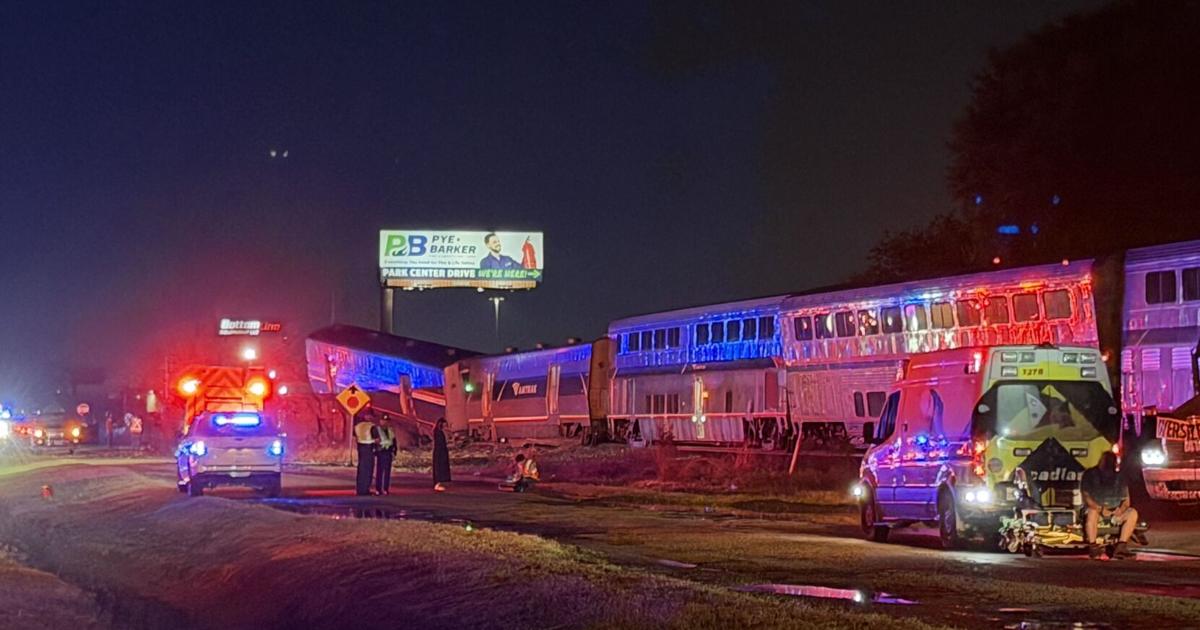
When New Orleans Mayor Helena Moreno arrived at the riverfront crash site on Nov. 13, she was alarmed to find a partially submerged paddlewheeler and dozens of elderly passengers in the Mississippi River awaiting rescue.
She immediately made a call. It was to Gov. Jeff Landry in Baton Rouge.
“He said, ‘Helena, whatever you need.’ And I told him, ‘I need you here in New Orleans,’” Moreno said earlier this week, recalling the conversation in a radio interview with WWL-AM. “He said, ‘No problem, I’m on my way.’”
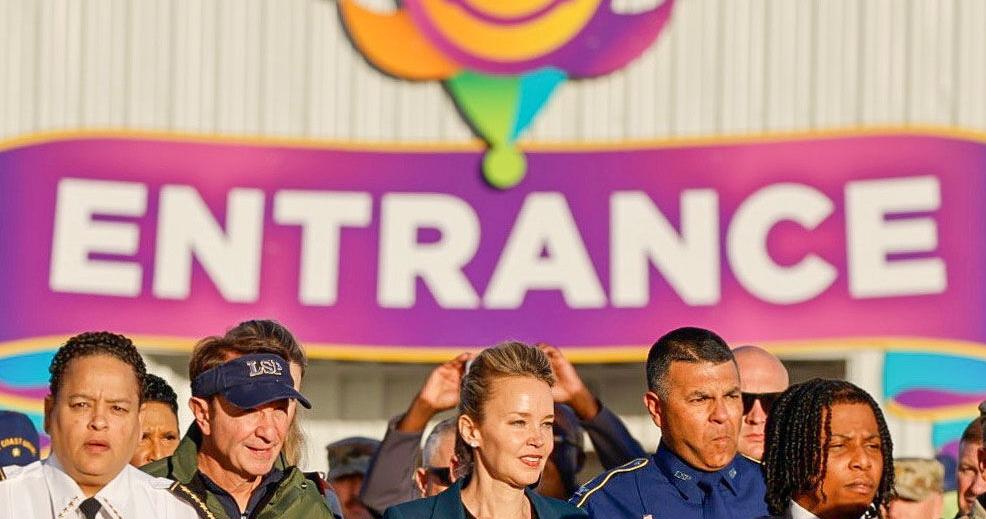
Less than 75 minutes later, Landry was at the scene. Stepping out of a Louisiana State Police vehicle, he shook the mayor’s hand. She began briefing him as they disappeared into a building at the Port of New Orleans, where they would spend the next two hours working together on a coordinated response to what appeared at the time as a likely fatal disaster.
It was the most the governor and the mayor had spoken, and the closest they had collaborated on anything, since early July, when an Orleans Parish grand jury indicted state Attorney General Liz Murrill, a Landry ally.
Though Moreno sent a letter to the special prosecutor urging her to dismiss the highly unusual charges, which were dropped, Landry and Murrill have maintained that the indictment was politically motivated — and claimed that Moreno and other city leaders were somehow responsible. Landry has said he will not speak to her until the conclusion of an ongoing investigation into how the charges came about.
In the months since, city and state political and business leaders have navigated the icy political waters as best they can, using back channels and working through proxies to address pressing issues in the city such as its budget shortfall, public safety needs, a new convention center hotel and an effort to lure the nation’s first space academy to the LSU New Orleans campus.
Moreno has periodically said that she is willing to sit down with Landry. He has declined. But the accident forced them together for hours and gave some key stakeholders hope for a reboot of city and state relations in the new year.
Those individuals, including nine business and political leaders and members of both administrations, declined to comment publicly on the dynamic because of the sensitive nature of the relationship. But they said the disaster and the collaboration that followed signal a potential turning point in one of the most important political relationships in the state.
“They were amazing working together,” said one local business leader who has dealt with both Landry and Moreno in recent months. “It was real. They were not pursing their lips. It was an opportunity for them to work together on something that mattered and let that be healing.”
Moreno and Landry declined to comment for this story.
Hugs and high fives
Crises have a way of bringing people together, according to political analyst Clancy DuBos, who said, “It would be a shame to let this one go to waste.”
Moreno embraced the opportunity almost immediately. Among the first things she did in her remarks at the first public briefing after the incident was to single out Landry, profusely praising his swift response and the way he “jumped right into action.”
“I have to say this,” she said. “A big thank you to Governor Jeff Landry.”
Two days later, in an interview with Newell Normand on WWL radio, she recounted how they worked together that afternoon — and her emotional response when she learned that the nearly 200 cruise ship passengers and crew members were alive and without critical injury.
“I think I jumped on top of the governor, high-fived him, hugged him. I was just so elated,” Moreno told Normand. “I think I accidentally hit him upside the head when I was trying to high-five him. I was so excited. He was super excited, too.”
It’s not clear how Landry responded in that instant, but in his public remarks at the briefing moments later, he alluded to the productive hours the two had just spent together. He credited Moreno with coining the “Miracle on the Mississippi” phrase, as the disaster has come to be known, and mentioned that they both had personally visited with passengers.
It was a subtle but notable shift in tone. District C City Council member Freddie King, who was also at the scene, was among those who said he was struck by how “polite and diplomatic” Landry was.
“Maybe it was the situation,” said King. “They were still pulling people out of the water, but I noticed a difference.”
Even still, New Orleans businessman Shane Guidry, Landry’s close political ally and advisor, said that despite the show of unity, there remain a lot of hard feelings within the administration over the Murrill indictment.
“In the face of an incident that requires everybody to come together, you come together,” Guidry said. “You do what you need to do for the public. I don’t think that changes the fact that we still need to get down to how Liz was wrongfully indicted.”
Working back channels
Landry’s troubled relationship with Moreno dates to last spring, when Moreno and other city officials balked at Landry-backed legislation to consolidate the city’s dual court systems. The controversy escalated when the council voted 5-2 to declare the combined office of clerk of court vacant and call for a new election. Council members Eugene Green and Lesli Harris voted against the measure, which had Moreno’s blessing.
Murrill responded with a letter to Moreno, District Attorney Jason Williams and the five council members behind the measure warning that she would seek their removal from office if they did not “officially retract” support for electing a new court clerk. Moreno said she would not be intimidated, noting in an Instagram video that “there is a criminal law that prohibits intimidating or threatening a public official.” Six weeks later, an Orleans Parish grand jury indicted Murrill on 16 felony counts of malfeasance in office and intimidation over the letter.
Moreno and the five council members said that they had no knowledge of the indictment and successfully implored the special prosecutor to drop the charges, but the political damage within the Landry administration was done.
Landry has said he doesn’t want to hurt the city of New Orleans and, as if to prove his point, has met with Green and Harris, the two council members that did not support the resolution at the heart of the controversy.
In September, Landry invited Green to the Governor’s Mansion in Baton Rouge, where the two spoke for an hour about issues in his district, including restoring the Almonaster Bridge, which has been out of use since it was damaged during Hurricane Katrina, Green said.
“I thought it was very productive and heartwarming,” Landry said of the meeting in a radio interview on WBOK. “I told him, ‘Give me a call if you think something is slipping inside the city.’”
More recently, Landry met with Harris for about 20 minutes in the lobby of the Windsor Court hotel, where she presented him with a list of priorities, including finding a new location for the low-barrier homeless shelter and retrofitting the police department’s crime lab.
“I came away hopeful,” said Harris, who described the conversation as “very friendly.”
The city and the state also collaborated on the state’s recent application to host the U.S. Space Academy, according to Page Carter, chief business development officer at Louisiana Economic Development.
“The city is actively on a regular basis engaged in every conversation we’re having and have been phenomenal partners to us,” said Carter.
Lawmakers have also been collaborative, especially of late. Last week, the Joint Legislative Budget Committee approved a new budget for the city’s consolidated clerk of court without opposition.
State Rep. Jack McFarland, R-Jonesboro, chair of the powerful Appropriations Committee who also chairs the joint budget committee, said he thinks tensions have cooled and does not sense any widespread “animosity towards New Orleans” in the Legislature.
While he considers the situation involving the attorney general “unfortunate,” McFarland said he “can’t say that anybody has come to me said, ‘We’re going to punish New Orleans because of this disagreement.’”
What now?
It’s unclear what comes next for Landry and Moreno. Guidry said nothing is going to happen until the conclusion of an investigation into the Murrill indictment, currently being conducted by special prosecutor Collin Sims, the St. Tammany Parish district attorney.
But others say the river accident, coming on the heels of the blue wave that swept much of the country in the midterm elections, hints at potential vulnerabilities for Landry and other GOP officials in Louisiana that could work to the Democratic mayor’s advantage.
“The election caught the governor’s attention, and I think he understands that the public expects leaders to govern and not to get involved in these sideshows,” another local business leader said. “It is in his political interest to rebuild that bridge, and it is in her interest to be part of it. I expect a thaw.”
Staff writer Joni Hess contributed reporting to this story.