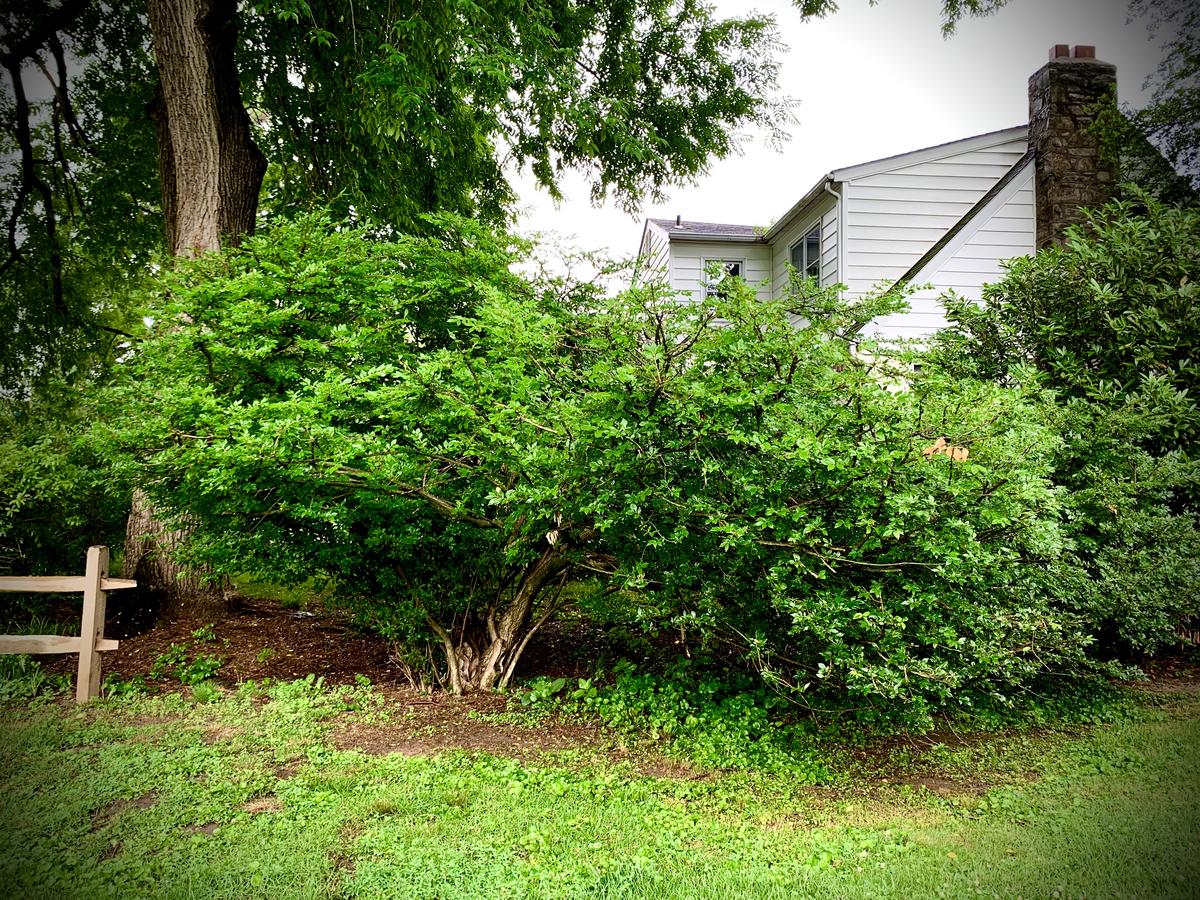
When we moved into our house, there was a burning bush in the side yard.
We loved it. Still do, if I am being completely honest. In the fall it turns a color that stops you in the driveway. It provides nice privacy through the summer and has probably been there since the 1960s. It felt like part of the property, part of the neighborhood, part of the landscape we inherited when we signed the papers.
This year we found out it is invasive.
Winged burning bush — Euonymus alatus if you want the Latin — is on New Jersey’s official list of prohibited invasive species under the Invasive Species Management Act signed into law in January 2026. It is right there on the list, between English ivy and Japanese hop. It spreads by seed into natural areas, crowds out native plants, and has been quietly doing this for decades while New Jersey homeowners, including this one, admired the fall color and never asked a question.
Peak growing season is a good time to walk your property and look around. You may have more company than you think.
The list is longer than you expect
The Invasive Species Management Act prohibits the sale, propagation and distribution of 30 specific plant species in New Jersey. Some of them you will recognize immediately. The Bradford pear — I wrote about that one in the spring when the trees were in bloom, beautiful white flowers, terrible invasive credentials. Japanese barberry, the spiky shrub in countless New Jersey landscaping beds. English ivy climbing the fences. Japanese wisteria draping over pergolas. Multiflora rose growing wild along every highway median in the state.
Others are more surprising. Norway maple — one of the most common street trees in New Jersey — is on the list. So is Chinese silver grass, the ornamental grass swaying in front of half the commercial properties in the state. Japanese barberry alone is probably in more New Jersey yards than any homeowner realizes, because it was sold at garden centers for decades before anyone looked too closely at what it was doing to the native understory.
The law does not require you to rip out what you already have. It prohibits future sale and propagation, with a phased implementation giving nurseries and landscapers time to adjust. But knowing what is in your yard is useful information regardless of what the law requires.
SEE ALSO: NJ just banned a tree I’ve hated my whole life — and I’m fine with it
Bradford Pear Trees at Trenton Mercer Airport | photo by EJBradford Pear Trees at Trenton Mercer Airport | photo by EJ
The bamboo situation is getting complicated
If you want to see how messy invasive species policy gets at the local level, look at Edison.
Edison officials are now considering scrapping a year-old bamboo ban, introducing a resolution to repeal the ordinance that prohibited the planting and spread of bamboo. The tension is familiar to anyone who has watched a neighbor’s bamboo march steadily under a fence and into their own lawn. Under Edison’s current ordinance, property owners with bamboo must keep it at least 10 feet from property lines, though property owners are not responsible for removing bamboo that has already spread onto neighboring properties. Twenty-five Edison homeowners filed complaints with the township about neighbors allowing bamboo to invade their yards. And yet the council is now hearing from property owners who feel the ordinance penalizes people unfairly for plants that were already there.
This is exactly the tension that makes invasive species policy so difficult. Running bamboo is on the state’s prohibited list. It spreads underground through rhizomes that can crack driveways, push through foundations and come up through asphalt. It is genuinely difficult to remove once established. And yet the person who planted it twenty years ago did so at a garden center, legally, with no warning label. Now their neighbor wants them held responsible for something that was sold to them as a landscaping choice.
What to do if you have something on the list
The short answer is that you are not required to remove established plants under the current law. The prohibitions focus on future sale and propagation. But if you have running bamboo spreading toward a property line, the neighborly move — and in many towns the legally required one — is to contain it before it becomes someone else’s problem.
For everything else on the list: know what you have. Walk your property this weekend while things are in full growth and you can actually see what is there. The burning bush in my side yard is not going anywhere this summer. But I know what it is now, and that is more than I knew a year ago.
Linda’s garden, for the record, is clean. She researches everything before it goes in the ground. I should have consulted her before admiring the burning bush for thirty years.
Plant Some Of These In Your Garden to Keep Mosquitoes Away
As we previously told you, mosquitoes are the most dangerous creatures on earth. If you want to keep them away from you’re yard, these plants can help!
Gallery Credit: Michelle Heart