
Iran announced Saturday that it’s reinstating restrictions on the Strait of Hormuz just one day after opening the waterway to commercial ships. Iran’s joint military command said that control of the strait would return to strict military management and that those restrictions would remain in place until the U.S. military ends its blockade of Iranian ports.Following the announcement, the British military reported that Iran’s Revolutionary Guard fired on a tanker in the strait in an apparent effort to reassert control of the waterway. The tanker and the crew were safe, officials said.President Donald Trump made brief comments about the developments at an unrelated executive order signing at the White House on Saturday morning. He said his team is talking with Iran, and more information would be coming out later in the day. “They wanted to close up the Strait again, as they’ve been doing for years, and they can’t blackmail us,” Trump said. Trump celebrated the opening of the crucial shipping route on Friday morning, declaring on social media that, “Iran has agreed to never close the Strait of Hormuz again.” While touting the breakthrough, the president also made clear that an American blockade on Iranian ports would remain in full force until a broader deal is reached that includes dismantling Iran’s nuclear program. The blockade is designed to strangle Iran’s economy and apply pressure in peace talks. The brief opening of the waterway on Friday allowed tankers to resume shipments, sending oil prices plunging. The relief appeared to be short-lived as Saturday’s whiplash raised more uncertainty for the global economy. Despite those developments, mediators in Pakistan expressed optimism about negotiations between the U.S. and Iran.On Friday, Trump suggested that a longer-term peace deal with Iran was within reach, with few differences remaining. He also did not commit to extending the current ceasefire agreement, which is due to expire Wednesday without further action.”Maybe I won’t extend it, so you’ll have a blockade, and unfortunately, we’ll have to start dropping bombs again,” Trump said.Peace talks last weekend came up short due to a dispute over the fate of Iran’s nuclear program, according to the Trump administration. The president once again asserted Friday that the U.S. would obtain Iran’s “nuclear dust,” shorthand that Trump frequently uses to refer to highly enriched uranium that is believed to be buried under nuclear sites that the U.S. bombed last year. “We’ll go in with Iran, and we will take it together, and we will bring it back, 100% of it, back to the United States. If we don’t do that, we will get it in a different form, in a much more unfriendly form,” Trump told reporters. Speaking to The Associated Press, Iranian Deputy Foreign Minister Saeed Khatibzadeh said it would not hand over enriched uranium to the United States. He said the Iranians were not ready for a new round of face-to-face talks because the Americans “have not abandoned their maximalist position.”
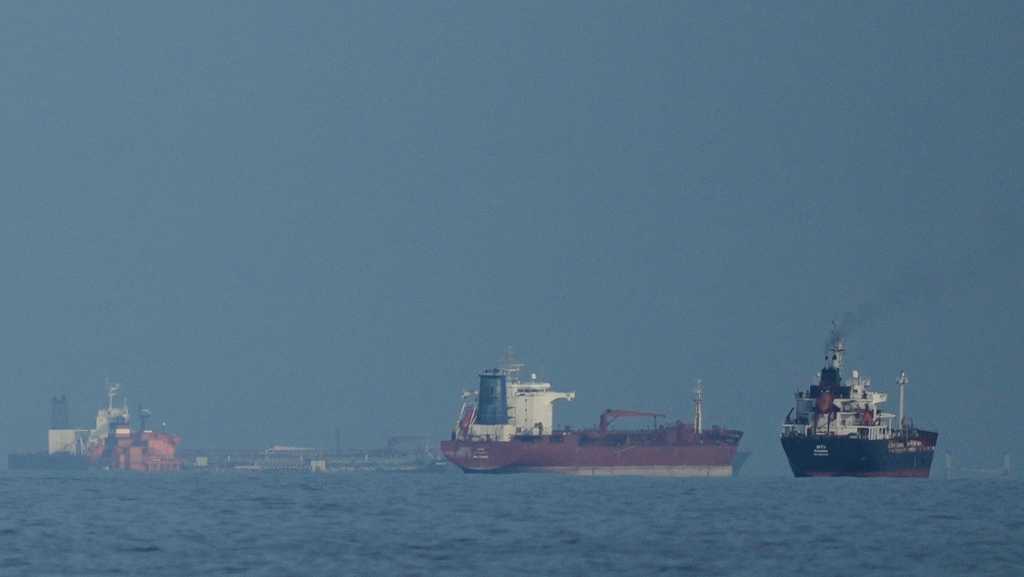
Iran announced Saturday that it’s reinstating restrictions on the Strait of Hormuz just one day after opening the waterway to commercial ships.
Iran’s joint military command said that control of the strait would return to strict military management and that those restrictions would remain in place until the U.S. military ends its blockade of Iranian ports.
Following the announcement, the British military reported that Iran’s Revolutionary Guard fired on a tanker in the strait in an apparent effort to reassert control of the waterway. The tanker and the crew were safe, officials said.
President Donald Trump made brief comments about the developments at an unrelated executive order signing at the White House on Saturday morning. He said his team is talking with Iran, and more information would be coming out later in the day.
“They wanted to close up the Strait again, as they’ve been doing for years, and they can’t blackmail us,” Trump said.
Trump celebrated the opening of the crucial shipping route on Friday morning, declaring on social media that, “Iran has agreed to never close the Strait of Hormuz again.”
While touting the breakthrough, the president also made clear that an American blockade on Iranian ports would remain in full force until a broader deal is reached that includes dismantling Iran’s nuclear program. The blockade is designed to strangle Iran’s economy and apply pressure in peace talks.
The brief opening of the waterway on Friday allowed tankers to resume shipments, sending oil prices plunging. The relief appeared to be short-lived as Saturday’s whiplash raised more uncertainty for the global economy.
Despite those developments, mediators in Pakistan expressed optimism about negotiations between the U.S. and Iran.
On Friday, Trump suggested that a longer-term peace deal with Iran was within reach, with few differences remaining. He also did not commit to extending the current ceasefire agreement, which is due to expire Wednesday without further action.
“Maybe I won’t extend it, so you’ll have a blockade, and unfortunately, we’ll have to start dropping bombs again,” Trump said.
Peace talks last weekend came up short due to a dispute over the fate of Iran’s nuclear program, according to the Trump administration.
The president once again asserted Friday that the U.S. would obtain Iran’s “nuclear dust,” shorthand that Trump frequently uses to refer to highly enriched uranium that is believed to be buried under nuclear sites that the U.S. bombed last year.
“We’ll go in with Iran, and we will take it together, and we will bring it back, 100% of it, back to the United States. If we don’t do that, we will get it in a different form, in a much more unfriendly form,” Trump told reporters.
Speaking to The Associated Press, Iranian Deputy Foreign Minister Saeed Khatibzadeh said it would not hand over enriched uranium to the United States. He said the Iranians were not ready for a new round of face-to-face talks because the Americans “have not abandoned their maximalist position.”


