The cost of gasoline, housing, healthcare, childcare, groceries, utility bills and more are up in New Hampshire and elsewhere this year, providing political arguments for candidates on the campaign trail.
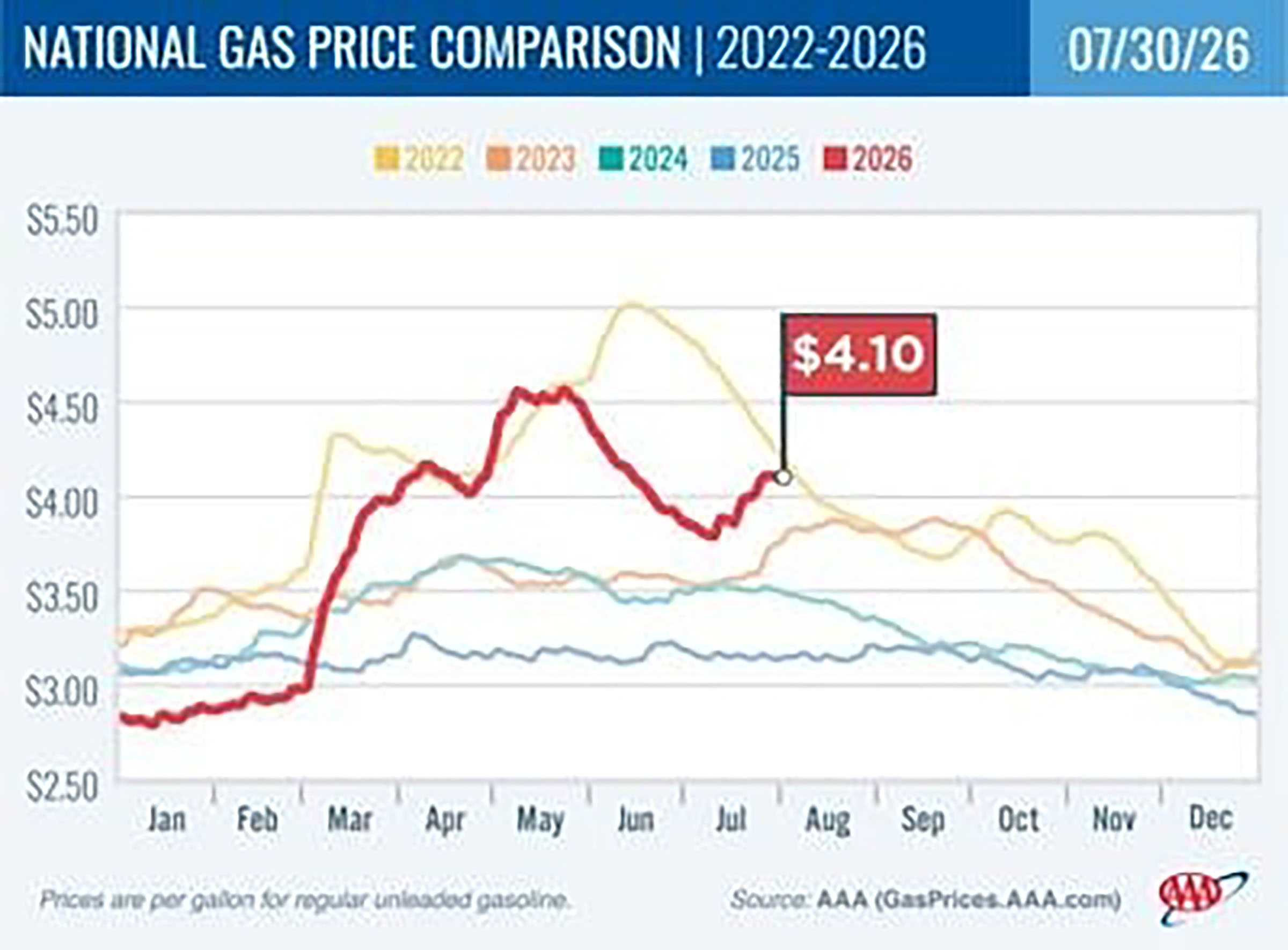
AAA Northern New England reported Thursday that the average price for gas had reached $4.09 in the Granite State, up from $3.99 a month ago and $2.98 a year ago. Armed conflict between the U.S. and Iran has led to these price increases.
There is an old saying that “people vote with their pocketbooks,” meaning that economic factors often are a prime political motivator at the polls. And, a famous catchphrase from Bill Clinton’s 1992 presidential campaign was, “It’s the economy, stupid.”
All this is not lost on today’s politicians.
U.S. Rep. Chris Pappas, D-N.H., who is running for the Senate, said in a written statement Thursday that Republican-backed federal legislation passed last year has reduced access to affordable healthcare.
This has come at the same time as “New Hampshire families continue to feel the economic pressure of Donald Trump’s reckless war of choice with Iran and costly tariffs driving up the price of everyday essentials,” he said.
The N.H. Fiscal Policy Institute’s analysis of the 2025 reconciliation law, also known as the One Big Beautiful Bill, said that two-thirds of its federal tax cuts go to the top 20 percent of households by income.
It also noted that the bill cuts $2.3 billion in Medicaid funding in New Hampshire.
John Sununu, a Republican who is also running to represent the Granite State in the U.S. Senate, promises that if elected, he will help consumers financially by holding the line against new taxes.
His website says “he’ll oppose all middle-class tax hikes and work to make life more affordable for New Hampshire families by focusing like a laser on reducing inflation and lowering the cost of housing, healthcare, and energy.”
Even public officials who aren’t campaigning frequently talk about inflation.
U.S. Sen. Maggie Hassan, D-N.H., who isn’t up for reelection until 2028, appeared at a locally owned grocery store in Portsmouth this week and released a statement blaming the U.S. war with Iran as a big factor in price increases for a variety of products.
“Now, (Trump’s) new tariffs on Canadian goods, as well as the across-the-board tariffs, will stretch the budgets of New Hampshire families even more,” she said.
Hassan is the ranking member on the congressional Joint Economic Committee. Democratic members of the panel released a fact sheet this month describing the uptick in the cost of living over the last year and a half.
The report, which included data from federal agencies, found that as of June 2026 the average household in New Hampshire has had to spend at least $4,400 more on goods and services since January 2025.
Vikram Mansharamani, a Republican from Lincoln, N.H., has expressed interest in challenging Hassan in two years.
“Oil, food, housing, and labor costs all appear to be on a one way path. At Goodwell Foods, the frozen pizza manufacturer I run in New Hampshire, I see it daily,” he said in an April blog post.
“Freight has skyrocketed on the back of higher fuel prices. Labor in rural New England remains stubbornly tight. Even whey prices, which we use in our high-protein offerings, seem to only go in one direction.”
He said that concerns about inflation cut across party lines.
“Politicians are probably on-point to worry that ‘affordability’ is a galvanizing, anti-incumbent driver that will impact the future elections,” he said.
The Pew Research Center says on its website that from December 2015 to December 2025, median weekly wages outpaced inflation, but that over the five years leading up to December 2025, real wages fell after factoring in inflation.
These articles are being shared by partners in The Granite State News Collaborative. For more information, visit collaborativenh.org.