Malta, with its crystalline waters and vibrant nightclub scene, is drawing tourists from around the world.
But the tiny European country is also drawing big US companies, like Colorado-based Crocs, that want to dodge corporate taxes. A recent New York Times article by investigative reporter Jesse Drucker described how US companies have been flocking to Malta to set up small offices in exchange for tax advantages.
This transcript has been lightly edited for clarity and length
Andrea Dukakis: What prompted you to start looking into the issue of Malta as a growing tax haven for US companies?
Jesse Drucker: This year, a new accounting rule took effect that for the first time required publicly traded companies in the US to disclose in their SEC filings if they were cutting their taxes because of stuff they were doing overseas, such as in tax havens, and they had to explicitly disclose the tax haven jurisdiction and the amount of money that they were saving. So for years and years, companies might disclose that they were saving billions of dollars on their taxes because of stuff going offshore or overseas. But now for the first time, they were explicitly required to disclose the jurisdictions that were helping them cut their taxes, places like Cyprus, the Netherlands, Luxembourg, Switzerland, Ireland, Bermuda, and Malta. So in the course of looking through these disclosures, I began to notice the presence of Malta showing up in a bunch of companies’ securities disclosures, which was unusual.
I’ve been writing these sorts of stories for more than 20 years, and you’re used to seeing different jurisdictions. You’re used to seeing Ireland and the Netherlands and Luxembourg and Switzerland. Seeing Malta is not super common.
What was it about Malta specifically that attracted these companies?
Drucker: For the last 13 years, there has been a global effort to try to crack down on how big multinational companies use offshore havens to cut their tax bills. And as a result of that effort, dozens and dozens of countries around the world have implemented what are called minimum taxes at a rate of 15% to basically end the days of companies like Apple and Google pushing profits into places like the Cayman Islands and Bermuda where they would pay taxes at a rate of zero. There were no corporate income taxes in those places. So while dozens of countries have signed on to this, the European Union permitted a handful of countries in the EU to delay implementing that minimum tax until 2029, and one of those countries was Malta.
So US companies started looking to Malta as a place to avoid taxes?
Drucker: I mean to some degree, Malta has been figuring in the offshore tax strategies of big companies for a long time. With this most recent turn, the European Union giving them a delay of implementing a minimum tax kind of turbocharged that. But then there’s sort of an additional piece, which is that on the very first day of the Trump administration last year, President Trump announced that the United States would not take part in this global effort. And earlier this year came to a formal agreement with regulators and policymakers overseas to essentially exempt US companies from important parts of this effort.
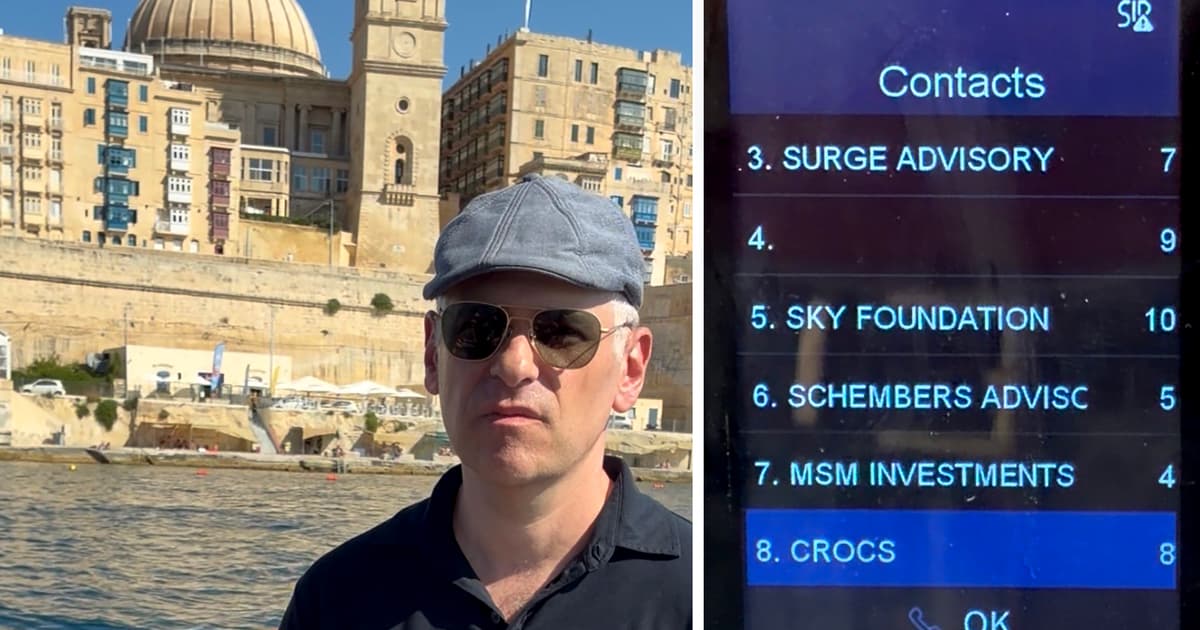
And you can see in securities disclosures, you can see big US companies piling into Malta in a way they’ve never done before. And when I say piling in, it’s not like they’re opening factories and offices, it’s just setting up subsidiaries there, which are oftentimes not much more than a name on a plaque outside an office building.
AP Photo/Damian Dovarganes, FileA Crocs store inside the Beverly Center shopping mall in Los Angeles.
As a Colorado-based news operation, we noticed the Broomfield-based shoe company Crocs figured prominently on the list of companies in your article. What made Crocs stand out?
Drucker: Crocs was one of many companies that include Thermo Fisher, Victoria’s Secret and Sketchers. Part of the reason they were of interest to me was I’ve written many, many stories over the years about big tech companies and big pharma companies using strategies like these. Crocs was interesting because it was sort of less common to find retail. I’m not sure I’ve ever written about a shoe company before. It just seemed it was an industry I hadn’t seen before using a strategy like this. It’s also obviously a very well-known brand name with a huge number of customers around the world.
When Crocs uses a strategy like this, how far does it go to reduce their tax bill?
Drucker: In 2023, just part of what they were doing in Malta cut the company’s tax bill by a little over $218 million.
So this is about having a subsidiary of the company set up shop in Malta. What does that look like?
Drucker: It’s a tiny office with two people who aren’t even employed by the company. Malta isn’t manufacturing shoes there. It’s not like they have their European outpost cutting deals with retail outlets across the continent from there. It’s just a tiny office with two people.
How do you weigh the benefits of allowing a US company to dodge corporate taxes and the loss to the US government and taxpayers?
Drucker: It’s such an interesting question because I think the calculus on the part of both regulators and lawmakers in the United States is that fundamentally these strategies are depriving other countries of tax revenue, not the United States. It in turn gives our multinational companies a competitive advantage, and the fact that they get to keep more of the profits they earn is a good thing for the company and a good thing for our homegrown US companies. The complication with that argument is that these strategies also end up costing the United States revenue. And even there, the argument is, okay, well, we’ll give up some revenue in exchange for helping to prop up the profits of our companies. And at the end of the day, they’ll employ people, they’ll innovate, they’ll create products consumers need, and on net, that’s a benefit.
There’s a lot of focus now on taxing billionaires. We have this kind of unbelievably wealthy, pretty small group of people that’s basically unprecedented in the country’s history, and [the idea is] we need to figure out a way to get them to pay their fair share of income tax. And so let’s tax billionaires. The corporate income tax is kind of a minimum tax on multimillionaires and billionaires. So, the ultimate beneficiaries of these tax dodges are the wealthiest people in the country. And it’s sort of just another way that the wealthiest people avoid paying taxes, which is that the companies they own are using strategies, cutting their tax bills at the corporate level, and that ultimately benefits them as the owners.
David Zalubowski/APFILE, A display of Crocs stands in a display at the Denver auto show Friday, Sept. 17, 2021, at Elitch’s Gardens in downtown Denver.
What does Malta stand to gain from this?
Drucker: So they have a sizable industry of lawyers and advisors and trust companies that service these entities, and they do collect some tax revenue. It is not zero. So, it’s helped drive the creation of an industry of advisors for these sorts of strategies. A person has to get hired to set these things up, to service them, to file the paperwork. I mean, if you walk around Valletta, which is the historic central district in Malta, and this is a little bit of an exaggeration, but it seems like literally every other building has a plaque, sometimes many plaques with the name of some law firm or some kind of financial services firm that’s in the business of doing stuff like this.
When I went to a building that was listed as the headquarters for subsidiaries for a number of US companies, including Skechers, I got buzzed into the building. And then when I went upstairs, the lights were out, all the offices were empty, the doors were locked inside. There was just no evidence of any human beings doing anything real there.
Is Malta the new hotspot for companies to do this and how much does this shift from country to country?
Drucker: It is definitely the new hotspot, but if I had to make a prediction, at some point in the future, this will get shut down and there’ll be some other destination, there’ll be some other jurisdiction that will offer similar tax benefits and in three years I’ll be writing a story about some other place where big US companies have empty offices and nameplates or attributing billions of dollars of profits to avoid paying taxes.