The gas pump is just the first place you’ll pay more because of the U.S.-Israel-Iran war. How might commodities, financial markets, fertilizer and food also be impacted?
Guests
Mark Finley, nonresident fellow in energy and global oil at Rice University’s Baker Institute. Former senior U.S. economist at BP.
Muqtedar Khan, professor of comparative politics, international relations and political theory at the University of Delaware. Co-author of the article The Energy Shock: U.S.-Israel War with Iran’s Impact on Indian, Chinese, and Global Economies.
The version of our broadcast available at the top of this page and via podcast apps is a condensed version of the full show. You can listen to the full, unedited broadcast here:
Transcript
Part I
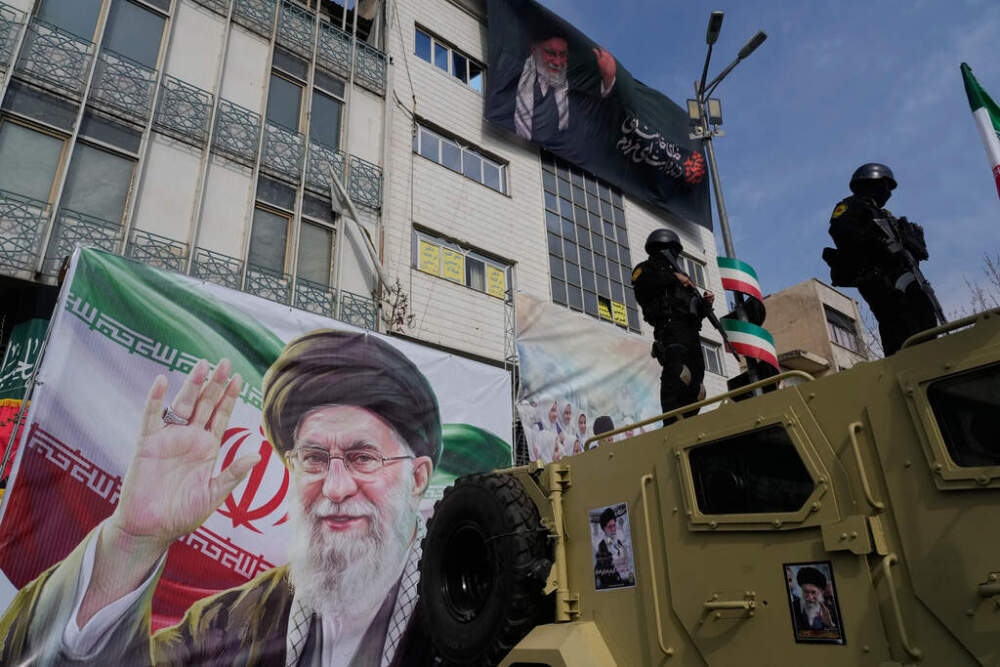
MEGHNA CHAKRABARTI: Iran’s new Supreme Leader, Ayatollah Mojtaba Khamenei, has broken his silence. He issued his first message today. It was read out on Iranian state media. Khamenei is not being seen or heard himself.
NEWSCASTER [Tape]: (SPEAKING FARSI)
INTERPRETER: I’ve also mentioned about how the closing the Hormuz Strait should be used and reopen it if the war is stopped.
CHAKRABARTI: “If the war is stopped.” It is not stopped now, meaning Iran will continue blocking the Strait of Hormuz. Three more cargo ships were attacked in the strait overnight. Almost all shipping through this crucial waterway has effectively been halted.
That prompted an historic report from the International Energy Agency. The IEA was created in 1974 to work with governments to help coordinate collective responses to major oil disruptions. Well, today, March 12, the IEA declared in its latest oil market report that the war in the Middle East “is creating the largest supply disruption in the history of the global oil market.”
As a consequence, the IEA announced yesterday that its 32 member countries would release 400 million barrels of oil to reduce the supply disruption caused by the Iran war. But the group did not identify a timeline in which this release would occur.
Well, yesterday Professor Vali Nasr spoke with us. He’s an Iran expert at the Johns Hopkins University School of Advanced International Studies, and he described Iran’s regional strategy in detail.
VALI NASR: Iran needs to absorb the punches that it gets from Israel and the U.S., organize itself that it can survive those punches and then drag out the war. And this time it has surprised them both by actually deciding not to fight on the battlefield that the U.S and Israel favor, means the air corridors and missiles and air power going back and forth between Israel and Iran and U.S. ships and Iran. But rather to use the global energy markets and the global economy, the Strait of Hormuz, which is the battlefield that Iran wants to fight on.
CHAKRABARTI: So it’s not just oil, it’s natural gas, fertilizer, food, the destabilization of parts of the global financial markets. As Nasr said, it’s the global economy that Iran is creating a battlefield on.
The impact will be felt around the world, including in the U.S. Well, President Donald Trump has called the increased energy prices temporary, but a necessary sacrifice, he says, as a result of the war. Yesterday at a rally in Kentucky, Trump said he has no intention of ending the war soon, even if global markets continue to drop.
PRESIDENT DONALD TRUMP: We’ve won. Let me say, we’ve won. You know, you never like to say too early. You won. We won. We won. In the first hour, it was over. We don’t wanna leave early, do we? Huh? We gotta finish the job, right?
CHAKRABARTI: The administration has not yet made it explicitly clear to the American people what the job or the overall objective of the Iran war is. But the impact as we’re seeing right now on the entire world’s economy and supply chains around the world is being felt.
That’s what we’re gonna talk about today, and we’re gonna start with Mark Finley. He’s a non-resident fellow in energy and global oil at Rice University’s Baker Institute. He’s also a former senior U.S. economist at BP.
Mark Finley, welcome to On Point.
MARK FINLEY: Hi Meghna. Thanks for having me.
CHAKRABARTI: So put it in context the moment that we’re at, specifically regarding the global supply of oil.
FINLEY: Well, we’ve seen with the Strait of Hormuz essentially closed, 20 million barrels a day of crude oil and refined products like gasoline and diesel fuel flow through that strait every day in normal times. That’s equivalent to 20% of the world’s total oil supply and demand.
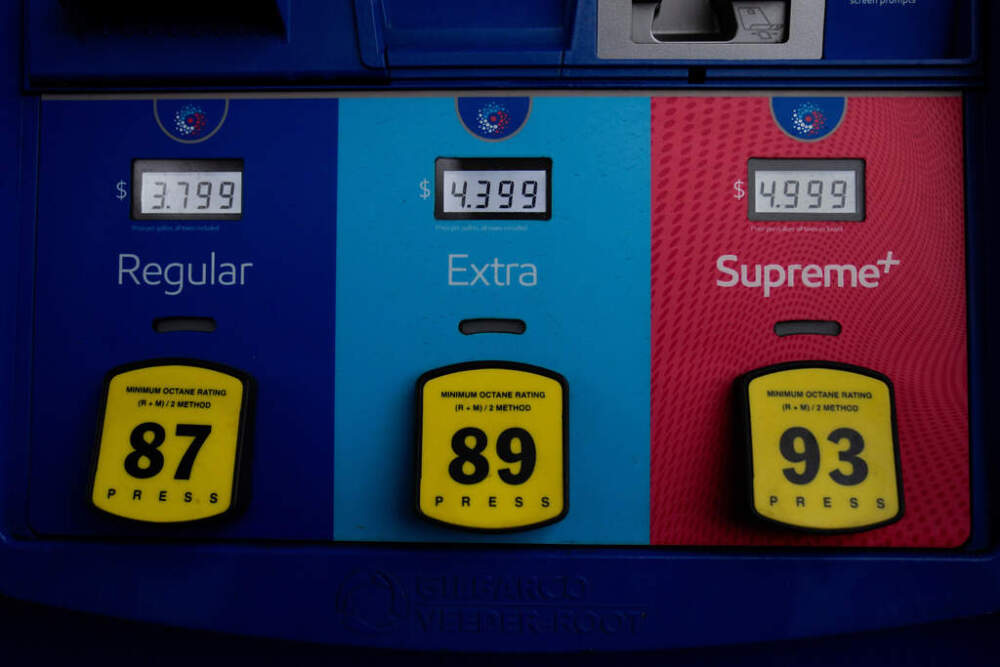
And while the United States doesn’t import a lot of oil from that region, it is a global marketplace. And so if something goes wrong anywhere, the price goes up everywhere. And indeed, that’s what we’ve seen just in the last week, price of gasoline here in the United States has gone up by about 60 cents a gallon. The price of diesel fuel has gone up by over a dollar a gallon.
CHAKRABARTI: Wow. Okay. Actually, can we just take a minute, Mark, to understand better how the oil markets actually work? Because as you said, it’s not that we’re just buying foreign oil directly.
I mean, how, how is the price determined based on the global supply of oil? Because it’s also a highly, well, I mean, there’s OPEC, right? So there, it’s, it’s also very, it’s a mediated market as well.
FINLEY: It is a mediated market. And in fact, you know, the role of OPEC here is, perhaps ironic in a way because the oil market is a complex global interaction with, you know, millions of consumers and producers around the world. And it’s over time proved to be a very efficient marketplace where, you know, if a hurricane hits the U.S. Gulf Coast and knocks out some refineries, a flotilla of gasoline tankers will come and bring gasoline to the United States.
In these situations it’s very flexible, very complex. But the challenge here is that the dependence on this one critical chokepoint is kind of overwhelming the normal coping mechanisms of the system.
CHAKRABARTI: Okay. Now, just to reiterate something you said earlier because I think it’s a very powerful way of describing this, if there’s an oil disruption, a major one anywhere, it affects prices everywhere. We’re already seeing that, as you said at the pump here in the United States.
AAA says the national average was about $3 a gallon before the start of this war. Now it’s up to, nationally, the average of $3.60 cents. So a 20% increase right there. But it’s not just the pump price that these oil increase or the price increases have an impact, right? It’s everything downstream that depends on energy to begin with.
FINLEY: Oh, absolutely. So anything, your summer travel, your airfares, agriculture, anything that gets moved around the country by trucks, you know, even things like plastics that get embedded into so many different products that we use.
It’s most readily noticeable in gasoline because literally the price is screamed at you from every street corner in foot-high numbers. But the majority of U.S. oil demand is actually other products that are embedded in all of those other things that we buy and sell.
CHAKRABARTI: Yeah. No, no, continue. I didn’t mean to interrupt you. Go ahead.
FINLEY: No, no, it’s okay. One thing that I think is interesting about this whole dynamic is that gasoline in particular tends to punch above its weight when it comes to its impact. Because not only is it important to consumer pocketbooks, it has an outsized influence on things like consumer confidence, and believe it or not, on politicians’ job approval ratings. And so gasoline looms large, both in the economic and in the political consciousness.
CHAKRABARTI: Most definitely. I can’t think of another product that there is such acute price sensitivity to. Right? On those big foot-high numbers, gas is priced down to the 10th of a cent.
FINLEY: Exactly.
CHAKRABARTI: Yeah. Which we could talk about in another show why that is, but it’s very indicative of its importance. Now let, let me ask you how does it work when we hear the IEA say that they’re going to release, or coordinate the release, of 400 million barrels of oil? Have we ever seen anything like that to that extent?
FINLEY: No. For the last 50 years, the United States and its allies, after they formed the International Energy Agency, they designed a, a system to address energy security concerns. And within that group, one of the big levers that they’ve developed to pull is developing government owned or controlled strategic stockpiles of oil and in some countries refined products as well.
And so the idea is, well, if there’s a supply disruption, we can release strategic stocks to offset that loss of supply temporarily while we work to get supply back online. And like I said, that’s one of several coping mechanisms. Another big one over the years has been spare production capacity, for example, in Saudi Arabia and other OPEC members, which you mentioned earlier.
Unfortunately, that, while it tends to be the first line of defense in a crisis, it’s not available because the countries that hold spare capacity are exactly the countries that are shut off by the closure of the strait and the limited ability to bypass it.
CHAKRABARTI: I do wanna actually spend another minute on that, because that’s very important. In comparison to previous oil shocks, which were essentially politically driven, this time around, we have an oil and energy shock that’s not just politically driven, but as you said, actual infrastructure is being shut down.
I mean, at least at, in the past couple weeks, we’ve seen refineries in Bahrain, Kuwait, Qatar, Saudi Arabia, the Emirates. They’ve all been hit and temporary, at least temporarily shut down. I see here that Bapco, that’s Bahrain’s only refinery, that one was attacked and set on fire. And so that one’s shut down for the near future. There was another major one in Saudi Arabia, the Ras Tanura refinery, that shut down temporarily.
FINLEY: Yes.
CHAKRABARTI: And now is starting up again. take a minute to describe honestly, just like the physical requirements around restarting refining facilities. It can’t — it’s not just the flip of a switch.
FINLEY: No, it’s not. And I think it’s an important point that you raise here, Meghna. I mean, it’s not just crude oil. I mean, at the end of the day, none of us consumes crude oil It has to be turned into something useful like gasoline or diesel fuel by going through a refinery.
And so, you know, while most of what gets shipped out of the Strait of Hormuz is crude oil. It is also a significant, that region is a significant source of refined products for the world. And if you’ve noticed, as much as the price of crude oil has gone up, the prices of gasoline and diesel fuel have gone up even more because it’s not just the production of crude oil that’s being impacted, it’s the refining as well.
And anytime you have equipment that’s operating at high temperatures and under a lot of pressure, if you have to do a cold stop and turn that equipment off, you have to go through, be very careful in the process of letting things cool down and heat up again as you start. So it’s not necessarily a straightforward process. Now bear in mind, this is an economist explaining a technical process to you. (LAUGHS)
CHAKRABARTI: (LAUGHS) Point well taken. But I think the big picture takeaway is it doesn’t just happen overnight. And also the other thing that prevents it from happening overnight, aside from just the engineering aspects, are insurance questions, which we’ll get to a little bit later in the show. Very, very important.
PART II
CHAKRABARTI: Mark, we talked about the Strategic Petroleum Reserve and global reserves being tapped right now, I just wanna hear for a moment from President Trump because he was asked about U.S. oil reserves. He was on Air Force One, so again, kind of tough to hear. But he told the reporter who asked that the U.S. has a healthy supply of oil already secured.
TRUMP: There’s a lot of oil. We’ve got a lot of oil. Our country has a tremendous amount and we have — there’s a lot of oil out there. That’ll get healed very quickly.
CHAKRABARTI: Mark Finley, fact check on this because my understanding is that the U.S. Strategic Petroleum Reserve can hold upwards of 700 million barrels of oil, but we’re not anywhere near that capacity right now, are we?
FINLEY: That’s correct. It holds a bit over 400 million barrels currently. President Biden made a big release after Russia invaded Ukraine. It’s important to recognize that that strategic petroleum reserve is owned by the federal government and stored in its own dedicated facilities in the Gulf Coast. But that’s the secondary, you know, supply. The primary supply is commercial inventories held by oil companies themselves. And that’s a much bigger quantity when you combine crude oil and refined products.
And I think the president is also referring to the fact that the United States is by far the biggest producer of oil in the world. You know, the challenge with that is that while we are the biggest producer, U.S. drillers don’t have the capacity to very quickly ramp up supply in a crisis, which is why we have to look at crisis measures like the strategic stockpile.
CHAKRABARTI: Okay. Can you just also tell me the 172 million barrel release that the United States has committed to doing, that’s gonna come from a mix of the SPR and those commercial reserves you talked about?
FINLEY: No, that comes exclusively from the Strategic Petroleum Reserve. I mean, what will happen is that the Energy Department will put together a plan for how quickly they wanna release that oil and start offering tenders and putting that out into the marketplace and seeing who buys. And that’s completely separate from the commercial decisions of U.S. producers and refiners and pipeline operators.
CHAKRABARTI: Okay. So after the Biden release in response to the Russian invasion of Ukraine, that was a lot, 120 million at least barrels. We didn’t actually have the SPR refilled. I don’t know if it can be refilled rapidly, but is that true?
FINLEY: There has been some oil put back in, but to completely refill it would require additional congressional authorizations to appropriate the funds. And that it hasn’t been on the agenda so far.
CHAKRABARTI: Okay. It hasn’t been on the agenda so far. So we’re reducing the SPR already from its somewhat reduced state. Okay.
Now, before we get to the larger global implications, in terms of downstream products, I mentioned insurance. We have to talk about this because there’s been just, I think, almost unprecedented decisions that have been made by insurance companies that insure everything from ships going through the, or that were going through the Strait of Hormuz to the very refining facilities that we’ve been talking about.
We’ve been seeing this phrase that I think no one ever wants to see a company invoke, which is force majeure. Talk about that.
FINLEY: Right. So I think we could get to force majeure in a couple of ways. One is if the straits are closed or the strait, it’s a singular, as I was reminded by U.S. Navy admiral once. If the Strait is closed, I mean, we saw, for example, the country of Qatar, which is the biggest, one of the biggest exporters of liquified natural gas on the planet, declared force majeure on LNG exports because they can’t get their tankers through the strait. Other places you mentioned where like there was a, I think the Bahraini refinery could, because it sustained physical damage, it’s unable to deliver on its contractual obligations and declares force majeure.
The role that insurance plays is a critical one, especially for shipping that the owners of the ships and their insurers have not been willing to take the risk of getting attacked by trying to transit the strait. And from their perspective that that’s business that makes smart business sense. You’re worried about not only the cargo of oil, you’re worried about the actual asset, the ship itself. You’re worried about the safety of your crew. And notice that in some of those attacks on tankers that you mentioned, there have been crew members injured and I believe killed as well.
So these are all important considerations that play into the willingness of shipping companies to be able to take on the risk of transiting the strait with the threats that are out there.
CHAKRABARTI: Okay, so Mark, hang on for a second because this is a great time for me to bring in another voice.
Muqtedar Khan joins us. He’s a professor of comparative politics, international relations and political theory at the University of Delaware. He’s co-author of an article titled The Energy Shock: U.S.-Israel War with Iran’s Impact on Indian, Chinese, and Global Economies. It was published in The New Line Institute for Strategy and Policy just a couple of days ago.
Professor Khan, welcome to On Point.
MUQTEDAR KHAN: Thank you for having me, Meghna.
CHAKRABARTI: I wanna just continue on this insurance line of questioning because I think it’s very indicative of the long-term impacts of this war. Because force majeure is invoked, as Mark said, when an insurance company, or even the company that’s being insured basically says we cannot fulfill our contractual obligations due to natural disasters, acts of God, et cetera, et cetera. The facility itself can be untouched. The ship can be in perfect working order. It’s the risk that has gotten too high.
Because of that fundamental truth, Professor Khan, do you see these disruptions to oil markets, energy markets, et cetera, reducing anytime soon, even if the war would technically stop today?
MUQTEDAR KHAN: So you can’t invoke force majeure every day. It happens only once. So once the Strait of Hormuz is blocked, and you said, okay, we didn’t know it was going to happen. It has happened. But going forward, they can’t do that. They have to plan for it. And you know, the insurance has gone up by 1000%, which means if you have a tanker with say, $300 million worth of oil on it, you’re going to be paying something close to a million or 3 million on that insurance.
So a lot of companies, what they have done is they’re trying to go around the old way, the Good Hope, all the way around Africa, so they’re avoiding it entirely. Which means it increases the cost of transportation. It increases — there is delays. And every day that you add, it goes up.
So for example, for India, when the price of oil goes up by $10, so say it was 65, 64 before the war. When it went to 75, it cost India $20 billion in terms of its impact on the Indian economy. So countries are now trying to use navy. The Pakistanis, for example, have already started escorting their ships with their navy. India has not made that decision. But it raises a very serious question that if you are going to force your way through the Strait of Hormuz, then are you going to engage in war? Will Pakistan be at war with Iran? Will India be at war with Iran if Iranian ships or Iranian drones target any of those ships? So it’s a very serious question for that.
CHAKRABARTI: Professor Khan, let me just jump in here for one second. You just uttered a statement I have not yet heard. That it is a live question if, you know, if India and Pakistan are, they are so desperate for energy supplies that we have to take seriously the possibility of India and Pakistan being at war with Iran?
KHAN: Well, Pakistan has already sent its navy ships to escort the oil. Pakistan has shut down its schools for two weeks because they don’t have energy.
CHAKRABARTI: Schools? There’s no school operating in Pakistan right now?
KHAN: Nope. Everybody’s on Zoom now. So universities, everything is being shut down because they don’t have fuel supplies. See, most of the developing countries have less than two or three weeks of strategic reserves. Only the U.S. has one year. Even Europeans don’t have strategic reserves that can go on for weeks and weeks. So these countries are under tremendous pressure.
And they are locked in with these, like with Qatar and United Arab Emirates in Saudi Arabia to buy their oil. So Pakistan has become so desperate that it is already started escorting its ships with navy. India is actively considering whether it should do that because one — or I don’t know whether you’re aware, but two Indian sailors have already died. One is still missing in the action. And a ship that was going to India, it was a Thai ship, was targeted by the Iranians.
So Iran has potentially declared war on the whole of the world by targeting this. And for poorer countries and developing countries, this chokehold can immediately drive their economies into recession. For example, India takes 85% of all its energy from the Strait of Hormuz. And since it stopped buying the Russian oil, now the U.S. has given India a license for one month to buy some Russian oil, but still 50 to 60% of that has to come.
And when they can’t get that oil, there’s a triple negative effect. So one thing that happens is that the price of oil and gas, everything has gone up. Things have become so bad that cooking gas, for example, in India is unavailable and restaurants are shutting down in Bangalore, for example. And that means people are losing their jobs. Day wage earners are unable to work because restaurants have been shut down. But that’s not enough.
Because these developing countries, nearly everybody has to buy oil in dollars. So if you are going to spend more money, so for example, if this thing remains shut down for one month, India will have to spend anywhere between $20 to 30 billion extra to buy oil. So when they go and buy dollars to pay, their own currency value goes down. So in the last three days, India has hit the highest in terms of, 92.5 rupees per dollar.
So what is happening is, one, the gas price is going up. Number two, your own currency is going down. So suddenly it’s a double whammy with regards to buying oil and gas. And as your previous speaker was saying, this is, it’s like getting, you see, gas prices are like sugar in your body. If you get diabetes, it affects everything else.
CHAKRABARTI: Mm.
KHAN: So it has an inflationary impact. If the price of gas goes up, then price of eggs, price of butter, price of bread, price of milk, going to schools, all of this goes up. Everything. And you know, it’s not just that in the U.S. is experiencing an affordability crisis. Most of the world is experiencing an affordability crisis.
And so Iran is going to simply magnify the affordability crisis in most of the world, including Europe.
CHAKRABARTI: Mark Finley, let me just turn back to you here for a moment because we’re gonna talk more with Professor Khan about impacts in different regions around the world. But given what he just said, do you think, again, what would it take to reduce the risk, for example, that’s preventing insurance companies from wanting to send ships through the strait, et cetera, but also then stabilize these energy markets such that the inflationary impact, at least the edge is taken off of it, Mark?
FINLEY: Mm-hmm. And I think professor Khan makes an excellent point that in wealthy countries like the United States, we do have the luxury of holding significant inventories, both government stockpiles and commercial inventories. Frequently lower income countries just don’t have that cushion. And they’re much more exposed to suffering both, you know, price spikes and physical shortages because of that.
What would it take? Well, I mean, bear in mind that even if prices stay only where they are now, that’s already a significant chunk of inflation that’s baked into the system.
CHAKRABARTI: Mm-hmm.
FINLEY: And that will show up in the economic data, you know, as that price increase gets digested.
And so what options are there for stabilizing it? I mean, we are already seeing some coping mechanisms trying, I mean, Saudi Arabia, for example, is trying to divert some of its oil production through a pipeline away from the Persian Gulf and over toward the Red Sea. The United Air Emirates has a pipeline, a small pipeline that also bypasses the strait.
We’ve talked earlier about the release of strategic stockpiles by the U.S. and its allies and the International Energy Agency. There will be a demand response around the world to the higher prices that we’re seeing, as well as things like the cancellation of a lot of air travel. And so, you know, at some point, market forces will help to stabilize the system.
But the challenge is with with the disruption being fairly recent, we’ve seen a disruption of flows through the Strait of Hormuz. But it takes two or three weeks for an oil tanker to sail to say China or Japan. And so we have actually haven’t seen those cargoes not arrive yet in their consuming markets. And so there is still, even in a steady state, that physical disruption is going to take some time to work its way through the system.
Now you asked about how to stabilize it. I mean, the Supreme Leader that you played the quote earlier saying, sure, straits can open up, you know, when we get peace. I mean, Iran has spent decades building up asymmetric capability, things like drones and mines as a way to balance the conventional military dominance that the U.S. and Israel hold over it. And I’m not a military expert, so I can’t speak to what the remaining inventory of these military equipment are. But we are already seeing that they’ve essentially succeeded in closing the strait just by threatening and attacks on a handful of tankers.
CHAKRABARTI: Right. Mark Finley, non-resident fellow in energy and global oil at Rice University’s Baker Institute.
Thank you so much for joining us, Mark.
FINLEY: It’s my pleasure. Thank you, Meghna.
CHAKRABARTI: Professor Khan, lemme just stick with this long-term impact for a little while longer. And sorry if I’m stumbling over my words. This is just a lot that you’ve said that I can’t believe we’re actually having to talk about right now.
But speaking of the long-term closure of the straits, again, if just the risk itself is too great, we have that problem, but also, mining the strait. That has been discussed as a worst case scenario. But it already seems to have come to pass. Iran is — there are some mines, as I understand, going into the Strait of Hormuz. So it seems like if you are India, Japan, et cetera, this is not something that will end quickly at all, Professor Khan.
KHAN: So the reports are that about 10 mines have been placed. So the mining is going to be a last option for Iran because if Iran mines the Strait of Hormuz, even Iran will not be able to use the strait for its own trading. There are a couple of reports going around that Iran is still allowing Chinese ships to take oil across —
CHAKRABARTI: Professor, hang on here for just a second. I’m sorry to have to interrupt you. I just mistimed the end of the segment, but we’ll be right back.
Part III
CHAKRABARTI: Professor Khan, I’m sorry I had to interrupt you previously, but you were talking about the consequence of Iran laying mines in the Strait of Hormuz.
KHAN: Yes, the mines are, I think for Iran also, the last resort, if it’s unable to shoot its drones, it still has thousands of them and short range missiles at ships that move, then it will start mining. The U.S. claims that it has already destroyed about 19 mine layers, boats which go about dropping mines. So if Iran completely, say it puts in like 500, 600 mines. Then it’ll become dangerous for any ship to go. But I think what Iran wants to do is control the traffic, not block the traffic.
CHAKRABARTI: Mm.
KHAN: What it wants to do is that it sells its own oil to China, and lets the ships that go to China go and then blocks everything else. So far, the United States has not blocked ships going to China and has let them go. And I think that would be a bigger decision for the U.S. and say, okay, if you’re not going to allow all the ships of the rest of the world to go, we will not allow Chinese ships to go. That will begin to hurt both China as well as Iran.
But the mining is going to be the last resort. I think right now it still has the capacity to hit, like it hit three ships already.
CHAKRABARTI: Mm-hmm.
KHAN: And it’s the fear factor also, right?
CHAKRABARTI: Yes.
KHAN: Like, would you take a chance? You don’t want your sailors to die. And the environmental disaster if a fully loaded tanker is sunk is going to be enormous.
So I think over a period of time if this war continues and if the president is determined to bring about regime change and install Pahlavi or somebody there, then we are going to have a situation where maybe they will start using land routes to force outside beyond the Strait of Hormuz.
CHAKRABARTI: Wow.
But the restructuring is going to have cost. See, the key is the cost. And the reason why people go to buy Gulf, the U.S. can supply to the world, but it’ll be so much more expensive to get it.
CHAKRABARTI: To get it to around the world. Yeah, exactly.
KHAN: Yes. People don’t realize that Qatar supplies 25% of the liquid gas, LNG, et cetera. And many countries are dependent on that.
CHAKRABARTI: Yes. This is in fact, exactly what I was talking about when we were thinking through with my producer yesterday that okay, could a long-term change be well, we’re just gonna see more overland transport of oil and natural gas, but that can’t happen quickly. And as you say, creating that infrastructure would be extremely expensive.
So this is all down the line. I still want to get back to what you were saying earlier, which was quite disturbing about the impacts that we’re seeing in other countries. Like you said, Pakistani children are not physically in school right now, that restaurants in India are shutting down. Right? One more quick thing about, about India. How is the reduction of the strength of the rupee and this, the, the energy threat in India having an impact on the rest of its economy?
KHAN: Let me give you an example. India is in a very precarious situation. It depends up to 85% for all its energy resources on stuff that flows through the Strait of Hormuz. So for example, India does not subsidize petrol and diesel anymore. But India does subsidize up to 2 trillion rupees probably up to like, maybe 20, 30 or even $100 billion worth of cooking gas.
CHAKRABARTI: Mm-hmm. And the price of cooking gas has gone up by 7% already. So now India has to make a decision whether it wants to continue to subsidize it. So in order to do that, it’ll have to increase the amount of subsidy it is spending. So for every country that is subsidizing energy, and a lot of developing countries do that, India does it for cooking gas, which is a huge thing.
So what happens now is the country has to decide, should we let the consumers pay, which means that it’s going to have a political impact, people are going to be very, very upset because you have promised in election campaigns that you’ll keep the price of cooking gas down. So if you can’t do that, then you’ll have to subsidize it. That means you’ll spend less on other things like defense or education or research or healthcare to divert money here or you borrow and go in debt.
So it, these are major fiscal, monetary questions that the Indian government will have to face. Even Bangladesh is now shutting down schools. So you are going to see this across the global south. And the reason why I talked about India, China, South Korea and Japan, is these are the drivers of the Asian economy. And Asia is the driver of the global economy.
CHAKRABARTI: Yeah.
KHAN: So even Japan and South Korea are dependent 75 to 90% on the oil going through the Strait of Hormuz. What is interesting is that so far the Japanese and the Chinese currencies have remained stable, but the South Korean currency has also started dropping significantly. And India’s rupee has dropped also by 2% in the last two days.
CHAKRABARTI: So, professor, let me just repeat some numbers. Because I think for many, many listeners hearing this, this is all new information for them, right?
That India relies, 85% of its energy comes through the Strait of Hormuz. For Japan and South Korea, 75 to 90% coming through the Strait of Hormuz. And as you said, these are countries that drive the Asian economy, which has an impact on us all.
But so can you tell me a little bit more about what we’re seeing in Japan and South Korea right now? The impacts on the ground, as you had described in India and Pakistan?
KHAN: So these countries also do not have much reserves. So they are beginning to panic and you’re beginning to see the fear. One of the earliest decisions that these countries, including China made was not to export purified oil.
So even India, for example, is a big exporter of petroleum. So they buy crude and they refine it, and then they sell it. In fact, India was buying Russian oil, putting it through its refineries and then selling it back to Europe as Indian oil. So all of that, at least China, Japan, and South Korea are now not going to export anything because they are beginning to hold whatever reserves they have.
And so the crisis is going to begin after like two weeks. Like Finley was saying that the ships will take a while to get there, right? So the ships, which are going to arrive in the next week are already sailing towards these ports. So the actual crisis of supply crisis is going to hit a week from now, but the price crisis has already hit everywhere. So because they’re buying now, they realize that they’re spending much more.
And people are not realizing, you know, people are saying, oh, it went up to 119 and dropped. And I think at the beginning of the show it was about 92 barrels per day. But it is actually a 50% hike because before the war it was around 64.
CHAKRABARTI: Mm-hmm.
KHAN: So going from 64 to 90 is, rough math, is close to 50% increase.
CHAKRABARTI: Let me just ask a follow up on that, because this is something in the way the U.S. media talks about oil markets that’s always frustrated me. We’re constantly reporting these spot prices, right? But is that the right metric to use to understand the overall impact of oil prices? Or should we be looking at something else?
KHAN: If you’re a speculator, that’s what you focus on. Right? (LAUGHS)
CHAKRABARTI: (LAUGHS) But the U.S. media should not be in the speculation business. Like, what is the best way to understand all of these knock-on effects if we’re like trying to encapsulate that in the price of oil?
KHAN: I don’t know about that. You know, I actually started my career doing PhD in business and the professors were quite upset when I asked philosophical questions.
CHAKRABARTI: (LAUGHS)
KHAN: They said, “Your job is to maximize the profit of the stakeholder. Not think seriously.”
CHAKRABARTI: Find the arbitrage, however you can. Understood. (LAUGHS)
KHAN: Yeah, exactly. But so for example, people are not realizing that now everywhere in the U.S., every state, the price of gas has gone above $3. And in some states it’s gone up to $3.58 cents. So we have had a a 20 to 40 cents hike. People may think it is small. I think that’s what President Trump is thinking, but like I said, it is going to impact anything that does not grow in your backyard is going to cost more.
Travel, for example, if you want to travel now, the air tickets are going through the roof. People are speculating that air travel could become twice or even thrice as expensive because jet fuel is going to go up, too. So we are going to face a multifaceted crisis if this thing goes on for months.
Already, President Trump, well, he changes his point. He said five weeks, and then he said it’s very complete. It’s a new concept. I’m still struggling to understand what is very complete. But the war is still going on, right? And the U.S., you know, surprisingly, I heard Newt Gingrich say that the US.. made a very big strategic error. They should have first captured the Strait of Hormuz. And I don’t know how they would do that before attacking Iran because I think that Trump administration underestimated the potential impact of a long war on the global economy and in the U.S. economy, too.
CHAKRABARTI: Well, we don’t see any evidence. They’re not speaking publicly about whether or not they even considered that at all before deciding to launch the first attacks.
But professor Khan, I would like — the numbers and the analysis that you’re bringing about the international impact are very, very, very, very powerful. And I wanna keep on that for just another few minutes.
So again, going back to Japan and South Korea. Is it plausible that, again, with them having to protect their energy sources, with costs going up, that to bring it back to the U.S., if someone in a few weeks wants to go and buy a new Samsung phone, the price hike they might see, it wouldn’t just be due to the extant tariffs, but that everything coming out of Asia is also going to be significantly more expensive because of this war?
KHAN: Yes, indeed. So for example, one of the bigger geo-economic thing that people are worried about is China’s manufacturing capacity.
CHAKRABARTI: Yes.
KHAN: It manufacture 50% of the stuff, right? So China has been the only country which are more prepared for this war. There is lots of reporting that China has actually increased its reserves before the war, and China is the least impacted by the Strait of Hormuz. As of today, they’re still getting their oil. So if the price of oil goes up anyway, it doesn’t mean that the Chinese will not be paying the higher prices. They will be paying, but they’re getting discounted oil from Iran.
The factories in China operate at very thin margins, so if the price of energy goes up even slightly, all of those factories can potentially be operating at negative profits, which means that they are supported by local governments in China, so either they hike their prices and become less competitive, or the local governments in China will have to borrow to continue subsidizing these companies. So you are looking at multifaceted crisis. Local governments, state governments also borrowing money. So it’s not just the federal governments in places like India, China, and other places, but even local governments, city governments, state governments will have to start borrowing money.
CHAKRABARTI: So professor, we only have a few minutes left and we’re coming to what I think is a really important question for you. And that is, yes, the United States and Israel began this war. But it’s Iran that has chosen to make it, as you heard Vali Nasr say at the very beginning of the show, a war on the global economy.
I just wonder how long major countries that we’re talking about here, you know, first of all there’s the entirety of the global south, but within that also India and China. How long will these nations be willing to absorb the pain for a war they did not start? It seems as if, especially China, might have some powerful leverage here to put pressure on, I don’t know, both the United States and Iran.
KHAN: So the country that is least affected by all of this at the moment is China. And everybody else is affected. So if the Gulf countries are hurting the Chinese will say, “Well, you deserve it. You have American bases, you suck up to America. It’s time you rethought your connection with the U.S. and come and become my groupie.” That’s probably what the Chinese are going to tell them.
CHAKRABARTI: Ah.
KHAN: If you heard Steve Lavrov literally scold the Arab ambassadors, he said you did not condemn, you know, Bahrain’s resolution passed to the U.N. Security Council, but it only condemns Iran. It does not condemn the U.S. and Israel for starting this war. Nor have any of these countries, including India, talked about the school where women, about 170 young girls were killed in Iran. So Steve Lavrov was referring to that.
CHAKRABARTI: Are you talking about Sergey Lavrov, the Russian foreign minister?
KHAN: Sorry. Yeah. Sergey Lavrov, the Russian foreign minister. And he was very critical about it, and he was saying basically to the Gulf countires that you deserve what you’re getting.
But the problem with all of these countries are that if they attack Iran, then it’ll appear as if they are joining Israel’s war on Iran. And none of them likes that optics. Pakistan does not want to be seen as helping Israel become a hegemon for the next thousand years, as Mike Huckabee says, right, for the next thousand years, as Lindsey Graham wants Israel to be dominant in the Middle East.
So none of these countries want to be seen as if they are supporting the Israeli war. In the U.S., we think it is a U.S. war, but the rest of the world think this as a war launched by Israel and its proxy, which is the U.S., on Iran.
CHAKRABARTI: So then would these countries then put pressure on the U.S. then, if not Iran?
KHAN: That is the goal of Iranian strategy is to get these countries to put pressure on the U.S. But apparently Iran has a problem. See if the U.S. stops fighting and everything goes back to normal quickly, then the U.S. and Israel might attack Iran again.
CHAKRABARTI: Yes.
KHAN: So for example, let’s say the war stops, everything is fine, and Mojtaba Khamenei decides that he wants to come out of his cave, wherever he is hiding. And if the Israelis know where he is, will they hit him? Will we have another war?
So for the Iranians, they said we tried to negotiate with the U.S. twice, and during the negotiations, the U.S. hit us twice. So they don’t know whether the U.S. will keep attacking them again. So I think the strategy for Iran is to send a message to the rest of the world that any attacks on Iran can be extremely debilitating to the world economy and the price of attacking Iran. So they’re trying to build a deterrence against future attacks. I think that is their strategy.
CHAKRABARTI: This is a complete — it sounds like it’s a complete and long-term sort of paradigm reset for how we understand fundamentals of the global economy.
KHAN: You know, there are, there are poems which say, “We will drown, but honey, we will take you with us.”
CHAKRABARTI: Muqtedar Khan is a professor of comparative politics, international relations and political theory at the University of Delaware.
Professor Khan, thank you so much.
KHAN: Thank you for having me, Meghna.
The first draft of this transcript was created by Descript, an AI transcription tool. An On Point producer then thoroughly reviewed, corrected, and reformatted the transcript before publication. The use of this AI tool creates the capacity to provide these transcripts.