Let us read it for you. Listen now.
Your browser does not support the audio element.
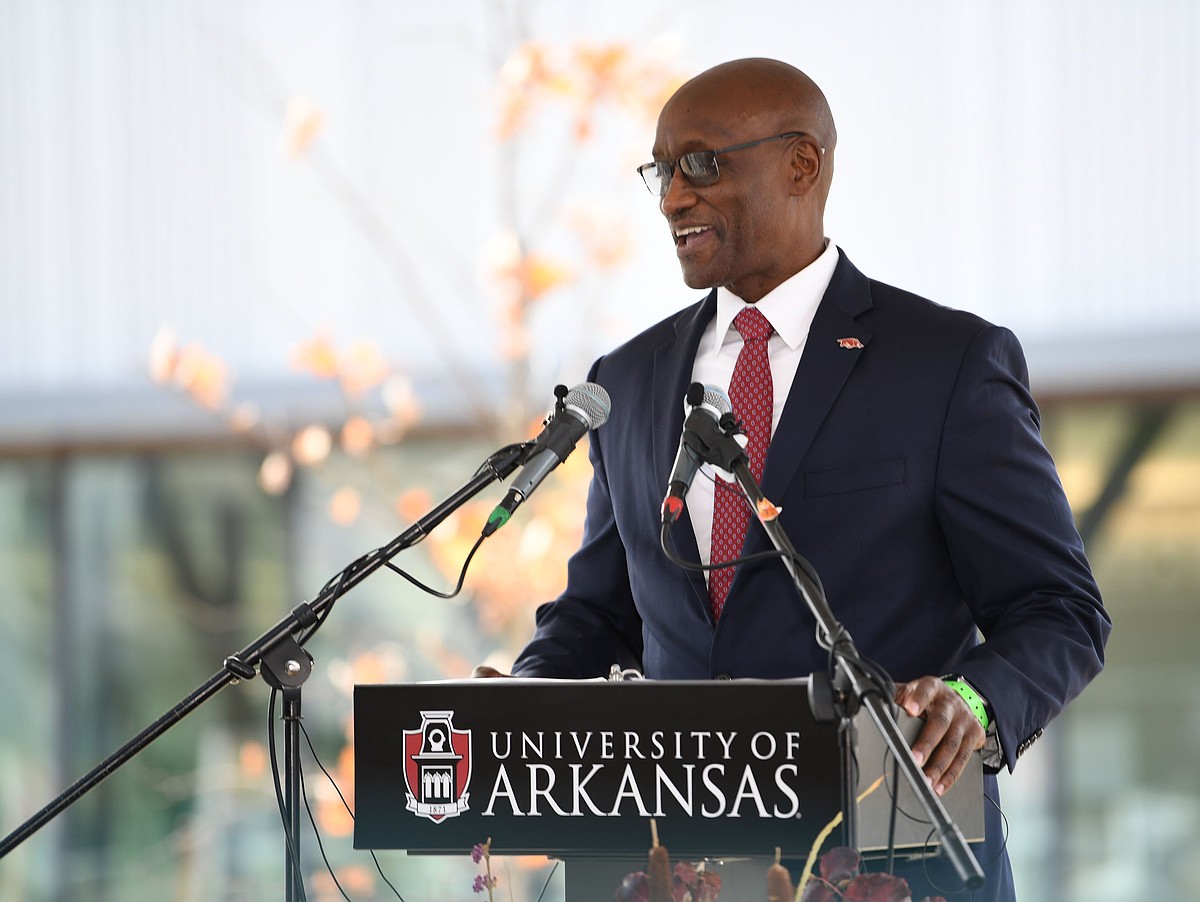
FAYETTEVILLE — In a resolution passed last month that seeks to add roughly $15 million in additional funding to the athletics department, the University of Arkansas Board of Trustees tasked chancellor Charles Robinson with devising a plan for the school to send $6 million per year in direct institutional support to athletics. He must present a plan to do so on March 1, according to the resolution.
In addition, the resolution requires the university to give up the annual transfer from the athletics department to campus, an average of $4.4 million per year. It also directs the athletics department to “create an additional $5 million annually through either operational efficiencies or new revenue” to be invested into a football-specific “All-In Fund.”
The resolution passed 7-3, with dissenting votes primarily based on objections to the procedure. Board members did not receive copies of the resolution until 8 a.m. the day of the meeting, which is not standard, and both Robinson and athletics director Hunter Yurachek said they had not seen it.
During discussion of the resolution, Robinson said it could force the addition of a student fee or a tuition increase.
“I just don’t know where I would get the $6 million from,” Robinson said. “There’s just no magic budget bucket out there, so I’d have to figure that out.”
“If it passes, you better get busy,” trustee Kevin Crass, one of the dissenting votes, told Robinson, “because they want a report by March 1 on your plan to implement it.”
Other trustees, including Scott Ford and Ted Dickey, the latter of whom presented the resolution, said explorations of where the money would come from had begun months earlier. Emails obtained via a Freedom of Information Act request show the work of determining how the university might fund direct support of athletics began as early as November — and how Arkansas might find the money.
On Nov. 20, UA system president Jay Silveria emailed Robinson and athletics director Hunter Yurachek requesting they provide “options to add roughly $15M to the football program.” He noted that could mean $5 million from the athletics department and $10 million from the university.
In his response, Robinson expressed that such a request “triggers the need to create a student athletics fee … and/or to authorize retrenchment from other programs,” and that he was “staunchly opposed” to both.
On Nov. 25, vice chancellor for finance and administration Ann Bordelon sent Robinson an outline of four ways the university could transfer $10 million per year to athletics.
Two of the proposed methods involved cancelling the annual transfer of funds from athletics to campus. The resolution passed in January did just that, making those the most relevant possible plans.
Under one option, Arkansas would add fees to offset the deficit created by giving $6 million per year to athletics.
First, the university could raise the existing facilities fee by about $2.50 per credit hour to cover the debt service portion of the now-defunct annual transfer, about $2.1 million. That fee amount, Bordelon noted, is incremental to a $2 increase already planned.
To make up for the remainder of the annual transfer amount of about $2.3 million, which Bordelon noted had historically been used to fund research, Arkansas could either increase tuition or add a new fee. In either case, it would be an added $2.80 per credit hour. Full-time students are enrolled in at least 12 credit hours per semester.
Those two measures combine to make up for the $4.4 million the university will no longer receive from athletics. Campus would still need to provide the roughly $6 million the resolution requires it to now transfer to athletics. Bordelon suggested a student athletics fee of $6.40 per credit hour would be needed, equaling about $77 per semester for a student enrolled in 12 credit hours.
In total, tuition and fees would increase by about 3.4%.
MORE FROM WHOLEHOGSPORTS | Arkansas football notebook: Ryan Silverfield talks roster-building, finances, coaching staff
Another option Bordelon laid out involved a reduction in the university’s budget.
There would still be a facilities fee increase of about $2.50 per credit hour to cover the debt service previously funded by the athletics transfer to campus, but the university would not increase tuition or implement a fee to cover the remaining $2.3 million. Instead, it would take a $2.3 million budget cut.
There would still be a new student athletics fee of about $6.40 per credit hour to fund the new transfer to athletics. Overall, tuition and fees would increase by about 1.5%. Students would bear less of the burden, but the campus budget would decrease.
Bordelon indicated the university could reduce its education and general budget, which she wrote would be “challenging given needed budget priorities in GA stipends, IT infrastructure, deferred maintenance, classroom building, research support, etc.”
The plan Robinson presents to the board by the March 1 deadline could differ from the options Bordelon laid out for him in November, but a student athletics fee appears likely.
According to data from the Knight-Newhouse Commission college athletics database, four public SEC schools reported revenues from a student fee for athletics in fiscal year 2024, the most recent year for which data is available: Auburn, Georgia, Florida and Tennessee. South Carolina announced the addition of a student athletics fee in June 2025. Eight SEC schools reported revenue from institutional or government support.
Each school levies fees differently. Tennessee, for example, has a “student programs and services fee” of $519 per semester for full-time students, which also provides access to student health and counseling centers in addition to access to athletics tickets. Georgia, meanwhile, lists a simple “athletic fee” of $63 per semester, or about $5.25 per credit hour for students enrolled in 12 credit hours.
Arkansas State, Little Rock, Arkansas-Pine Bluff and Central Arkansas all reported revenue generated from student fees in FY24, according to the Knight-Newhouse database. Student athletic fees have long been a way for schools outside power conferences to fund their athletics departments, as they generate less revenue in big categories such as conference distributions and media rights.
Many power conference schools have begun to add, change or increase similar fees to generate additional revenue, and Arkansas could be joining them.