Editor’s Note: This is an excerpt from WBUR’s weekly health newsletter, CommonHealth. If you like what you read and want it in your inbox, sign up here.
Last month, the federal Food and Drug Administration approved a drug that upends treatment for patients suffering from pancreatic cancer, and it could extend lives for people like Darren Spicer.
“He was my Prince Charming,” said his wife, Lorrie Spicer.
But just two years after their wedding in 2019, he fell inexplicably ill. It started with a pain in his abdomen, and what they thought would be a routine visit to his doctor’s office in Michigan. Instead, they found themselves making repeat trips to the local hospital.
By that time, COVID-19 was at its height, so Lorrie waited outside in their Jeep while her husband saw the doctors. On one such visit, he returned to the car and said he’d been diagnosed with Stage 4 pancreatic cancer — and it had already spread to his liver.
After two days of researching his options, Darren told his wife he didn’t want to seek treatment.
“I don’t want you to be mad at me,” she remembered him saying during an interview this summer with WBUR’s On Point. “But I’ve decided not to do chemo because I’m already Stage 4. It’s spreading, and why go through all of this grief and, you know, hurt and pain just to maybe have a couple more months?”
Her response was immediate: “Darren Daniel, why in the world would you think I would be mad at you? I seem to remember three years ago saying to you, ‘In sickness and in health.’ We are joined at the hip, and I am here for you always.”
He died in her arms three months later, at the age of 52
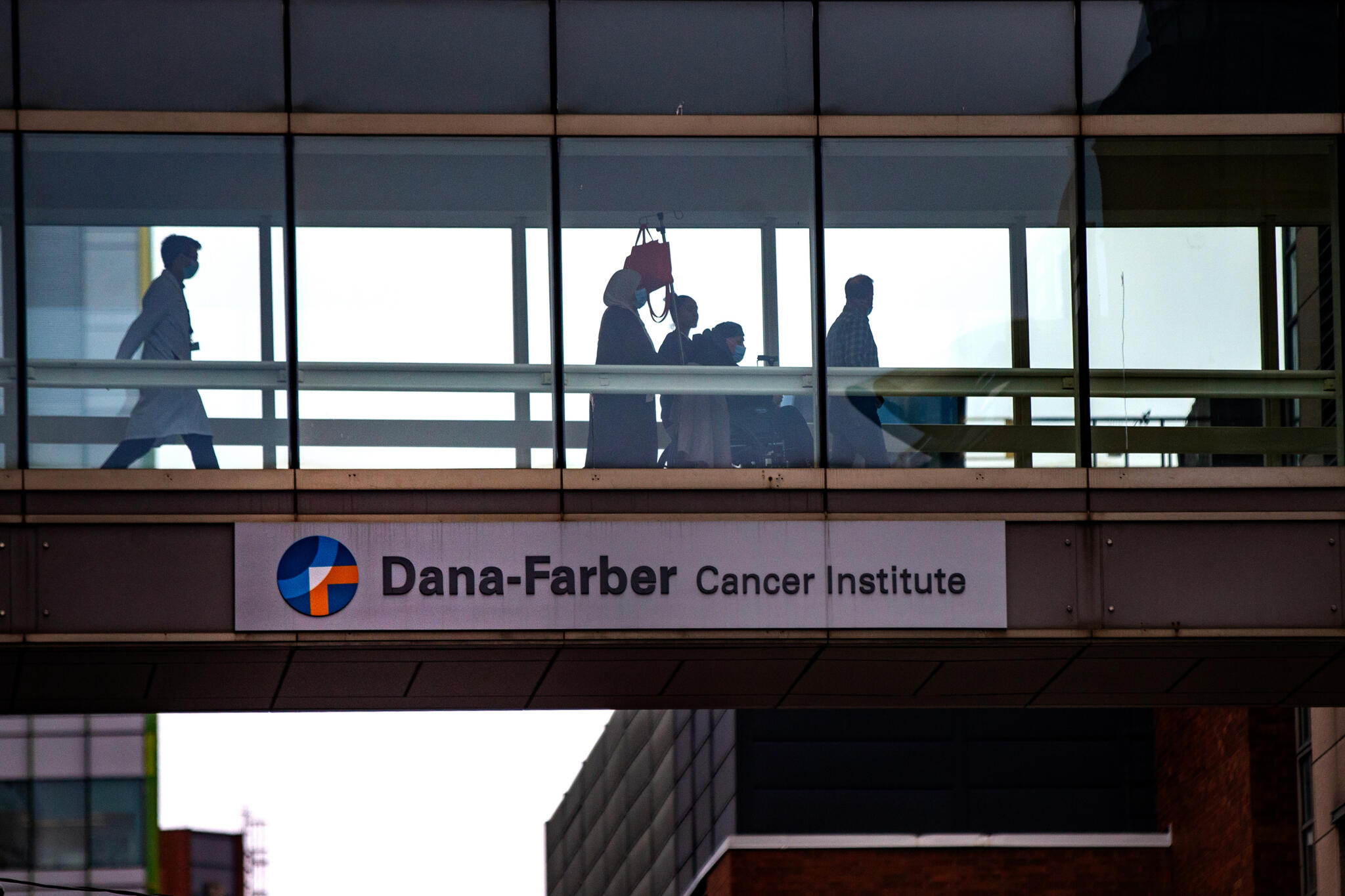
It’s possible that if Darren had received that diagnosis today, he’d have more time with his family, thanks to a new advance in pancreatic cancer treatment tested by Dr. Brian Wolpin and his team at Dana-Farber Cancer Institute in Boston.
Wolpin directs the Hale Family Center for Pancreatic Cancer Research, and his lab’s work led to the development of the new drug, daraxonrasib. It works by blocking the specific gene mutations thought to drive abnormal cell growth in pancreatic cancer. The treatment has shown so much promise that the FDA approved it more than six months ahead of schedule.
In a clinical trial led by Wolpin, patients who had stopped responding to other treatments lived nearly twice as long when given the new drug, combined with a second drug that boosts the immune system, as compared to patients who received chemotherapy. Their median survival rate, about 13 months, may seem modest, but after decades of research it represents significant hope for people with pancreatic cancer.
When Wolpin presented the findings at the American Society of Clinical Oncology’s annual meeting in Chicago in June, the audience erupted in applause. It was like the response to the New York Knicks winning Game 5 to secure this year’s NBA title — the sound of true appreciation for a medical breakthrough.
“We’ve all been working so hard for so long to get to this point,” said Wolpin.
Pancreatic cancer has an almost 90% fatality rate for people within five years of diagnosis. For people diagnosed with Stage 4, that fatality rate rises to 97% but is usually measured in months not years.
It’s a disease that’s been particularly vexing for researchers and physicians. Pancreatic cancer is often diagnosed late, because the organ is deep inside the abdomen, and symptoms may not be obvious early — as was the case with Darren Spicer. Diagnostic tools are also limited. There’s no blood test or mammogram-like screening tool. (Researchers are working on this, too.)
“If you could sort of step back and think, well, what are the things that would make a cancer very lethal? Pancreatic cancer really checks all the boxes,” Wolpin said.
Pancreatic cancer is also particularly aggressive. It grows and spreads quickly. And it prevents the immune system from fighting back. According to Wolpin, it has a higher rate of recurrence after surgery than other cancers, and chemotherapy doesn’t have a great track record against it.
Wolpin’s research, alongside other efforts to find new treatments, has the potential to greatly improve — and lengthen — the lives of people with pancreatic cancer. The hope is to flip the diagnosis from an imminent death sentence to a treatable condition.
In Wolpin’s trial, patients did develop some resistance to the new drug over time, but many tolerated it longer than chemotherapy and with fewer side effects.
“There were substantial improvements in people’s quality of life, which is sort of a global measure of all of these things, but also in pain,” Wolpin said, “just from treating the cancer alone.”
Researchers are now trying the pill in combination with other treatments to see if they can extend its effects, or maybe even find a cure.
Any advance is an achievement Lorrie Spicer, who lost her husband to pancreatic cancer, can appreciate.
“You know, if there is a better treatment for people, I’m all for it,” she said. “My husband was only 52 when he died. 52. That’s just too young.”