Since our ocean coastline isn’t much longer than a half-marathon, New Hampshire shouldn’t have much of a history with it, including the process of getting food out of the sea.
But we do, and what’s more surprising is that a lot of it involves aquaculture — that is, raising seafood in the ocean like a rancher rather than seeking it out like a hunter.
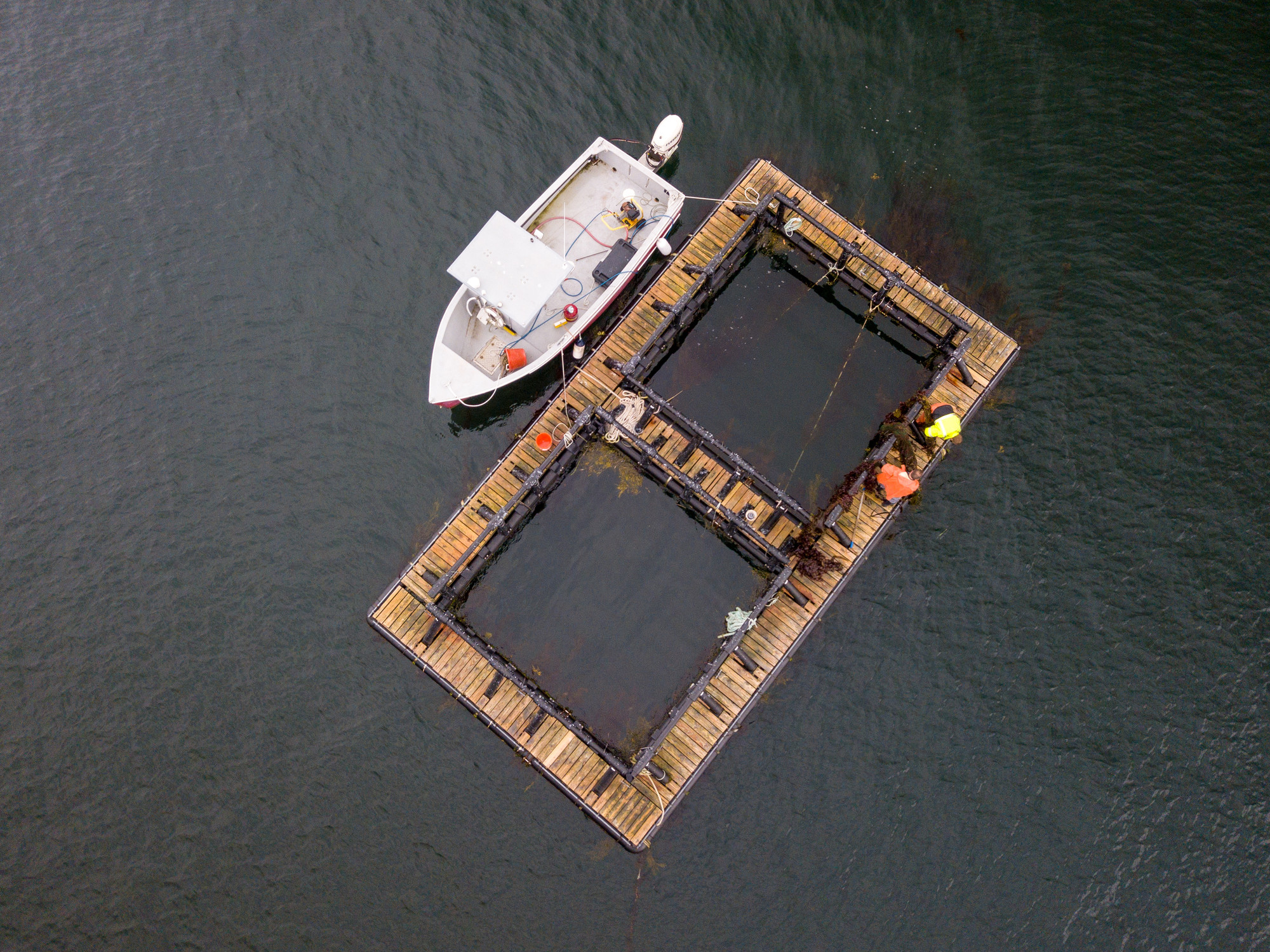
Much of this is driven by the University of New Hampshire, which has been at it for a while. More than two decades ago I visited the university’s open-ocean aquaculture program, composed of big floating cages holding thousands of fish many miles offshore. These days, the school produces thousands of pounds of steelhead trout, the saltwater version of rainbow trout, in pens with the cool name of AquaFort in Portsmouth harbor, alongside mussels and kelp to balance the nitrogen output of the fish.
Now, the school has been chosen by the National Oceanic and Atmospheric Administration (NOAA) to lead a new national effort to strengthen America’s seafood supply through aquaculture research known as the Cooperative Institute Fostering Aquaculture Research and Markets, or CIFARM. The acronym is pronounced “sea farm,” which I’m sure NOAA is very proud of.
It’s possible that our minuscule coastline indirectly helped win that award since it has forced local ocean research to think beyond our own waters.
“I think that’s why we were so competitive,” said David Fredriksson, a professor of ocean engineering who directs the longstanding UNH Center for Sustainable Seafood Systems and will direct CIFARM. “A lot of other researchers were looking to get money for their states, to build programs in their universities. We looked outward.”
The goal is straightforward, says Fredriksson: Get the United States to produce more of the seafood we eat, and do it without damaging the ecosystem that provides it.
“We import almost all of our salmon and shrimp, the most common seafood, from overseas. We want homegrown products,” he said.
At a time when feeding the world is getting harder as climate change damages crops and causes other problems — that screwworm infestation is going to raise meat prices, big time — getting more seafood becomes more important.
The program, which starts out with $13 million in federal funding, will involve institutions around the country, mostly research universities with major seafood programs, to target species that are important in each region. Think steelhead trout and striped bass here, pompanou in the Caribbean, red shrimp in the Gulf of Mexico, yellowtail and black cod on the West Coast and other species out in the Pacific.
“These products are known but they’re not widely available. We’re looking to develop the capabilities to responsibly grow these species in these different regions, because they’re culturally important for the people and the place,” Fredriksson said.
They’ll start with workshops to ensure local buy-in and hope to be putting fish in the water before long. And not just on our charming if diminutive coastline.
“The ultimate goal is to maximize seafood production, not looking inward toward our individual states,” he said. “In order for us to really compete with these imports, we need to leverage all the assets around the country … If we do that collectively in a collaborative, non-competitive way, that’s the way we can make substantial progress.”