by Mike Koshmrl, WyoFile
Wyoming’s contracted pilot, who’s a wildlife-spotting specialist, was flying over the Teton Wilderness on a routine grizzly bear surveillance flight when he checked the signal for Grizzly 1126F.
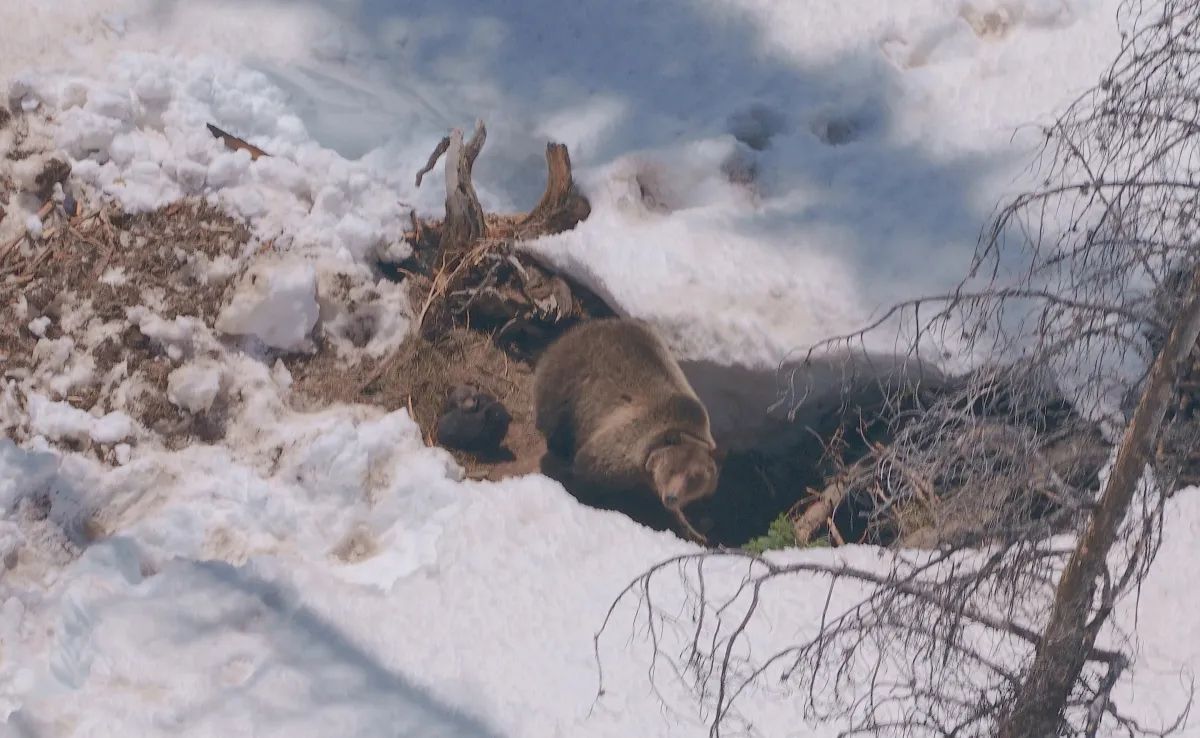
The pilot tracked her signal on March 27, leading him to a surprise: Two cubs of the year were in a pile by mom’s butt.
“They just happened to be kind of hanging out the den hole,” Wyoming Game and Fish Department Large Carnivore Supervisor Dan Thompson said.
The cub sighting was of special significance because 1126F is one of the two young grizzlies that Montana trucked into Wyoming in 2024 as part of a plan to address a judge’s concerns about genetic diversity. The youngsters at her side were the first piece of solid evidence that the interagency plan was achieving its objective of infusing new grizzly bloodlines into the geographically and genetically isolated Greater Yellowstone Ecosystem.
There’s no saying how long it had been since a grizzly bear from Montana’s Northern Continental Divide Ecosystem had bred with a Yellowstone-region bear. But it’s been “at least 50 years,” Thompson said, and “maybe much more than that.”
Grizzly 1126F was captured near Montana’s Middle Fork Flathead River and deposited southwest of Togwotee Pass in the Blackrock Creek area. Around the same time, Grizzly 1129M, a male, was turned loose on the shores of Yellowstone Lake.
Grizzly 1126F runs out from a culvert trap in Wyoming’s Blackrock Creek drainage on July 30, 2024. (Montana Fish, Wildlife and Parks)
Grizzly 1129M, then a subadult male, runs out of a trap along the shore of Yellowstone Lake on July 31, 2024. (National Park Service)
Because the two grizzlies were moved in 2024, wildlife managers know that 1126F was impregnated by a Yellowstone ecosystem bear.
It’s a lot tougher to verify that 1129M has spread his genes — ascertaining if that’s the case, it would take bloodwork and genetic tests of other bears.
“He’s still out there, and he’s part of the reproductive segment of the population, too,” Thompson said. “While we focus on her, he has the capacity to spread genes as much — or more.”
Grizzly 1126F’s legacy in terms of spreading northern Montana bear genes into the Greater Yellowstone Ecosystem population isn’t assured.
“This is her first litter,” Thompson said. “Cub survival is lower in the GYE based on the overall density of grizzly bears, so we can’t hang our hats on what’s going to happen with this family group.”
Nevertheless, the litter the pilot documented is “unique,” Thompson said, and a step toward placating U.S. District Judge Dana Christensen, who in 2018 ruled against the U.S. Fish and Wildlife Service and in favor of plaintiffs who sought to keep Yellowstone region grizzlies protected under the Endangered Species Act.
The federal judge out of Montana cited concerns about the population’s long-term genetic health. He faulted wildlife managers for not planning to intervene unless “the Greater Yellowstone grizzly’s genetic health is demonstrably weakened.”
Although the court dinged the states’ genetic health plans, wildlife managers say the population was never in dire straits. The Yellowstone ecosystem’s grizzlies were on good genetic footing, now-retired Interagency Grizzly Bear Study Team leader Frank van Manen told WyoFile in 2023. “With the current population size, that concern is decades away — and probably more than decades,” he said.
Grizzly bears occupy an estimated 59,000 square miles of habitat throughout all their recovery zones in the Lower 48. (Cecily Costello)
Although just 35 miles separates the edges of grizzly range in Montana’s Northern Continental Divide and the Greater Yellowstone Ecosystem, the two populations have never connected organically.
Grizzly bears once numbered an estimated 50,000 animals in the Lower 48, and were first listed as protected under the Endangered Species Act in 1975. The regional population has steadily grown to about 1,000 bears since it bottomed out during the 1980s, when there were as few as 136 of the bruins remaining.
The U.S. Fish and Wildlife Service proposed to retain grizzlies’ “threatened” status in the Yellowstone ecosystem and Lower 48 in the waning days of the Biden administration. Those plans are on hold, however, and won’t be finalized until December.
This article was originally published by WyoFile and is republished here with permission. WyoFile is an independent nonprofit news organization focused on Wyoming people, places and policy.