Sponsored Content
This article is brought to you by the Louisiana Commercial Fisheries Coalition LLC.
Along Louisiana’s working coastlines, a small silver fish powers a vast network of food, health, and agriculture. Known as menhaden, sometimes called pogies, this humble species forms the backbone of one of our state’s most valuable and least understood commercial fisheries. But the story doesn’t end at the water’s edge. Once caught and refined, menhaden support industries across the U.S. and around the world—from aquaculture and pet food to livestock feed and dietary supplements.
Each year, Louisiana’s menhaden industry generates more than $419 million in economic output and supports over 2,000 jobs across 32 parishes. Its reach extends far beyond the dock, anchoring a value chain critical to national food systems and Louisiana’s coastal communities.
Harvesting a Renewable Resource
Louisiana is home to the menhaden fishery—one of the most productive and sustainably managed fisheries in the world. Less than 2% of the Gulf’s menhaden biomass is harvested each year under science-based management, innovative technology, and strict adherence to state and federal regulations. The Marine Stewardship Council (MSC) certifies the fishery for its responsible practices, and the Gulf States Marine Fisheries Commission confirms that populations are healthy and growing. Abundant, fast-growing, and naturally renewable, menhaden are an ideal sustainable resource.
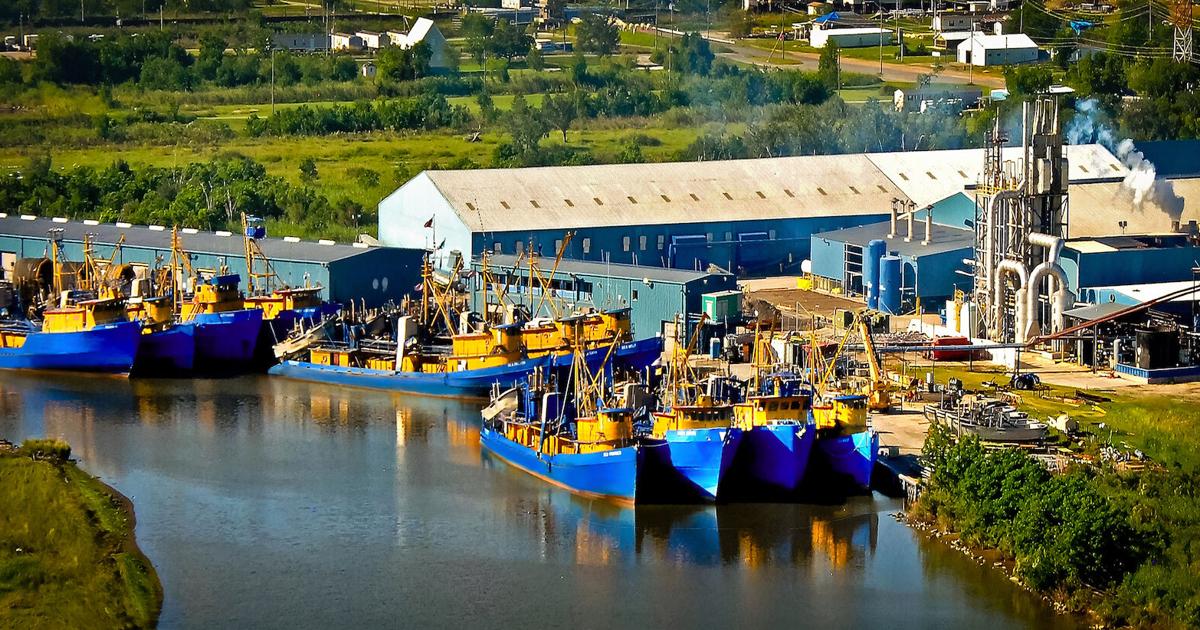
Two companies—Westbank Fishing and Ocean Harvesters—operate fleets out of Empire, LA and Abbeville, LA. Their vessels use advanced netting technology to minimize bycatch and ensure safe, efficient harvests. Once landed, the fish go to local processing plants to become two primary products: fishmeal and fish oil.
Processing for U.S. and Global Markets
During the production process, menhaden are cooked, pressed, dried, and ground into high-protein meal, while the extracted oils are filtered and refined. Nothing is wasted. The process is designed for maximum efficiency and minimal environmental impact, aligning with circular economy principles that prioritize full resource utilization.
These products are rich in omega-3s, protein, and essential nutrients, making them ideal ingredients for aquaculture feed, pet food, and nutritional supplements. Most product stays in the U.S. to support domestic industries, with the balance exported to meet global demand for high-quality, sustainable feed ingredients.
Fueling Aquaculture and Food Security
As global demand for seafood continues to rise, aquaculture now represents more than half of the world’s supply. Remarkably efficient, fish can gain one kilogram (about 2.2 pounds) of body mass with just one kilogram of feed—making aquaculture one of the most effective methods of protein production.
A major use of menhaden-derived fishmeal and oil is in aquaculture. These marine ingredients are essential to the diets of farm-raised species such as salmon and seabass, supporting optimal growth and overall health. Menhaden fishmeal and oil are also used in products like artificial crawfish bait and feed for catfish fingerlings raised on farms across the southern United States.
Hayne Rainey
Pet Nutrition and Agriculture
Menhaden plays a growing role in pet nutrition. Premium U.S. pet food brands rely on menhaden fishmeal and oil for its high levels of DHA and EPA—types of omega-3 fatty acids that are nutrients that support joint health, coat condition, and brain development in dogs and cats. In a competitive global market, Louisiana menhaden provides premium and sustainable ingredients to U.S. pet food manufacturers, thereby reducing the industry’s reliance on imports.
In agriculture, menhaden fishmeal and oil serve as a protein- and nutrient-rich feed supplement for U.S. livestock such as pigs, chickens and even horses. Louisiana Menhaden is a highly sustainable resource that plays a critical role in U.S. and global food security.
A Global Impact with Local Roots
While menhaden products reach customers in dozens of countries, the biggest impact is felt here at home. Their economic impact starts in Louisiana. In 2023 alone, Westbank Fishing and Daybrook Fisheries delivered more than $36.5 million in employee compensation—supporting hundreds of jobs in southern Plaquemines Parish, one of the state’s most economically vulnerable regions. In 2023, Omega Protein and its fishing partner Ocean Harvesters provided an additional $23 million in payroll and benefits in rural Vermilion Parish, located in the heart of Louisiana’s Cajun Country. Many employees come from multigenerational fishing families, and most are people of color—underscoring the industry’s role in providing inclusive, living-wage employment.
By keeping processing local, companies ensure that the economic value stays in Louisiana.
Connecting Louisiana to the World
Louisiana’s menhaden fishery is a model for how local, sustainable industries can support national food systems while fueling global supply chains. From feeding fish and pets and supporting exports, this century-old fishery continues to evolve—proving that when managed responsibly, a small fish can make a big impact.
As regulators and lawmakers consider future policy, it’s critical to recognize the broad benefits of this working fishery. It’s not just about what happens offshore, it’s about how Louisiana’s fishing heritage helps feed the country and the world.