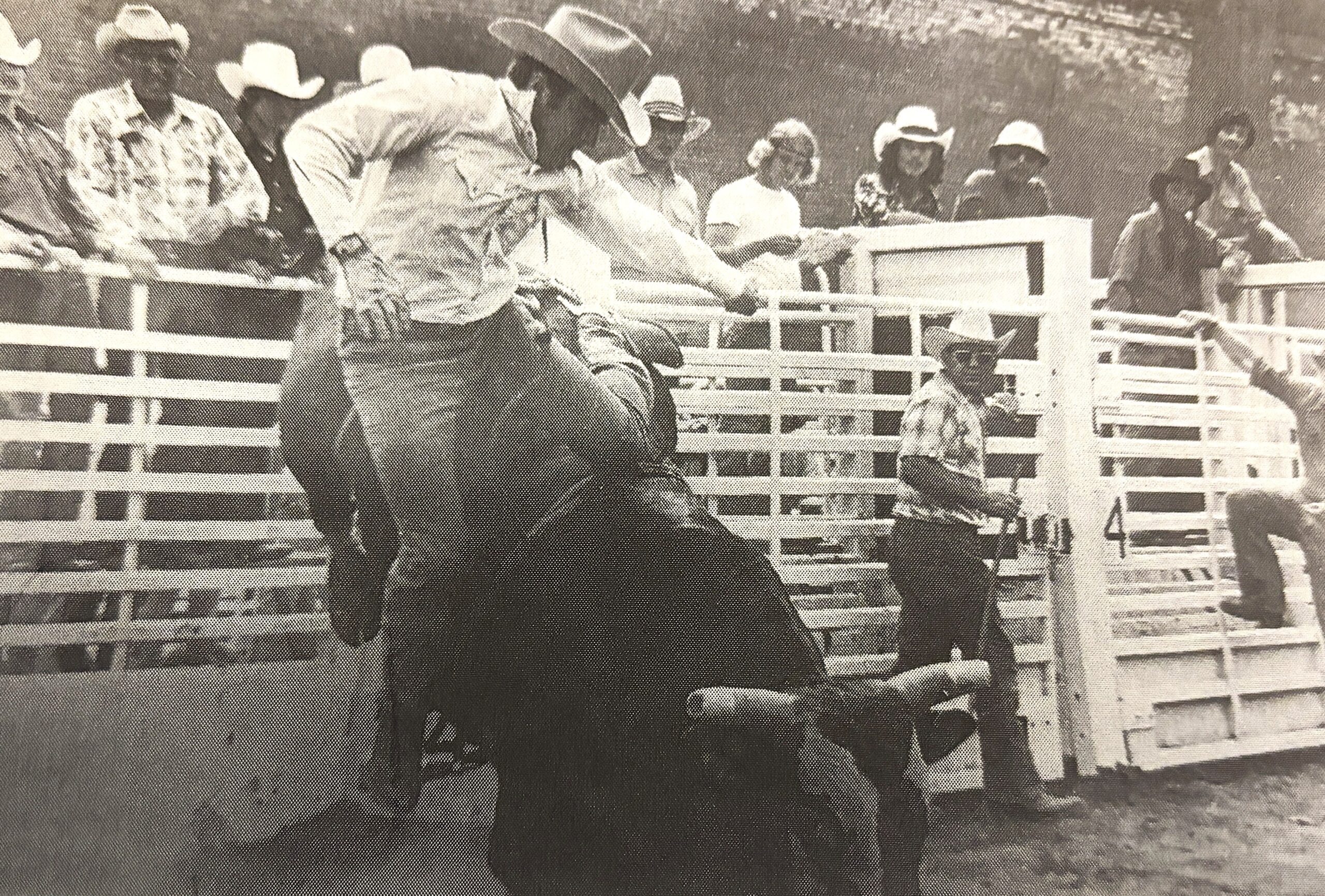
Over the years, North Dakota native Winston Satran has done many jobs. He’s worked his whole life and even helped reshape the modern North Dakota State Penitentiary as a prison warden, aiding in the introduction of programs focused on education and rehabilitation.
“I was a warden for seven years, then I went to Home on the Range and then I became the vice president of the Theodore Roosevelt Foundation,” Satran said. “I totally retired and I was appointed to be the director of the Horse Racing Commission.”
Satran was raised in Mohall after his father passed away. He was born in Tolley.
“We moved to Mohall and then I went to Minot State for a couple of years,” Satran said. “While I was there I was working at Dakota Boys Ranch. I needed to work. After my father passed away, he had a little store and we had next to no income. My mother and I took my brother and I into the living room and gave us a lecture about work. You need to work and help.”
Satran began working for the penitentiary in 1969 and described the facility as struggling and facing many challenges. He was also present for the 1973 breakout involving 10 inmates.
“The prison was just chaos for discipline, lots of assaults,” Satran said.
More than five decades later, Satran released the book, “Tough but Fair: Reformation of a Prison, Memoir of a Warden,” which looks back on his experiences. He worked at the prison for 14 years, ending his career as the warden, but started as a pre-release counselor. The book has been nominated for the 2027 North Dakota Great Reads from Great Places program.
He described his path into corrections as unexpected. After a consultant from the Federal Bureau of Prisons heard him speaking to employees, the consultant approached him with a job offer.
“He came up to me after my talk and said, ‘I would like to come over to your house for dinner.’ I didn’t know him,” Satran said. “I called my wife and she said, ‘Bring him over.’ When I got done eating, he said, ‘Let’s go into your living room. I want to talk.’ He told me, ‘Tomorrow, I want to go to the director of Institutions and advise him to hire you as the deputy warden.’ That’s how I got hired.”
Among the efforts that were introduced were programs for alcohol and drug offenders, sex offenders and other violent-related offenses, as well as anger management and educational courses to help inmates earn GED’s.
“I made a rule upon the advice of our educational director that if somebody didn’t have a high school education before they could get a prison job they’d have to go through GED classes,” Satran said.
Satran said the changes took time to effect inmates and the challenges staff were facing. If an inmate became violent toward other inmates or a staff member, they could have faced multiple days in disciplinary segregation.
“Not dramatically at first, it took a long time,” Satran said. “I always said that my seven years as a deputy warden were really difficult and it took a long time for the inmates to say, ‘I can spend my time better than sitting in a cell for 15 days.’ That was not only for protection of staff but for inmates. You can’t have attacks.”
During the changes he helped establish Roughrider Industries, a manufacturing and employment program that allowed inmates to work in furniture production, metal manufacturing and other operations. An incentive pay system gave inmates the opportunity to earn more money through their work.
“The inmates liked working in there because they made a lot more money than if they were washing dishes in the kitchen,” Satran said. “That actually had to go through the state legislature and get codified into law. That became part of the North Dakota Century Code.”
The programs were intended to give inmates the chance to earn money and prepare them for life beyond incarceration. Satran said one of his principles was to separate their past actions from their everyday behavior. His approach to corrections was balancing discipline with fairness.
“Don’t judge them by what they did,” Satran said. “Just judge them by what you see before you. That started trust being built between myself and inmates. They realized that I wasn’t judging them for the crime, but on everyday behavior. By doing that, I gained their confidence and they would reveal things and I would learn the kinds of things we were going to address and make sure that they didn’t get out and assault somebody else or sell drugs. Almost everyone wanted to tell their story.”
Through working for many years, Satran said maintaining fitness and relying on family and faith helped him manage the demands of the job. He also became a part of the United States Deputy Wardens Association.
“I visited lots of prisons around the United States,” Satran said. “We would have deputy warden and warden conferences. I’d go to it all and attended every session I could. I learned a tremendous amount.”
The penitentiary also expanded holiday visitation for families to spend additional time together. He said those moments reinforced the importance of family connection and motivated many inmates.
He recalled many memorable moments over his career, including three movies that were made at the prison. The one story he continues to come back to though is the organizing of a prison rodeo held over two days, with inmates and even Satran participating in the events.
“We started with absolutely nothing,” Satran said. “We would have 7,000 people inside the prison, which was unheard of and had absolutely no disciplinary problems then or after. It just absorbed all the energy in the prison and things settled down and we would have weeks and months of good behavior. Nobody wanted to miss it.”
Reflecting on his career through his book, Satran said there are some decisions he wished were handled differently, particularly the use of disciplinary segregation. He explained that better practices are used now.
“If two guys get into a fight now they take them into a restraining area and they’d have a table that they’d sit down at and a councilor comes in and within a matter of hours, the dispute is worked out,” Satran said. “I look back and it really bothered me, having people spend 15 days in disciplinary segregation.”
Despite the challenges, Satran said he is proud of the growth he witnessed and the programs that continued long after he left. He said the experiences taught him the importance of endurance, preparation, patience, faith and recognizing the individual circumstances of other people.
“We’re all made differently,” Satran said. “I worked with men that could face dangerous situations calmly and others that had a difficult time doing that. I recognize that we’re all different and the people that didn’t like those physical situations, doing something else that was productive helped. We all have a role in life, and there were a lot of good people throughout the whole system.”