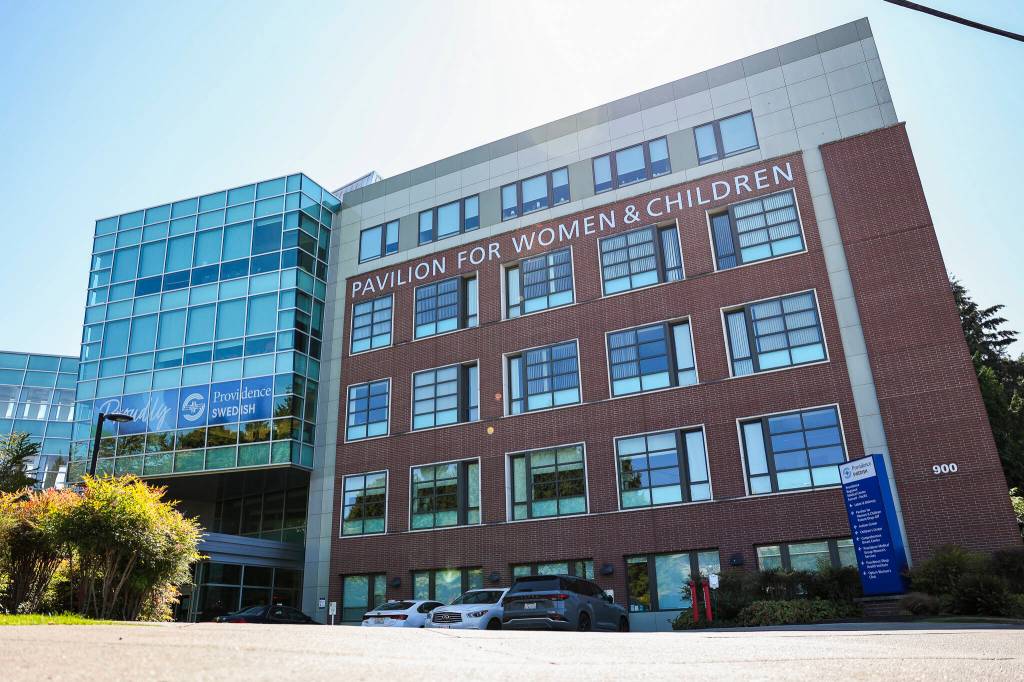
EVERETT — The former manager of the Providence Boyden Family Autism Center resigned earlier this month because of the decision-making process that went into closing the center’s bridging program, she told The Daily Herald.
Jill McDaniel had served as manager of the autism center since 2019. On Aug. 13, Providence announced it will end the center’s bridging program, which provides up to one year of applied behavioral analysis, or ABA, therapy for children with autism who are waiting for long-term care. The program is the only autism bridging program in the state and will officially end Oct. 30.
In an Aug. 11 interview with The Herald, McDaniel said the decision felt rushed and Providence misrepresented the number of children the program serves.
“I just couldn’t sit by and have the clinic or those families or that staff treated with such indifference, and I couldn’t pretend I was in support of what they were doing,” McDaniel said of her resignation. “I couldn’t pretend that I was going to be OK with watching them tear it apart when I know that such a need exists in the community.”
In a statement Friday, Providence spokesperson Ed Boyle said Providence made the decision to end the program to “preserve access to essential autism services in an increasingly challenging healthcare environment.”
The autism center has three service areas: diagnostic services, a 12-week ABA therapy program and the bridging program. Earlier this month, Kristy Carrington, CEO of Providence Swedish North Puget Sound, told The Herald that the bridging program makes up 70% of the autism center’s operating costs, and ending the program will allow the center to continue its other services.
McDaniel said Providence only gave her approximately 36 hours to collect the financial data that led to the 70% figure. She said the software the center uses made it difficult to parse out financial data by program, and the center was in the process of updating its software to make that process easier. Providence leadership gave her a chance to go back and review the data, but they declined to wait until May for the update, McDaniel said.
“If it really is losing as much money as you claim it is, then I will stand behind it because I’ll see that maybe it isn’t sustainable,” McDaniel said. “I just can’t in good conscience feel good about a decision made on this data.”
Boyle said that while it took additional analysis to look at the three services individually, the team looked at the data carefully.
“The data was re-checked, validated, and reviewed several times with our finance team to make sure what we were looking at was the most accurate reflection of how the Autism Center actually operates,” Boyle said.
Providence said in a press release that while the bridging program has a capacity of 20 children per year, only 12 are currently enrolled. Providence compared this to the 390 children per year served by the center’s other programs.
McDaniel said the program isn’t at full capacity because leadership asked them to pause new intakes at least three months before the closure was announced. She estimated the program has served at least 120 children and provided about 70,000 hours of therapy since it started in 2021.
“The 12 is not because we didn’t have kids on the waitlist or because we didn’t have spots,” McDaniel said. “It’s because they purposely stopped the bridging program from functioning ahead of this announcement.”
Boyle confirmed that Providence paused enrollment in early 2026 “until a decision on its long-term viability could be made.”
“We wanted to limit the potential number of families impacted should the discernment process lead us to close the program,” he said.
A staff member, who spoke under the condition of anonymity due to fear of retaliation, said they noticed months ago that the program wasn’t taking in new patients. Providence officially informed staff and families of the closure on Aug. 12, and the staff member said they weren’t surprised. The employee is one of nine that will lose their jobs as a result of the closure.
McDaniel said that over time, staff began to ask her if the center was closing, and she wasn’t allowed to tell them.
“All the staff are looking at this, going ‘Wait a minute, we’re doing none of the things that we’re usually doing. What’s happening?’” McDaniel said. “I wasn’t allowed to say a word to anybody about anything.”
Boyle said Providence waited to tell caregivers and families to avoid having them “hear the news through informal channels.”
McDaniel and the staff member both said the autism center still has money available from Providence General Foundation donations. A 2021 expansion of the center was advertised as a $1.2 million project entirely funded by the Providence General Foundation. According to a 2021 tax filing, the foundation only paid about $651,000 for the expansion. That donation funded the 2021 expansion, but further expansion was planned then stalled due to space constraints, Boyle said.
On Friday, Boyle confirmed that the foundation currently has $2.1 million in funds to support the autism center. Through the discernment process, leadership determined that the funding would have only been able to sustain the bridging program for up to two years, Boyle added.
“It would have been a short-term solution, but it might have enabled us to find a longer-term solution,” McDaniel said.
McDaniel said that going into the expansion, staff had a business plan for the bridging program to eventually become profitable. However, the first phase of the expansion only included approximately 60% of the planned space for the program, and it couldn’t accept the number of children outlined in the plan, McDaniel said. The remaining space has been used as sleeping rooms for providers, she said.
Boyle said that expanding the program’s footprint would have required displacing other services. Providence’s financial analysis showed that the reimbursement model and cost structure did not support profitability.
“This is also reflected by the fact that similar bridging programs have not emerged in Washington state, despite the significant need,” Boyle said.
In addition, McDaniel said Providence leadership declined to try to renegotiate reimbursement rates for commercial insurance.
Boyle said that since most of the children in the program are covered by Medicaid, no negotiation option was available.
McDaniel also said Providence leadership told her they would not consider expanding the existing 12-week day treatment program in lieu of the bridging program, which she said was a large factor in her decision to resign.
“That meant that cutting the Bridging Program was not about improving efficiency or access to services; it also meant qualified and dedicated staff were going to be relieved of their positions, when there was a wait list to support continuation of their employment,” McDaniel said in an email Friday. “That’s when I felt it became crystal clear exactly what the priority was, and knowing that, I felt that I could no longer stay at Providence AND make the difference that I want to make in this field.”
Boyle said Friday that expanding the 12-week program “is not off the table.”
“However, doing so would require the same space needs as an expanded Bridging Program,” Boyle said. “Evaluating whether to expand (the Intensive Day Treatment Program) would also need to make sense for the community as well as for Providence.”
While Washington has many short-term and long-term ABA therapy options, Providence’s bridging program is the only one in the state that provides a “bridge” between the two. When kids graduate from Providence’s 12-week therapy program, they can be on a waitlist for long-term care for multiple years, McDaniel said. The bridging program’s waitlist was typically a few months, she added.
“We have many kids who come in not speaking, having no language, being unable to communicate, who leave having their own devices and being able to communicate in words or sentences what they want and need on their devices or they can do it with spoken language,” McDaniel said.
The program helped fill the gap in a critical window for children with autism, serving children between the ages of 2 to 5 years and 11 months. McDaniel said it’s important for children with autism to receive services as early as possible.
“We have a social obligation here, not just for the short term but the long term, to give these families and these kids the best chance they have at independence, and I think Providence just took the approach of ‘Hey, not our problem,’ and that’s really unfortunate because it has to be somebody’s problem,” McDaniel said.
Jenna Peterson: 425-339-3486; jenna.peterson@heraldnet.com; X: @jennarpetersonn.