Federal officials visited Manchester this week, aiming to generate excitement about long-running efforts to clean up and redevelop contaminated land.
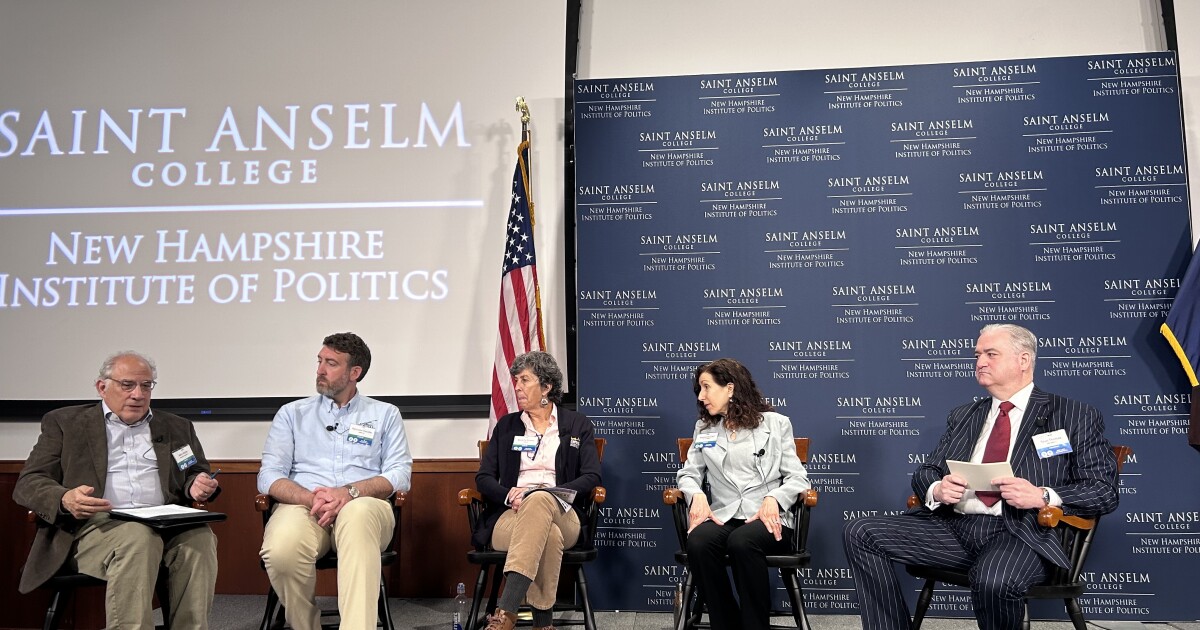
Regional leaders from the Environmental Protection Agency and the Department of Housing and Urban Development co-hosted the event at Saint Anselm College, which brought local housing experts and state officials together to discuss how those efforts could help address New England’s housing crisis.
The EPA’s Brownfields program has long provided funding for communities to develop land where hazardous substances might otherwise prevent it from being used. In New Hampshire, remediated sites have been turned into offices, affordable housing, and parking lots.
Mark Sanborn, who leads the EPA’s operations in New England, said those programs are particularly important in a region where much of the land is conserved or already in use.
“You need space to build housing,” he said. “We are passionate about the ability to execute these programs to create great environmental and public health impacts and outcomes, and then create the opportunity that can be used for another serious public policy challenge we have here.”
Jessica Dominguez, who manages brownfields in New England for the EPA, told the crowd that one of the biggest issues she sees is developers delaying the evaluation process for environmental issues.
“These legacy sites have been there. We know they’re there. But people don’t want to look at them until they want to build on them,” she said. “Everybody wants to build, but we need the correct information to protect public health.”
Some panelists shared suggestions to streamline the process to access funding through the brownfields program.
Michael Monte, the CEO of the Champlain Housing Trust, said it would be helpful to consolidate two public comment periods that are required to be done consecutively, instead of at the same time.
“Time is money. When you’re doing development, the only thing that matters is how quickly you can go,” he said. “We could move something faster when you do those things concurrently.”
Sanborn, the regional EPA administrator, said his agency is hoping to eliminate unnecessary delays in the brownfields program.
“We want to make good science-based decisions, but we want to get through that process so we can actually start doing the work and removing those public health risks from the community,” he said.
He said the EPA’s shuttering of the Office of Research and Development, which formerly conducted scientific research the agency relied on for its decisions, would not prevent the brownfields program from having access to scientific expertise.
“We have all the access we need to the scientists in the agency,” he said. “We’ll have great cleanups, and then it’ll create a space that has an ability to be reused for another important purpose for our community.”