EVERETT — The city of Everett plans to put $33 million that it will receive from its merger with Community Transit toward its proposed downtown stadium project, city officials said in an interview Thursday.
The figure is cited in Everett’s financial plan for the stadium, expected to be released Friday, which also shows that the projected cost of the project has risen by $24 million since the beginning of the year — to a total of $144 million. In an interview with The Daily Herald that was under embargo until noon Friday, city staff attributed the increase to rises in property acquisition and construction costs.
The planned announcement comes less than 24 hours after the merger became official, with Community Transit approving the consolidation agreement with Everett Transit on Thursday afternoon. The merger is set to go into effect April 1, 2027.
The city’s financial plan for the stadium, known as the Outdoor Event Center, calls for Everett to issue about $92 million worth of debt to help fund its construction, along with capital contributions from the city itself, the state, Snohomish County, the AquaSox and the United Soccer League, along with an unknown “business partner” that chipped in $5 million. The plan would still require City Council approval at a later meeting.
Per the consolidation agreement, Community Transit will pay Everett about $54 million for transit property and assets. Combined with its current transit reserves, the city has over $80 million in transit funds it plans to invest in two buckets: economic development and transportation and infrastructure.
For economic development, $30 million will go directly toward the stadium project, according to the proposed spending plan. Another $2 million in economic development funding is set to go toward a project in south Everett, though the city did not share details of what that project would be. About $3 million will go toward street improvements around the stadium, Everett Finance Director Chris Godwin said Thursday.
The planned announcement is the first time the city has publicly shared specifics as to how it plans to use the funding from the transit merger.
In 2019, Everett began exploring consolidation as Everett Transit was facing financial challenges. That work stalled in 2024 as both agencies worked on near-term transit improvements, a city document read. In April, officials at the city and Community Transit announced they were going to try to move forward with a merger again, after a 2025 state law allowed public transportation benefit areas to annex city transit agencies via an interlocal agreement rather than a public vote. The merger had divided public opinion.
When asked Thursday, city officials denied that the consolidation effort came forward or had its timeline accelerated as a way to get money for the stadium project.
“The conversation around the merger has always been around what’s best for the future of transit, especially in the connectivity to Sound Transit,” Godwin said. “And that’s one of the reasons I think the conversation about what to do with any potential cash hasn’t been a significant component of that conversation. The considerations around whether or not to use that funding for this project really only became something we had to explore as we got a better sense of what the project costs were going to be doing.”
On Thursday, Deputy Mayor Mike Fong said that the spending plan was “socialized at socialized at this high level with the council in regard to the spending buckets.”
“At this point, the spending plan investment strategies are as we’ve delineated: a substantial portion going towards transportation and infrastructure, and a substantial portion going to economic development,” Fong said.
In an interview Friday afternoon, city council Vice President Paula Rhyne said that the council was not aware of the exact details of any spending plan before the vote on consolidation, but said that the vote on the merger was a separate matter than the spending plan that would come after.
“It’s two separate policy matters,” Rhyne said. “There’s the vote for consolidation, and that’s completely separate than making any decisions about a spending plan. So it was clear that we would do the vote first, and then we would be privy to the spending plan from the mayor.”
Rhyne said the one-time influx of cash was “exceptional timing that the city has an opportunity to invest in a multi-generational project with the stadium, and the money coming from a one-time payment from CT for a capital investment for the city, it makes sense to me.”
She added that she hoped to invest other one-time funds into quality of life projects, including possibly expanding library hours or opening a day shelter in Everett.
Steve Oss, the head of the Amalgamated Transit Union 883, the union that represents Everett Transit drivers and mechanics, said in a phone interview Friday that he was “not surprised” about the fact that funding from the merger would go toward the stadium project, and that the city got rid of a valuable service for “some ready cash,” he said.
“The disturbing thing is, they knew the money was going to go to the stadium, and they didn’t let the citizens know about it,” Oss said.
Because the project went through a progressive design-build process, in which architects and contractors work alongside each other in the design process, the $144 million price tag represents a “guaranteed maximum price.”
Up to this point, major funding sources for the project included about $7 million from the state, $10 million from the county, $10 million from the Everett AquaSox and $7 million from the United Soccer League, staff said Thursday. Those remain in place.
An additional $5 million is coming from an unnamed “key business partner.” City staff declined to name the business Thursday, citing a nondisclosure agreement, but said the revenue is tied to some naming rights for the stadium.
“No matter what I say about this organization, you would know who it is, and that would violate our NDA at this point,” said Scott Pattison, a city project manager.
Godwin said the business partner will eventually be disclosed when the funding comes forward for City Council action.
If approved, the city will now add the $33 million from the transit merger, as well as up to $2.9 million in annual revenue from a business and occupation tax overhaul the City Council approved in October, which increased taxes on certain businesses while lowering taxes for others.
Using the revenue from the transit will allow the city to pay more up front, reducing interest costs, Godwin said.
“As we became aware that there was going to be this availability of one-time funding, it’s one of those situations where you really have to start considering it in order to see how to generate the best return on this investment for the taxpayers,” he said.
To pay for the rest of the project, the city plans to open a $92 million line of credit with a bank and use it in the short term to help pay for the construction of the project, Godwin said. That line of credit will be open for three years, but the city will only need to make interest payments on the money it draws out from the bank, along with a small fee on the rest of the money that isn’t in use.
The city plans to cover those interest payments in the first three years — estimated at about $3.6 million in 2027, according to Godwin — through the use of its recently approved business and occupation tax changes, along with “other revenues,” Godwin said.
After construction, the city plans to convert that debt into long-term general obligation debt, with an estimated 6.3% interest rate, Godwin said. For 30 years, Everett would pay an average of about $6.2 million per year to service its debt for the project, Godwin said. The city anticipates getting about $4.1 million per year in direct revenues from the stadium itself, including through the lease agreements, admissions and facility fees, and naming rights. Approximately $2.9 million per year will also be used from the B&O tax changes.
If the stadium revenues or business and occupation taxes aren’t enough to cover the costs of the debt, Godwin said that there are “other revenues the city is going to be generating as a result of the stadium that we’ve not factored in,” including, he said, an increase in B&O tax revenues from activity around the stadium and an increase in sales tax activity.
Staff said that there are still “some pieces being worked out” on the lease agreements between Everett, the AquaSox and the United Soccer League. But Godwin said Thursday that the leases would amount to just under $70 million over the next 30 years, plus a fee per ticket charged to the sports teams. The USL would be the primary tenant and the AquaSox would be a subtenant because the soccer league plans to host more events at the stadium.
“They’ll be on site most often, so it makes sense that they manage the facility,” Pattison said.
Everett first started studying a new stadium in 2022 after Major League Baseball announced new requirements for minor league stadiums, which Funko Field doesn’t meet. The AquaSox’s owner said in 2024 that the city could lose the team as a result. After exploring sites around the city, the city council decided on the downtown site in 2024.
If approved, the city plans to lease the stadium to the AquaSox and a men’s United Soccer League team with the possibility of a women’s team. Officials have previously said that the stadium would host both men’s and women’s soccer teams.
The city first estimated in June 2025 the project would cost $82 million. Earlier this year, the projected cost rose to $120 million, with staff also citing an increase in property acquisition and construction costs at that time.
To date, Everett has allocated $23.2 million for the stadium, including about $7.2 million in capital dollars and $16 million in loans from its general fund. That money has gone toward consultant fees, site studies, stadium design and initial property purchases.
The city would need the project go forward if it wants to pay back the loans it has taken out of its own general fund. If the project doesn’t receive council approval, the general fund could lose millions of dollars at a time when the city is in the midst of a structural deficit. City spokesperson Jason Kelly wrote in an email Friday that the land already acquired for the project could be sold to recoup some of the losses.
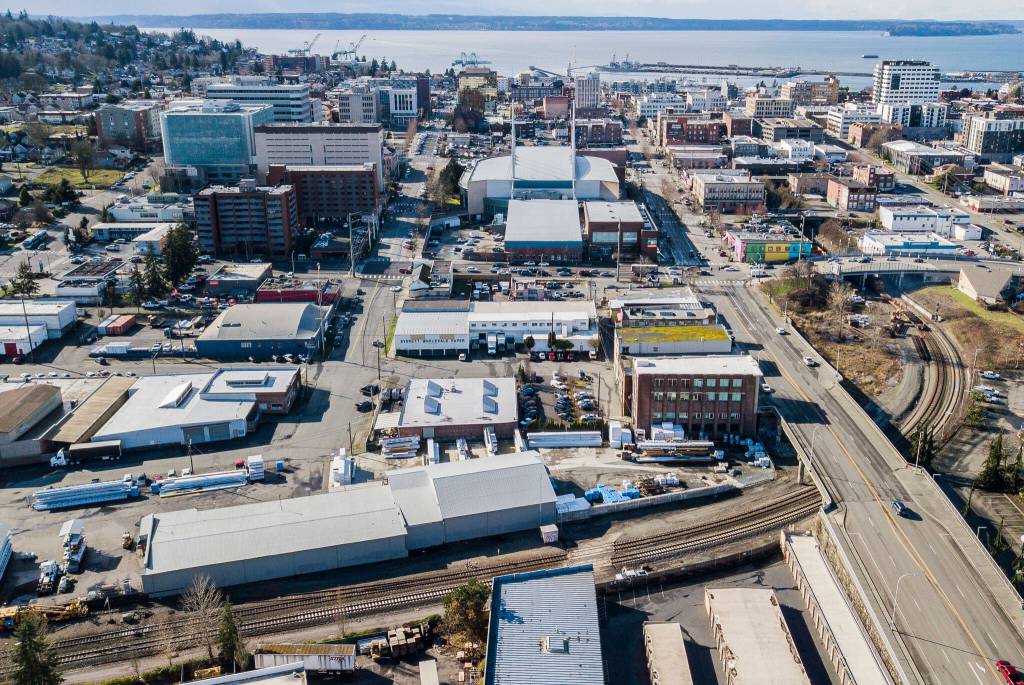
So far, Everett has spent about $18.1 million on six plots of land for the project, planned to be built between Pacific Avenue and Hewitt Avenue east of Broadway. The city would expect to close the sale of five additional properties shortly after the council approves the funding plan, Pattison said. The city is negotiating with the owners of two properties and has filed three condemnation lawsuits for owners of the other four parcels. Those lawsuits are still ongoing.
Originally, Everett had budgeted $35 million to acquire the 17 parcels on the project site. Now, that cost has gone up to about $40 million.
The proposed stadium would seat 5,000 people, per design plans, and include a walking path around its perimeter.
City staff will present the financial plan to the city council at its next meeting Tuesday, officials said in the interview Thursday. The council is scheduled to vote on the plan, including budget amendments, the lease agreements, the contract with the construction companies and extending consultant contracts, at a meeting on Dec. 2.
Will Geschke: 425-339-3443; william.geschke@heraldnet.com; X: @willgeschke.
Jenna Peterson: 425-339-3486; jenna.peterson@heraldnet.com; X: @jennarpetersonn.