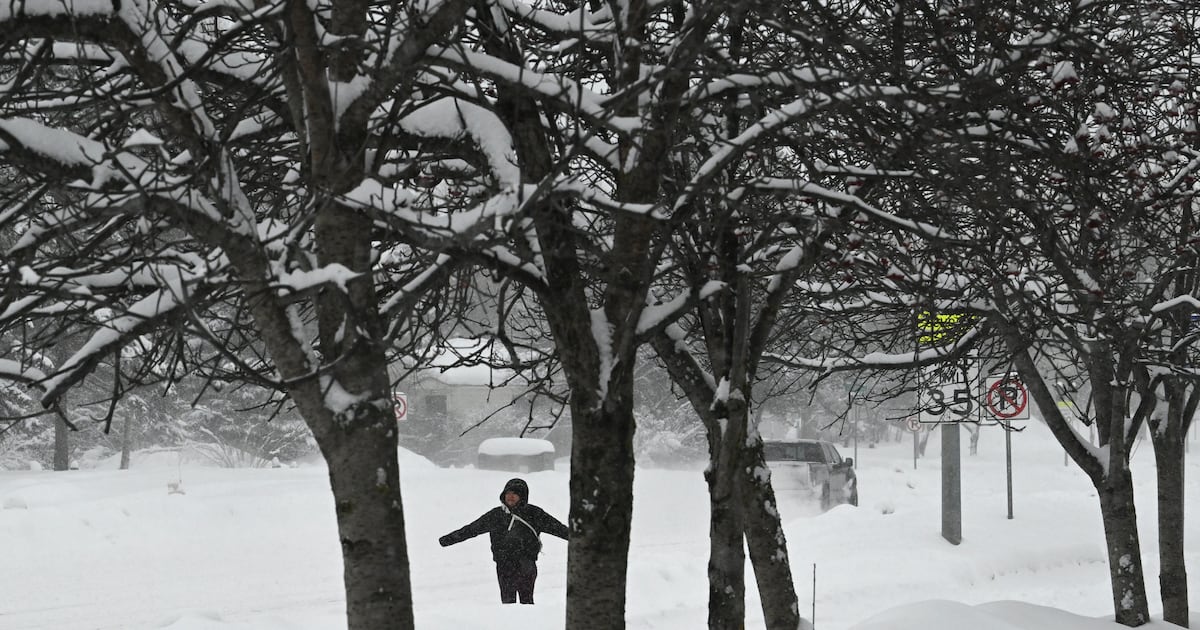
A pedestrian stands along A Street while walking in the snowstorm on Jan. 27. (Bill Roth / ADN)
During the winter, pedestrians and cyclists are likely to encounter a series of obstacles when traversing Anchorage’s sidewalks: toppled piles of heavy ice blocks, tall snow berms and uneven surfaces where it’s easy to lose footing. Even with moving traffic, sometimes the path of least resistance is the street.
“For folks who don’t have another option, they’re being put in a really difficult, dangerous situation,” said Alexa Dobson, executive director of the nonprofit Bike Anchorage.
With buried sidewalks, the argument comes down to the question of: Who is responsible for maintaining what? Many of Anchorage’s main roads are owned and maintained by the state, where funding cuts and equipment failures have created extra lag time this winter. City officials say recent changes to snowplowing operations have increased the speed with which the municipality has been able to clear its own sidewalks.
The inconsistency, which leaves some sidewalks under layers of ice and snow for weeks or longer, has long frustrated Anchorage residents. The problem is compounded during stacked storms or melt-freeze cycles, Dobson said.
“That can complicate the timeline,” Dobson said. “But considering that active transportation routes really are not treated as the top priority, we feel lucky that they get cleared at all.”
When Anchorage broke multiple snowfall records during the month of January as snow piled up around the city, West Anchorage resident Kerry Lynch wrote to local and state officials to say snow buried a pathway on Benson Boulevard for nine days.
Nearly a month later, Lynch, who frequently rides her bike, walks or rides the bus, emailed again. The south side of the street, where People Mover public transit buses run, still sat under snow, she said, noting she had seen “no significant change or improvement” in the last three winters in some of these areas.
“It’s wrong to clear four lanes for vehicles down to bare pavement while neglecting or burying the only sidewalk and making it dangerous or impossible for anyone to walk, bike or reach the bus stop,” she said in early March.
Central Region Director Sean Holland replied to Lynch in January, agreeing the Alaska Department of Transportation and Public Facilities “needs to improve snow removal on sidewalks and meet the goals that we’ve set.”
The state’s target is to clear sidewalks two to four days after a storm, a goal they’ve hit all winter until the last two weeks in February, said DOT spokeswoman Shannon McCarthy. While broken mini-blowers resulted in delays, crews caught up last week, she said.
Holland told Lynch that delays can be attributed to “vintage and aging” equipment and funding shortfalls. The state’s budget continues to be a challenge as the DOT Central Region’s operating budget was cut last year by $2 million, he said. DOT was investigating alternative funding to replace its sidewalk blowers, originally purchased with grants.
Because mini-blowers are particularly sensitive to breaking, McCarthy said DOT is increasing the number of mini-blowers and “diversifying” its fleet to help with winter sidewalk operations.
Snow is removed from a sidewalk in Anchorage on Jan. 10, 2024. (AP Photo/Mark Thiessen)
Even when snow is moved out of the way, it’s not uncommon for it to collapse back down into the sidewalk, said Justin Shelby, an administrative operations manager with DOT.
“Ultimately, it’s equipment and manpower issue … Those challenges add up really quick, especially with the amount of snow that we had to deal with last month,” Shelby said.
Major roads such as Northern Lights Boulevard, DeBarr Road and C Street are maintained by the DOT. Many Anchorage streets have “very little” snow storage, McCarthy said.
To keep sidewalks and roads free of snow, DOT must haul out snow on roads including Minnesota Drive and Fireweed Lane, as well as Northern Lights and Benson boulevards, she said. Snow hauling, which can take several weeks to complete, can interfere with the timing for when sidewalks are cleared, she said.
Municipal sidewalk plowing
In a Feb. 22 Facebook post, Mayor Suzanne LaFrance said municipal sidewalks have been cleared in “record time” this winter.
The municipality this winter has plowed its sidewalks in an average of roughly two days, although it is often less, city spokeswoman Nora Morse said. This task used to take more than four days, she said.
Last April, Anchorage voters passed a new heavy equipment bond expected to generate $3.5 million annually. With this revenue, the municipality added new snowplowing equipment to its fleet. It also made changes to how it compensates its winter maintenance crew, and this year is fully staffed, Morse said.
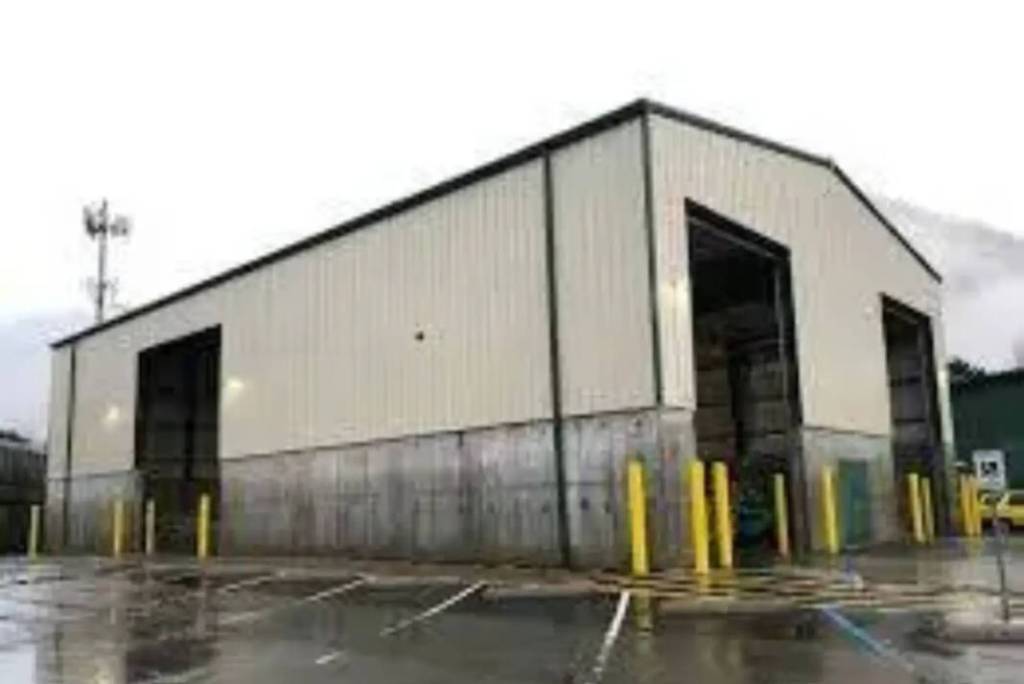
Road and sidewalk clearing equipment is held in an Anchorage Street Maintenance warm storage facility on Sept. 11, 2024. (Marc Lester / ADN)
Parks and Recreation staff are also coordinating with the street maintenance crew to speed up snow clearing near public parks.
DOT relies on “different crews, different equipment (and) different timetables,” Morse said. It’s common for residents to not know who is responsible for maintaining each road, she said.
The nonprofit Anchorage Downtown Partnership, responsible for 30 miles of sidewalks downtown, acts quickly to clear pedestrians routes and busy bus stops. Because it does not have a right of way it can use to store snow, staff coordinate with the municipality to haul it away, Executive Director Radhika Krishna said. It’s their goal to clear 4 to 6 inches of accumulation in one day if it’s not heavy and wet snow, she said.
Pedestrians on Sixth Avenue pass a flowery mural during a heavy snowfall on Jan. 6. (Marc Lester / ADN)
Not everyone online agreed with LaFrance’s social media post regarding sidewalk plowing. In comments, some residents said neighborhoods were still under snow. Others said they have seen people choosing to walk on the side of the road instead of buried sidewalks.
Anchorage resident Jamie Lopez on Feb. 16 received a traffic citation for “illegal walking on (a) roadway.” During a Tuesday Assembly meeting, he said snow covered the adjacent sidewalks in Mountain View and he knew of several others who were similarly cited.
In response to questions about the incident, Anchorage Police Department spokesperson Gina Romero said information in the police report indicated that an officer had observed the sidewalks were clear enough for people to walk on and that others were doing so in the area.
When asked about the alleged citations by Assembly Chair Christopher Constant during a Wednesday Public Health and Safety Committee meeting, APD Chief Sean Case said he would look into the issue, but he only knew of the one citation.
By the weekend, city and state winter maintenance crews were tested again as several inches of snow fell across Anchorage.