Environmental groups are renewing calls to remove an obsolete dam on the Missisquoi River that blocks endangered lake sturgeon and other fish from reaching critical spawning grounds.
Environmentalists and the Vermont Fish & Wildlife Department have long eyed the 8-foot-high concrete berm in the Village of Swanton for removal. But locals like the attractive pond that would drain if the dam were taken out and argue that the structure’s an important part of the village’s industrial history — and could someday be retrofitted to generate electricity. There has been a dam at the site since the 1790s; the existing one dates to around 1940.
A push to tear out the dam stalled a decade ago in part because local residents resented pressure from outside groups. The village, which owns the dam, said it was also exploring a small hydroelectric project on the site.
Removing the Swanton dam would open up eight miles of vital fish-spawning habitat.
Despite skepticism that hydro could ever work there, the village in 2019 teamed up with developer Bill Scully of North Bennington. Scully had restored hydro power generation at the Vermont Tissue Paper dam on the Walloomsac River in 2016. He died of cancer in 2020.
Another developer, Peter Blanchfield of Connecticut, continued exploring the idea in 2022 but abandoned the project in March 2025.
With hydro development now off the table, environmental groups and state officials are again hoping the village will consider removing the dam.
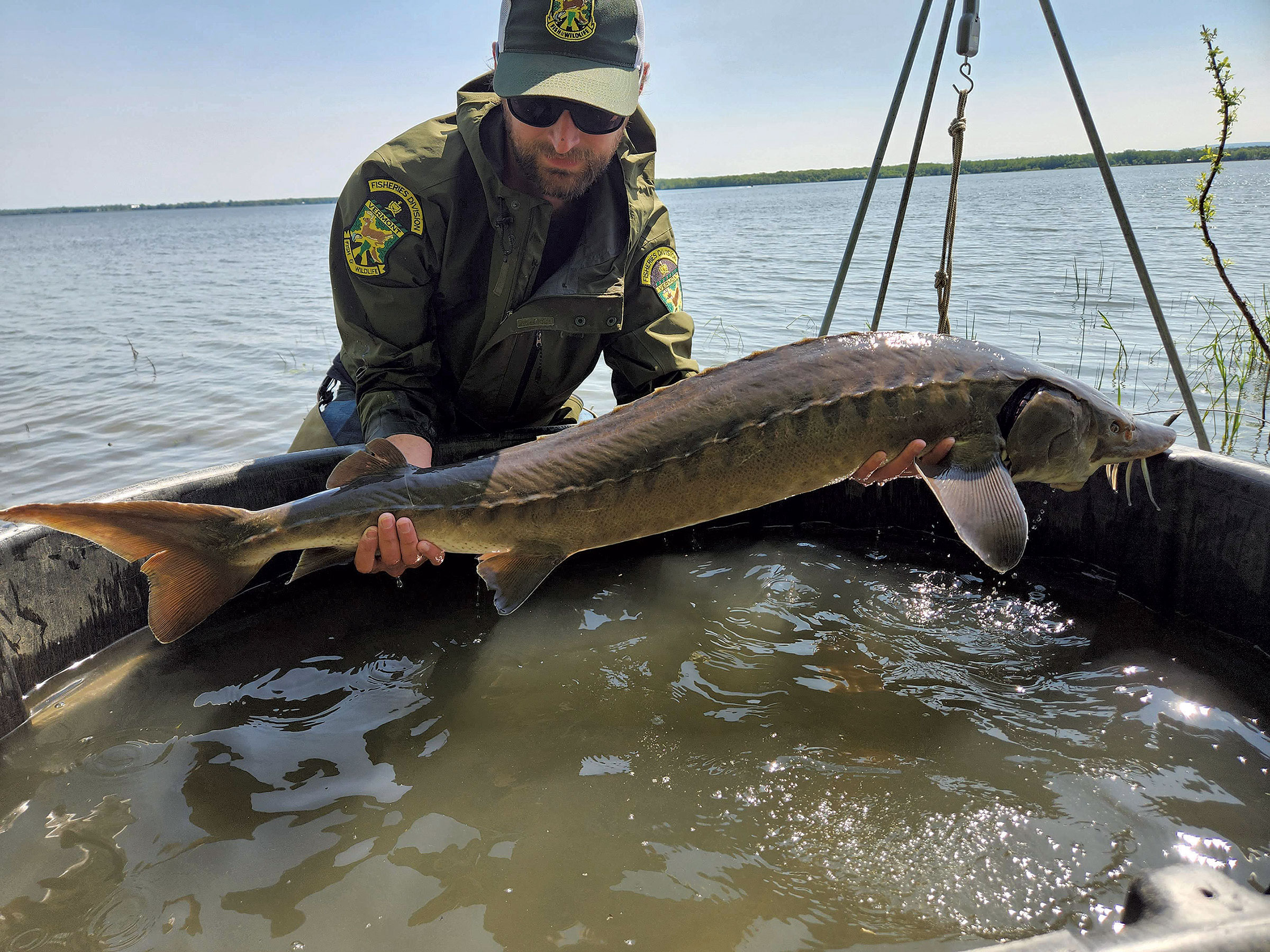
The Misissquoi is one of the largest rivers in the state, meandering 80 miles through northern Vermont and southern Québec farmland. It flows past several important hydro dams and a national wildlife refuge before emptying into Lake Champlain at Missisquoi Bay. Removing the Swanton structure would open up eight miles of vital fish-spawning habitat, including for sturgeon, a species that the state is attempting to help rebound.
“It’s a pretty incredible opportunity,” said Karina Dailey, science and restoration director for the Vermont Natural Resources Council. “It’s the biggest, highest-profile, ecologically-important dam removal project in the state.”
She stressed, however, that the effort will only succeed if the village is on board. A decade ago, the idea of removal was “introduced in a top-down manner,” causing villagers to dig in their heels, she said.
“The community needs to want it,” she said.
It’s not clear that it does.
“I think certain residents would be hesitant to have it removed,” Village manager Bill Sheets said. “I think others clearly would support that. I don’t know what the answer is.”
The idea has resurfaced partly because of the debate about the operation of another much larger dam eight miles upstream at Highgate Falls. That dam, also owned by the village, is going through the arduous federal relicensing process, which is required every 40 years.
No one is calling for that dam to be removed. It’s a big one, capable of producing nearly 10 megawatts of power. As part of its relicensing application, however, the village proposed studying ways to improve fish passage around the smaller dam downstream. Environmental groups, as well as state fisheries biologists, want the village to also study how removing the smaller dam altogether would impact the fish.
VNRC, the Nature Conservancy in Vermont, Trout Unlimited, the Lake Champlain Committee and the Abenaki Nation of Missisquoi are now all involved in the relicensing case.
The Swanton dam Credit: Owen Leavey
Fish ladders often help aquatic life get up and over dams. But the Swanton dam prevents so many species from heading upstream that a single fish ladder couldn’t serve them all, explained Lee Simard, a fisheries biologist with the Fish & Wildlife Department. Plus, lake sturgeon, which can live 150 years and reach 310 pounds, have a tough time getting up the structures.
That makes removing the dam the best way to restore the connection between Lake Champlain and the prime spawning habitat between Swanton and the Highgate Falls, Simard said.
Sturgeon populations were robust in Lake Champlain in the early 1900s, but their populations plunged midcentury due to overfishing, habitat loss and predation by sea lampreys, Simard said. The state listed them as endangered in 1987.
Sturgeon need gravelly river bottom to spawn because the gaps between the pebbles give fertilized eggs a place to nestle until the fry hatch and float downstream to the lake. There is a small spawning area just below the Swanton dam, but the eight miles above the dam would offer 300 times as much such habitat, vastly increasing their chances of reproducing, he said.
Other species that could benefit include walleye, a popular sport fish, and the endangered stonecat, a small catfish that in Vermont only lives in the Missisquoi and La Platte rivers.
But lake sturgeon capture the public’s imagination like few other species. The ancient fish have been described as living fossils. The bottom-dwellers have a pointed snout, sharklike tail and raised bony plates called scutes that line the length of their bodies. They are the largest and longest-living fish species in the state and are rarely seen anymore by anglers. Sturgeon have historically spawned only in the Missisquoi, Lamoille and Winooski rivers, plus Otter Creek.
They are slow to reach sexual maturity, with males reaching that landmark at around 15 years and females around 25; that makes restoring the species a challenge. The population in the lake is hard to estimate, but biologists think helping their numbers grow to 2,000 mature fish could take 50 to 100 years.
For decades, Fish & Wildlife has sought to study, protect and restore the population. A recovery plan formulated in 2016 identified removal of the Swanton dam as the highest priority project.
Another strategy has been to limit how hydro dams operate. Releasing large volumes of water stored behind dams at times of high-power demand, a practice known as “peaking,” can harm fish species, particularly when they are spawning.
At the moment, however, there’s not much peaking happening at the Highgate Falls dam. A 15-foot-high rubber bladder that increases the size of the pond behind the dam, and thus power production, split in June after a seam repair failed.
Federal regulators won’t let the village try another fix or install a replacement, according to Sheets, the village manager, so officials are exploring options. A new, alternative system could cost millions and take years to install, he said.
The dam produces low-cost electricity for the Village of Swanton and the towns of Swanton, St. Albans and Highgate. Without the bladder, its production is down about a third.
The repair and relicensing of that Highgate Falls dam is the village’s top priority at the moment, Sheets said. Sheets questions why environmentalists believe the process should require studies related to the removal of a small dam eight miles downriver.
“We truly care about the environment,” Sheets said. “We’re willing to do whatever we need to do. We would just like to know what that is.”
VNRC and other groups are willing to step in to pay for and manage removal projects, which can cost millions, Dailey said. The public has increasingly embraced removing dams because of the ecological benefits of the practice, Dailey said.
A year after four dams were taken out of the Klamath River in California and Oregon, salmon have returned faster and in far greater numbers than anyone expected. The project, decades in the making, is being hailed as an environmental triumph.
VNRC’s work is on a smaller scale, but it helped remove a record nine small dams in Vermont this past summer, reconnecting 125 miles of rivers. In addition to restoring habitat for wildlife, the removal of so-called “deadbeat dams” that have outlived their purpose is increasingly becoming a key strategy for improving water quality and flood resilience.
“My sense is, there is a rethinking about what we value about the Missisquoi, and that includes Highgate and Swanton,” Dailey said. “It’s a package deal.”
The original print version of this article was headlined “Spawning Debate | A proposal has resurfaced to remove a Swanton dam and improve sturgeon habitat”
This article appears in The Reading Issue 2025.