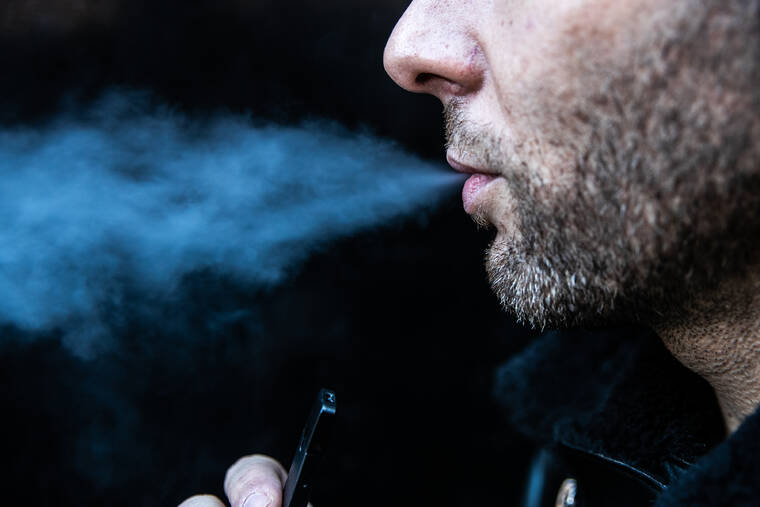
A measure moving through the state Legislature presents yet another opportunity to limit the spread of harmful vaping products. After failing to get a ban on flavored vapes across the finish line in 2025, health activists and industry opponents are taking a new tack, targeting not user well-being, but a secondary issue related to disposable devices that is sure to resonate in this island state: the environment. It’s a welcome attempt to stamp out the tobacco-adjacent products that are proliferating at alarming rates among young users despite prohibitions against use by minors.
Senate Bill 2175, which would bar sale or distribution of disposable electronics smoking devices, has sailed through both chambers relatively unscathed and is now in conference committee for hashing out of differences before final reading. As it stood on Friday, a proposed ban set to take effect on Jan. 1, backed by fines of $1,000 per day, per infraction, would help to reduce or eliminate hazardous waste that comes part and parcel with disposable vapes. It would also, of course, draw down the number of e-cigarettes available to users, including vulnerable youth.
Proponents of SB 2175 characterize disposables as the next environmental scourge, something akin to Hawaii’s cigarette butt predicament that peaked in the 1980s and 1990s, when the non-biodegradable leavings turned beaches into oversized ashtrays. Addressing that issue meant smoking bans at beaches, then parks and finally all enclosed or partially enclosed public areas, with proprietors granted the authority to designate their private spaces smoke-free. The prohibition, which was expanded to include vapes, and shifting public sentiment have both reduced toxic litter and cleared the air.
With their plastic shells, metal innards and chemical load, disposable e-cigarettes are in many ways worse than cigarette butts, advocates say. Like other complex electronic devices, there is no standardized recycling option for vaping devices, which means when a user tosses one, its toxic contents leach into soil and water, and its lithium-ion battery becomes a fire risk. Apparently. Beyond anecdotal reports, there exists little quantifiable evidence or rigorous study of environmental damage, though the logic is sound. It would be a refreshing change of pace to get ahead of a problem before it metastasizes.
What should take precedent, but curiously has not been enough to tighten vaping laws, are the ill effects on user health and, more specifically, adoption among Hawaii’s youth despite long-standing age limits.
According to the Hawai‘i Public Health Institute, through written testimony, 13% of high school students, down from 15% from 2021, and 10% of middle school students, up from 7%, in Hawaii currently partake in vaping products. That jibes with a CDC Foundation report that claims disposable vapes are the most common type of electronic cigarette device among young users, with overall sales skyrocketing 500% between 2019 and 2023. These statistics are troubling.
Don’t miss out on what’s happening!
Stay in touch with breaking news, as it happens, conveniently in your email inbox. It’s FREE!
The American Lung Association says e-cigarettes not only contain high levels of nicotine, but also carcinogens; heavy metals; deacetyl, a chemical linked to the disease bronchiolitis obliterans, or “popcorn lung”; benzene, a volatile organic compound; and ultrafine particles. Not a mix users, young or old, should be inhaling. The dangers are quickly coming to light, but it will take time to undo years of marketing and pseudoscience that hailed e-cigarettes as a safer and healthier alternative to tobacco.
Also in need of time: small businesses and smokers’ transitioning off tobacco. If passed, SB 2175 should go into effect at a date later than currently specified, giving local shops and legal users time to pivot — reusable devices would be a natural fit to address environmental concerns. Any effort to rein in vaping is worth serious consideration, and a ban won on the back of environmental anxiety is no less effective than one predicated on public health.