The Des Moines airport has renumbered all its gates overnight, removing concourse letters, as part of preparations for a new terminal set to open in January. Sarah Hoodjer, a representative from the Des Moines airport, explained the effort behind the change. “It looks like it occurs overnight, but there is a lot of thought and planning and prep that goes into it,” Hoodjer said. The new numbering system eliminates concourse letters entirely. For example, gates previously labeled C-1 and C-2 are now simply gates 18 and 19. The current concourse, which now features gates numbered 14 to 26, will remain operational for another 15 years. A new gray pedestrian bridge connects the current concourse to the upcoming terminal, which will house lower-numbered gates. “So everything is just one number. Easy to find, no concourse,” Hoodjer said. The changes extend beyond passengers. Pilots, operations staff, ground workers, and air traffic controllers must also adapt to the new system. Pilots are adjusting to the renumbering, with fresh paint marking the new gate numbers outside. “So our field team has worked tirelessly to get all the gates changed. So actually, all the changes outside occurred before the changes inside. So we just wanted to make sure the pilots, number one, knew where they needed to get to,” Hoodjer said. Travelers are gradually learning the new system. “There’s a change for sure. But I don’t think it makes too drastic of a difference. And it looks like all the numbers are in order. If they weren’t, that might be a problem,” said Naman Bhasin, a traveler at the airport. The learning curve is expected to ramp up next January when the new terminal officially opens.
DES MOINES, Iowa —
The Des Moines airport has renumbered all its gates overnight, removing concourse letters, as part of preparations for a new terminal set to open in January.
Sarah Hoodjer, a representative from the Des Moines airport, explained the effort behind the change.
“It looks like it occurs overnight, but there is a lot of thought and planning and prep that goes into it,” Hoodjer said.
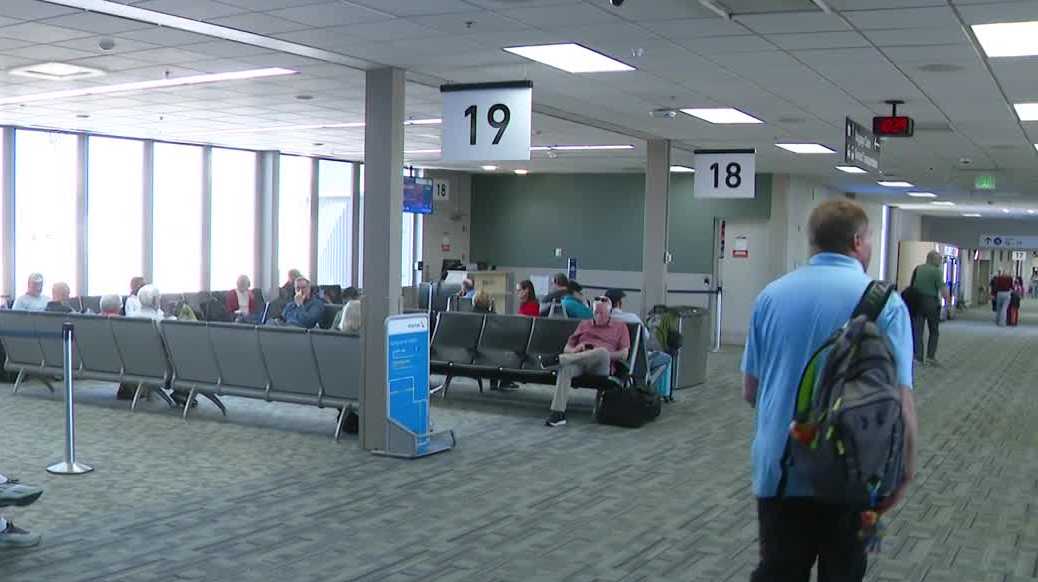
The new numbering system eliminates concourse letters entirely. For example, gates previously labeled C-1 and C-2 are now simply gates 18 and 19. The current concourse, which now features gates numbered 14 to 26, will remain operational for another 15 years. A new gray pedestrian bridge connects the current concourse to the upcoming terminal, which will house lower-numbered gates.
“So everything is just one number. Easy to find, no concourse,” Hoodjer said.
The changes extend beyond passengers. Pilots, operations staff, ground workers, and air traffic controllers must also adapt to the new system.
Pilots are adjusting to the renumbering, with fresh paint marking the new gate numbers outside.
“So our field team has worked tirelessly to get all the gates changed. So actually, all the changes outside occurred before the changes inside. So we just wanted to make sure the pilots, number one, knew where they needed to get to,” Hoodjer said.
Travelers are gradually learning the new system.
“There’s a change for sure. But I don’t think it makes too drastic of a difference. And it looks like all the numbers are in order. If they weren’t, that might be a problem,” said Naman Bhasin, a traveler at the airport.
The learning curve is expected to ramp up next January when the new terminal officially opens.