Before jurors began their fifth day of deliberations in the murder trial of Lindsay Clancy, they faced questions from the judge related to another criminal case.
Judge William Sullivan questioned all 12 jurors and six alternates after a woman was arrested outside Plymouth Superior Court Tuesday and accused of filming the jurors.
Prosecutors accused Dawn Light, 56, of Sutton, of parking in a restricted area of the courthouse and taking photos of the jury members. They charged her with witness intimidation, and asked that she be held on $50,000 bail and ordered to stay away from the courthouse.
“The sanctity of the judicial system is at risk because of her actions. It’s a serious matter for the commonwealth,” said Plymouth County assistant district attorney Nicole Piacentini during Light’s arraignment Wednesday.
Light’s defense attorney claimed it was a “misunderstanding,” and she was not trying to photograph the jurors, but was trying to get a picture of Clancy as she left court. Light was released on personal recognizance and ordered to stay away from the courthouse and not to produce or disseminate any photos.
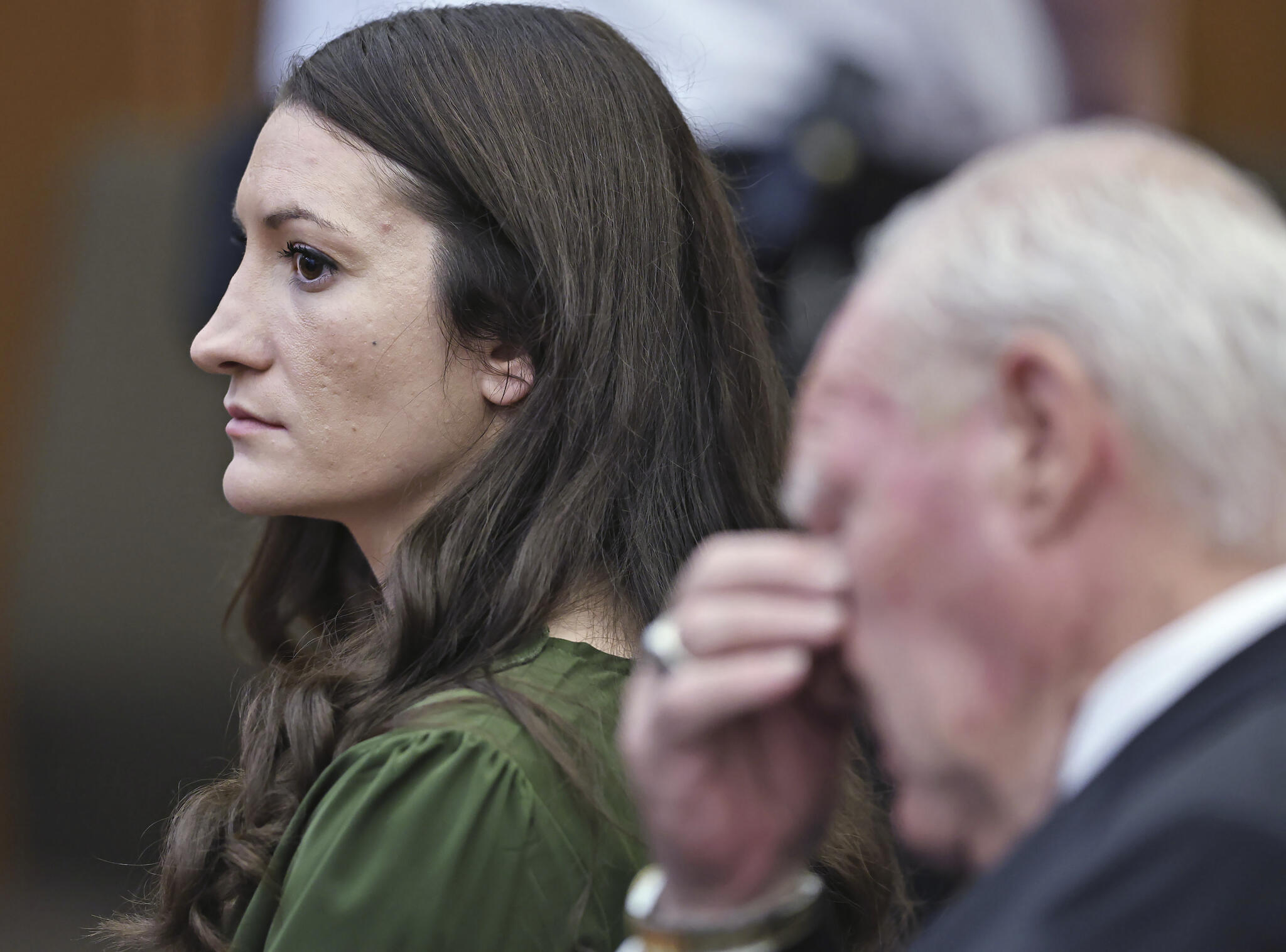
Clancy, 36, of Duxbury, is charged with killing her three children in 2023. The jurors reported to the judge on Tuesday that they had failed to reach a unanimous decision in the case that centers on whether Clancy can be held criminally liable for strangling her children. Judge Sullivan urged the jury of nine women and three men to keep trying to come to a consensus.
Clancy’s attorney Kevin Reddington said the jurors were not bothered by the arrest and could resume their deliberations.
Judge William Sullivan asks the jury to continue deliberations during Lindsay Clancy’s murder trial at Plymouth Superior Court on Sept. 1. (Greg Derr/The Patriot Ledger via AP, Pool)
Sullivan, the judge in the Clancy case, reminded those who crowded into his courtroom at the start of the day Wednesday that there are strict statutes about conduct that “will be enforced.”
So far, the jurors have spent more than 24 hours weighing the facts of the trial, which lasted for five weeks and included hundreds of pieces of evidence and hundreds of hours of testimony.
Although jurors have so far been unable to reach a verdict, Clancy’s attorney sounded optimistic when they were sent home at the end of the day Tuesday.
“I’m heartened,” he said. “I’m very pleased with the work that this jury has put into the case.”
The possibility of a mistrial
Legal experts said it’s not unusual for jurors to initially report they’ve failed to reach consensus in a lengthy, complex trial. But it does raise the possibility the judge could declare a mistrial.
“This is a long case with a lot of evidence and a lot of moving pieces,” said criminal defense attorney Ryan Sullivan, who is not involved with the Clancy case. “It’s not surprising to me to hear that the jury is struggling with this decision.”
The jury must weigh several potential verdicts in the case. They’ve been asked to decide if Lindsay Clancy is guilty of first-degree murder, second-degree murder, or manslaughter — or if her mental state was so compromised she should not be held criminally responsible for the deaths.
Her defense argues she was experiencing postpartum psychosis and was not in control of her behavior. The prosecution claims Clancy deliberately planned to kill her children, who were 5 years old, 3 years old and 8 months old.
Several attorneys said jurors could again report that they’re unable to reach a unanimous verdict. If that happens, they said the judge could then issue what are called in Massachusetts “Tuey Rodriguez” instructions — essentially telling jurors to keep working to reach a verdict because they are the best positioned to decide the case.
Boston criminal defense lawyer Shira Diner said lawyers call that the “dynamite option.”
“Then he would send them back out, and maybe they come up with a verdict,” said criminal defense lawyer and Boston University law school Lecturer Shira Diner. “But if they don’t, at that point then the judge would likely declare a mistrial.”
If a mistrial is declared, the Plymouth County district attorney’s office would decide whether to hold a new trial. Clancy would remain committed to the state hospital where she has been for more than three years.
The DA’s office could consider lesser charges, such as second-degree murder or manslaughter. Then, Clancy could face a bench trial with just the judge, no jury. It is not possible to waive a jury trial for defendants facing first-degree murder charges. The DA’s office declined to comment.
Many people dread the thought of another trial after weeks of emotional — sometimes grueling — testimony in a case that has become a nationwide spectacle, drawing hundreds of media and spectators.