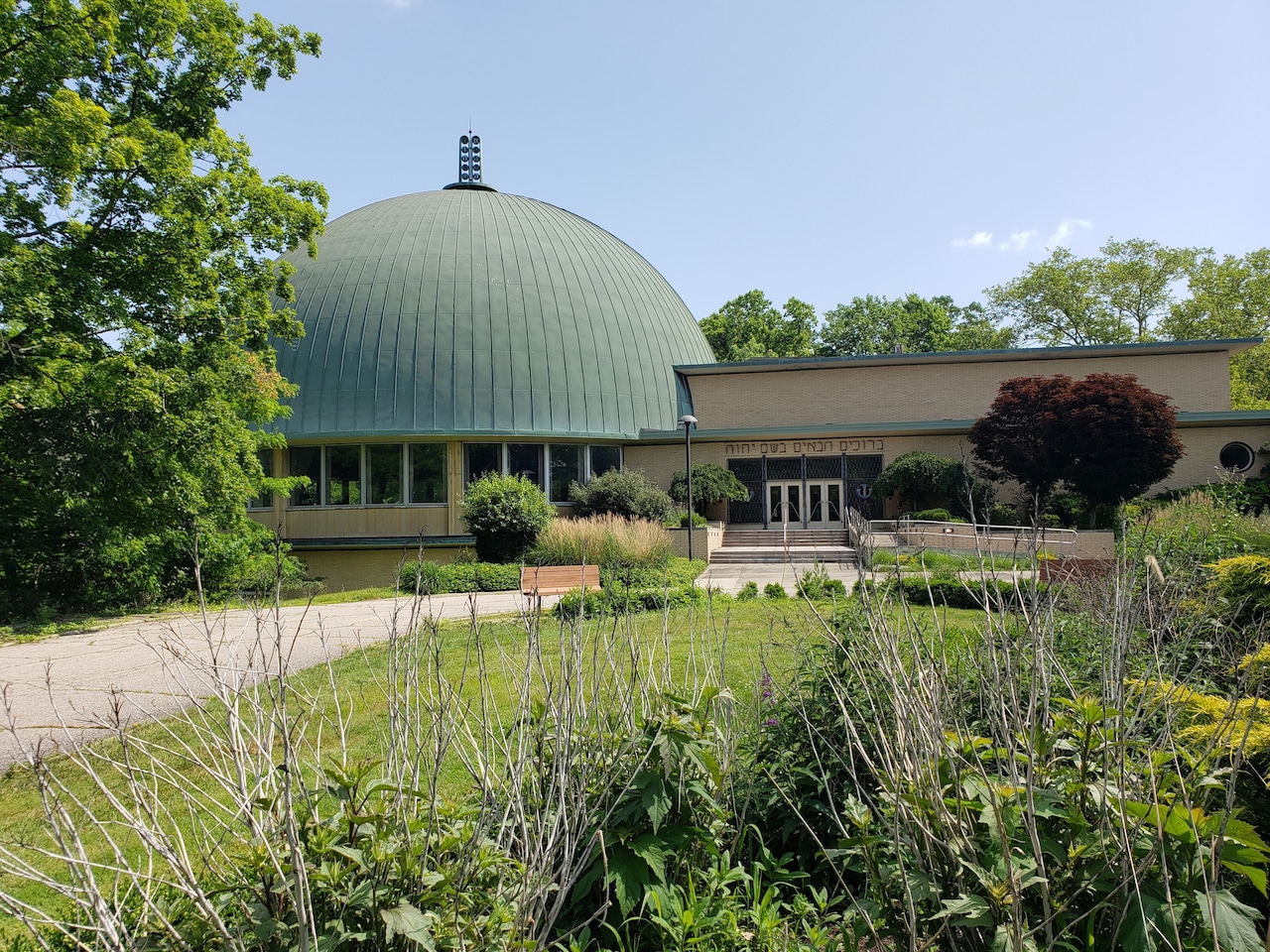
CLEVELAND HEIGHTS, Ohio — Cuyahoga County is considering a $2 million loan to help transform a former synagogue in Cleveland Heights into a regional hub for visual and performing arts, anchored by Oberlin College’s first satellite campus.
If approved, the funding would support a $52 million transformation of the historic Park Synagogue campus, including preserving the temple dome. The complex is a midcentury modern landmark and one of four synagogues designed by renowned German-Jewish architect Erich Mendelsohn.
Sustainable Communities Associates plans to convert the space into a multiuse arts and education center, with Oberlin College serving as the main tenant for at least the first 10 years. The college has committed to launching new Bachelor of Fine Arts and Master of Fine Arts programs at the site, marking its first academic expansion outside Lorain County, Paul Herdeg, the county’s director of development, told council members during a Jan. 12 committee meeting.
Oberlin College is also planning to invest $1 million in the space and bring more than 20 jobs to Cleveland Heights, Herdeg said. He called it an “extremely important project” and future economic driver for the area.
“(The building) has been used previously as a synagogue, but its importance goes far beyond religion to the cultural history of the region and the world,” Herdeg said.
In addition to the college programs, the space is also expected to have a wide range of community uses. Herdeg mentioned possible offices for nonprofit organizations that provide arts programming for people with disabilities, space for childcare and areas for social and community events, including hosting weddings.
Future phases of the project could expand the campus’s uses further and potentially add housing.
The overall project is being financed through a mix of historic tax credits, new market tax credits, equity, grants and debt. Cleveland Heights is contributing about $1.5 million, but Herdeg noted that a large chunk of the funding – more than $11 million – was donated by local organizations.
“This is an extraordinary level of community support we rarely see for such a project,” Herdeg said.
The county’s proposed $2 million contribution would be split into two parts: a $1 million traditional economic development loan with a 3% fixed interest rate to be repaid over 20 years, and what he called a $1 million recoverable grant.
The grant would be structured with the expectation that it will be repaid in five-year increments, but only if the project generates enough money to cover the bill. Full repayment would not be legally required, Herdeg said, but he continued to insist that the county will recoup its money in full.
It’s not something the county has offered before, Herdeg said, but the administration believes in the project enough to move forward.
“We believe firmly it needs that level of support – deserves that level of support,” Herdeg said. “There’s great community interest in this building…That is why, as staff, we believe that the prospects are good for the repayment of the second million dollars through the recoverable grant.”
The loan package received initial approval from council’s Economic Development and Planning Committee. Council is expected to vote on final approval at the regular council meeting on Tuesday.