SCOFIELD, Carbon County — Utah wildlife officials fear that a transmissible disease that affects the nervous system of big game like deer, elk and moose is spreading after it was recently discovered in more parts of the state.
Chronic wasting disease has recently been found to have spread to deer near Scofield, as well as to additional parts of Uintah County, which neighbors Carbon County, the Utah Division of Wildlife Resources announced on Wednesday.
“We are finding the disease in new areas, so unfortunately, it does appear to be spreading in Utah,” said Ginger Stout, the state’s wildlife veterinarian, in a statement. “We are continuing to do extensive monitoring and trying different hunting strategies to stay on top of the disease and its prevalence in the state.”
Chronic wasting disease is caused when prions — a misfolded protein — accumulates in the brain and spinal cord of a deer, elk or moose, much like mad cow disease in cattle or scrapie in sheep. It causes the animal to develop brain lesions and other complications that are incurable and ultimately become fatal.
Hundreds of cases have been found in Utah since 2002, most of which have been in northern, northeastern, central and southeastern parts of the state. It’s often transmitted by urine, feces and saliva of infected animals.
Over 2,100 big game samples were tested for chronic wasting disease since July 1 of last year, many of which have come from animals sampled at check stations during the general-season rifle deer hunt over the fall, state wildlife officials said. Eighty-three of the tests came back as positive for chronic wasting disease, including 46 submitted by hunters.
The number of positive cases is down from 98 in the previous year, which is good, but officials said finding the disease in new locations is concerning. The disease had not been detected in the Scofield area or the Little Mountain/Pine Ridge/Dry Fork area of Uintah County until this past fall.
“We can’t accurately compare each year’s positive cases to determine how fast the disease is spreading because we sample areas of the state on a five-year rotation — alternatively, we compare each unit from year to year,” Stout said.
The risk of transmission from animals to humans is considered very low, according to the Centers for Disease Control, but it and state wildlife officials don’t recommend consuming meat from animals infected with the disease.
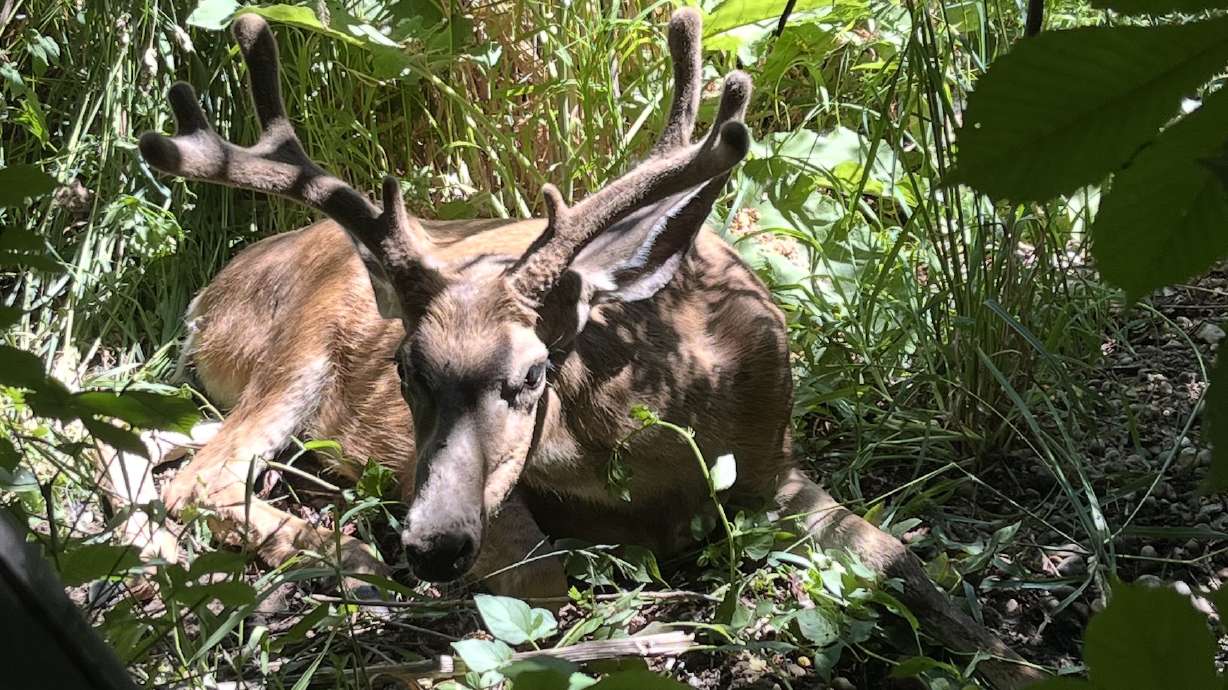
Deer in the early stages of the disease might appear healthy, but infected animals eventually develop symptoms before succumbing. These include salivating excessively, becoming emaciated, appearing listless or having droopy ears.
The Key Takeaways for this article were generated with the assistance of large language models and reviewed by our editorial team. The article, itself, is solely human-written.