This year is the 250th anniversary of Jane Austen’s birth; she was born on Dec. 16, 1775 (and died July 7, 1817). Much will be written about her and given the politicalization of college English departments, there is likely much new that will be said.
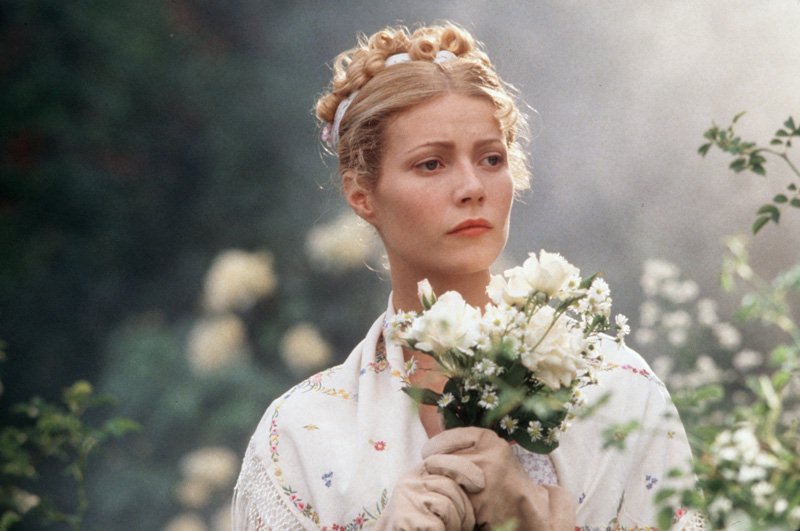
Jane Austen and Thomas Hardy (1840-1928) are my two favorite authors and I have read all of their novels. For Jane Austen that is a relatively easy and pleasant task; there are only six to read and happily reread every few years or so. Jane Austen is, perhaps, the only major author that does not need to be read. There have been many stage, film, and television adaptations of all six of her novels, as well as the epistolary novella, “Lady Susan.” For me, and many others, I suspect, the best “Pride and Prejudice” was the 1995 BBC adaptation with Jennifer Ehle and Colin Firth. With six episodes, each an hour long, it had time to maintain the leisurely pace and twists and turns of the novel. I enjoyed the movie version of “Emma” with Gwyneth Paltrow, but many more knowledgeable readers than I found fault with it. For me, the least satisfactory “Pride and Prejudice” was the 1940 adaptation with Greer Garson and Laurence Olivier; it needlessly made a major change in the plot. A newly cast “Pride and Prejudice” will be presented later this year. And next summer, locally, at DeSales University, the Pennsylvania Shakespeare Festival will offer “The Complete Works of Jane Austen, Abridged.”
I follow the plot but I’m not the perceptive reader that my wife once was and I can no longer seek her guidance. I often miss the subtleties that a more perceptive or trained reader sees and appreciates. My insights and enjoyments have likely been better expressed by others. But, still, I’d like to share some of my observations and pleasures with you; perhaps prompting anew some of your own recollections.
“Pride and Prejudice” and “Persuasion” are my two favorite novels. Everyone likes “Pride and Prejudice,” and “Emma,” I’ve read somewhere, was Jane Austen’s favorite. Although “Northanger Abbey” is, perhaps, the least successful of her novels, Catherine Moreland is my favorite heroine.
With the first sentence of the novel, I am entranced: “No one who had ever seen Catherine Moreland in her infancy would have supposed her born to be an heroine.” And, with the concluding sentence of the second paragraph, I am completely won over: “To look almost pretty is an acquisition of higher delight to a girl who has been looking plain the first fifteen years of her life than a beauty from her cradle can ever receive.”
Many novels have a hero or heroine that has an objective whose attainment is the focus of the story. In “Pride and Prejudice,” Lizzy and Darcy do not have any intentions to fall in love and get happily married; they almost stumble into it.
By contrast, Mrs. Bennet and Mr. Collins do have goals that they strive to achieve. Mrs. Bennet wants to see her five daughters well married or, at least, comfortably provided for. She achieves her goals in splendid fashion. Jane gets Bingley and his 5,000 pounds a year; Elizabeth does even better with Darcy and his 10,000 a year. And Wickham, in Mrs. Bennet’s high regard, is a charming match for her darling daughter, Lydia.
Mr. Collins desires the condescension of a grand patron and the finding of a suitable wife. When we first meet him, he has already “been so fortunate as to be distinguished by the patronage of the Right Honourable Lady Catherine de Bourgh.” His first aspiration already achieved, he soon accomplishes his second goal of finding a suitable wife. Although rejected by Elizabeth Bennet, he quickly recovers, and wins the hand of her closest friend, Charlotte Lucas.
In having stated goals and then achieving them, could Mrs. Bennet and Mr. Collins be the focus of our reading? Just a passing thought.
Both pride and prejudice properly apportioned are virtues; but, they can be overdone. Darcy’s pride is excessive, easily misguided and even more easily misinterpreted. Lizzy’s prejudice is based on first impressions and predispositions, unmitigated by thoughtful reassessment. Their story is in finding how their pride and prejudice have misled them and in realigning them back to the virtues that they can be. Both Elizabeth and Darcy must change and their unfolding change is what delights us.
By contrast, in “Emma,” it is only our heroine who must experience change. Mr. Knightly is perhaps the only one of Jane Austen’s leading men who has no need to change, but only to be discovered. And, of course, he is. Anyone who newly comes to Jane Austen can be assured that although there are always obstacles to overcome, all will end well; there will be a happy marriage and given that happy outcome, we know that they will live happily ever after.
Jane Austen wrote in troubled times. The Napoleonic wars are only noted in unnamed passing, and only with some specificity in “Persuasion.” And the word “slavery” is only once mentioned, passingly noted in “Mansfield Park.”
This is a contributed opinion column. George Heitmann is professor emeritus of management science at Penn State (University Park) and professor emeritus of economics at Muhlenberg College. The views expressed in this piece are those of its individual author, and should not be interpreted as reflecting the views of this publication. Do you have a perspective to share? Learn more about how we handle guest opinion submissions at themorningcall.com/opinions.