by Jennifer Palmer and Brenna Witchey, Oklahoma Watch
September 25, 2026
Messiah Shanks watched a movie on a tablet in his cell at the Oklahoma County Detention Center when, about 1:30 a.m. on April 25, 2025, his cellmate heard someone groaning down the hall.
Shanks didn’t hear it at first, but it got louder. Punches also echoed through the pod on the 12th floor of the jail, and a man moaned. Shanks and his cellmate moved to the door and tried to figure out where the sound was coming from.
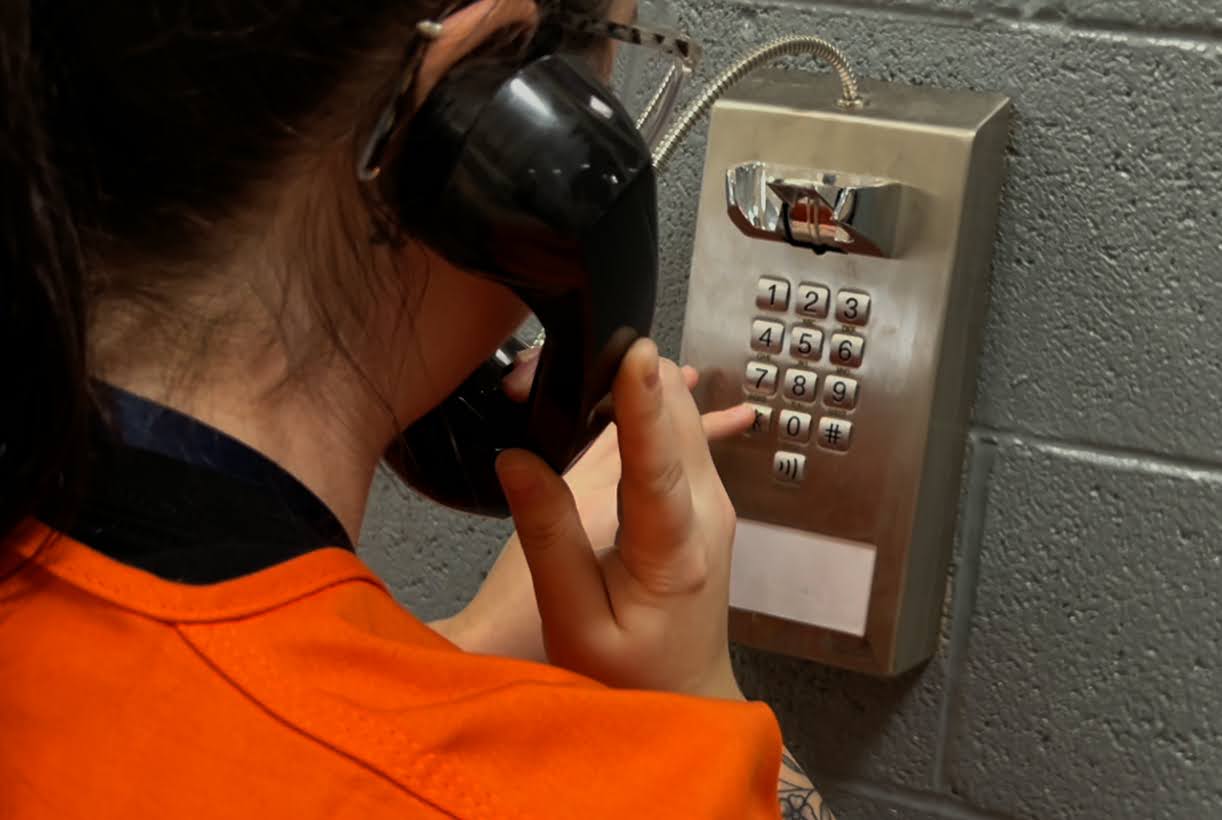
They thought it was coming from cell 20. Shanks called the emergency phone line for help.
A correctional officer later recalled there were “five, maybe six of us” working that night, plus several supervisors, in the towering, 13-story jail holding an average of 1,400 detainees.
Oklahoma jails with more than 75 detainees are only required to be staffed with at least two correctional officers and a dispatcher or operator under Oklahoma State Department of Health rules. At smaller jails, the minimum is just one or two detention officers, depending on the number of inmates.
Chronic understaffing is the most critical issue facing the downtown Oklahoma City lockup, a recent independent review found. More than 60 detainees died in custody there in the past six years.
Debbie Binkley, the jail’s phone operator that night, answered Shanks’ call. Shanks told Binkley, “Someone is dying in the cell next to me, a man’s head is getting slammed against the wall,” according to court records.
Shanks said Binkley told him that sight checkers would be coming by soon. State law requires jails to conduct hourly visual safety checks. At the time, the jail had a deal with VieMed Healthcare Staffing to provide contract workers to conduct sight checks, filling staffing gaps.
Twelve minutes later, when no one had arrived, Shanks dialed the operator again. No answer. Two minutes later, he tried again. Still no answer.
Finally, Binkley answered. This time, Shanks told her he thought the man was being raped. Binkley told Shanks that she had let someone know about the situation, but investigators alleged she didn’t notify anyone. She was eventually charged with second-degree manslaughter; her attorney has requested a hearing to determine whether she’s competent to stand trial.
The sounds of the beating began to quiet. Around 2 a.m., one of the contract workers came by. Then, Officer Elijah Pierce responded and opened the door to cell 20. Pierce later testified in court he had been in the booking area on the ground floor, and it takes five to 10 minutes on the elevator to get to the 12th floor, which is designated for detainees with medical and mental health needs.
Blood pooled near the door, Shanks said. Orenzo Byrd stood against the back wall of the cell, his feet and the hems of his pants covered in Clinton Pike’s blood. Booked two weeks earlier and accused of robbery with a dangerous weapon, Byrd later told investigators that Pike tried to lift his blanket, so he beat him up.
“He tried to look at my meat,” Byrd said, according to an affidavit. “I kept hitting him until I felt safe.”
Byrd, who’s 5 feet, 7 inches and 170 pounds, said he struck Pike in the face several times until he fell over and hit his head on the sharp corner of the bed frame, court records show. Byrd hit him in the ribs as well.
Shanks watched as Pike was removed from the cell on a gurney. Barely conscious, beaten and bloodied, he was taken from the Oklahoma County Detention Center for the last time. The 40-year-old died at 3:10 a.m. at the University of Oklahoma Medical Center.
Prosecutors charged Byrd, 20, with murder.
“It was a very traumatic experience, hearing someone get beat to death,” Shanks said.
He was 18 at the time, jailed for a robbery at a convenience store. No one offered counseling.
Not Enough Staff to Operate Safely, Report Says
The Oklahoma County Detention Center ended its contract with VieMed in April. It was too expensive, said Mark Opgrande, a jail spokesman. The jail paid VieMed $40 to $63 per manhour, depending on the time of the shift and whether it was overtime, according to the contract.
When the jail hired VieMed, staffing was down to about 250 employees. The contract workers freed up the detention officers to perform other duties, such as transporting and booking inmates.
The jail now has more than 300 employees.
“We’re just filling the gaps with our own staff,” Opgrande said..
County commissioners terminated the contract by unanimous vote on March 31.
“This will save approximately $180,000 a month,” Oklahoma County Jail Trust Chairman Jim Holman said at the meeting.
They’ve made other changes, too. Previously, staff served hot meals for breakfast and dinner, and a cold lunch. They’ve now switched to hot meals for breakfast and lunch and a sack meal for dinner, allowing staff to wrap up kitchen duties earlier in the day and freeing them to work in other areas, Opgrande said.
A study by the McDaniel Consulting Group released in March found the jail didn’t have enough staff to run safely. They noted severe understaffing on housing floors, with one officer supervising hundreds of inmates, and an overreliance on overtime that led to staff burnout.
The report says these are symptoms of larger issues, such as a lack of funding.
However, the consultants did find areas of improvement at the jail, such as a reduction in drug overdoses. They highlighted the staff’s dedication to public safety, an expanded training academy and more visible leadership.
Plans to build a new jail are underway, with phase one scheduled for completion in 2028. County Commissioner Brian Maughan said the new facility’s one-floor design will be safer for detainees.
“The people in there have a jail sentence, not a death sentence.”
Cara Pike, sister of Clinton Pike
Maughan said if voters approve the proposed sales tax increase in November, the jail will be completed within a few years.
The Oklahoma County Criminal Justice Authority, which has been in charge of the jail’s operation since 2020, faces numerous lawsuits over inmate deaths on its watch.
In April, a jury awarded $2 million to the family of Gregory Davis, who died of a perforated ulcer in 2021. He was detained on the 12th floor for mental health issues, and detention officers missed sight checks that could have saved him.
As he lay dying in his cell, Davis placed 893 calls for help. A medical expert testified at trial that Davis needed surgery but could have survived.
Pike’s sister, Cara Pike, said she talked to her brother while he was incarcerated. He told her he was ready to clean up his life. A month before his death, Pike pleaded guilty to burglary. A judge sentenced him to four years in the Department of Corrections.
“The people in there have a jail sentence, not a death sentence,” she said.
Broken and Cracked Windows Obscured Lines of Sight
The Oklahoma State Health Department completed its most recent unannounced visit on May 5. Inspectors reviewed samples of 20 inmate housing logbooks dated April 7 to May 4 and found jail staff missed or didn’t document thousands of safety checks.
Inspectors noted that many housing pod and corridor windows on several floors, including the 12th, were broken or cracked, obscuring visibility and creating potential safety and security hazards. Shower walls, floors and fixtures were stained, discolored and coated with grime.
The previous year, during an unannounced inspection on May 6, 2025 — about two weeks after Pike’s death — inspectors found the vents, floors, walls, sinks, toilets and showers in several areas dirty, littered with debris and caked with dirt and black residue. Staff told inspectors that cleaning supplies are available and inmates are responsible for cleaning their cells and common areas.
Just one day after Pike died, jail staff found another detainee, Rachel Nalley, unresponsive in her cell. An autopsy showed she died of natural causes but had trace amounts of drugs in her body. She was in a drug detox program for opiate withdrawal.
According to the McDaniel report, a single nurse managed the jail’s detox services, which were used by a significant percentage of the detainees.
This <a target=”_blank” href=”https://oklahomawatch.org/2026/09/25/an-inmate-called-for-help-four-times-in-45-minutes-before-anyone-came-a-man-was-being-beaten-to-death/”>article</a> first appeared on <a target=”_blank” href=”https://oklahomawatch.org”>Oklahoma Watch</a> and is republished here under a <a target=”_blank” href=”https://creativecommons.org/licenses/by-nd/4.0/”>Creative Commons Attribution-NoDerivatives 4.0 International License</a>.<img src=”https://i0.wp.com/oklahomawatch.org/wp-content/uploads/2019/10/okwatch-icon.png?fit=150%2C150&ssl=1″ style=”width:1em;height:1em;margin-left:10px;”>
<img id=”republication-tracker-tool-source” src=”https://oklahomawatch.org/?republication-pixel=true&post=762588&ga4=G-6G6K9FYSH8″ style=”width:1px;height:1px;”><script> PARSELY = { autotrack: false, onload: function() { PARSELY.beacon.trackPageView({ url: “https://oklahomawatch.org/2026/09/25/an-inmate-called-for-help-four-times-in-45-minutes-before-anyone-came-a-man-was-being-beaten-to-death/”, urlref: window.location.href }); } } </script> <script id=”parsely-cfg” src=”//cdn.parsely.com/keys/oklahomawatch.org/p.js”></script>