A scaled-back bill to incorporate climate change education into Oregon’s academic standards won support from a key committee this week and is headed for a vote on the Senate floor.
Under the proposal, which Democrats moved out of the Senate Education Committee on a party-line 3-2 vote Wednesday, climate education would be incorporated into the state’s regularly revised academic standards for science, health, history, geography, economics and civics courses.
Earlier drafts of House Bill 3365 were more sweeping and would have required that academic content standards for all core subjects across grade levels — including math, world languages and physical education — incorporate lessons on the causes and impacts of climate change, along with solutions for navigating a warming planet.
That would have been among the most ambitious climate education mandates in the country, following in the footsteps of New Jersey, which adopted similar learning standards in 2020, and Connecticut, where climate change education is required under state law.
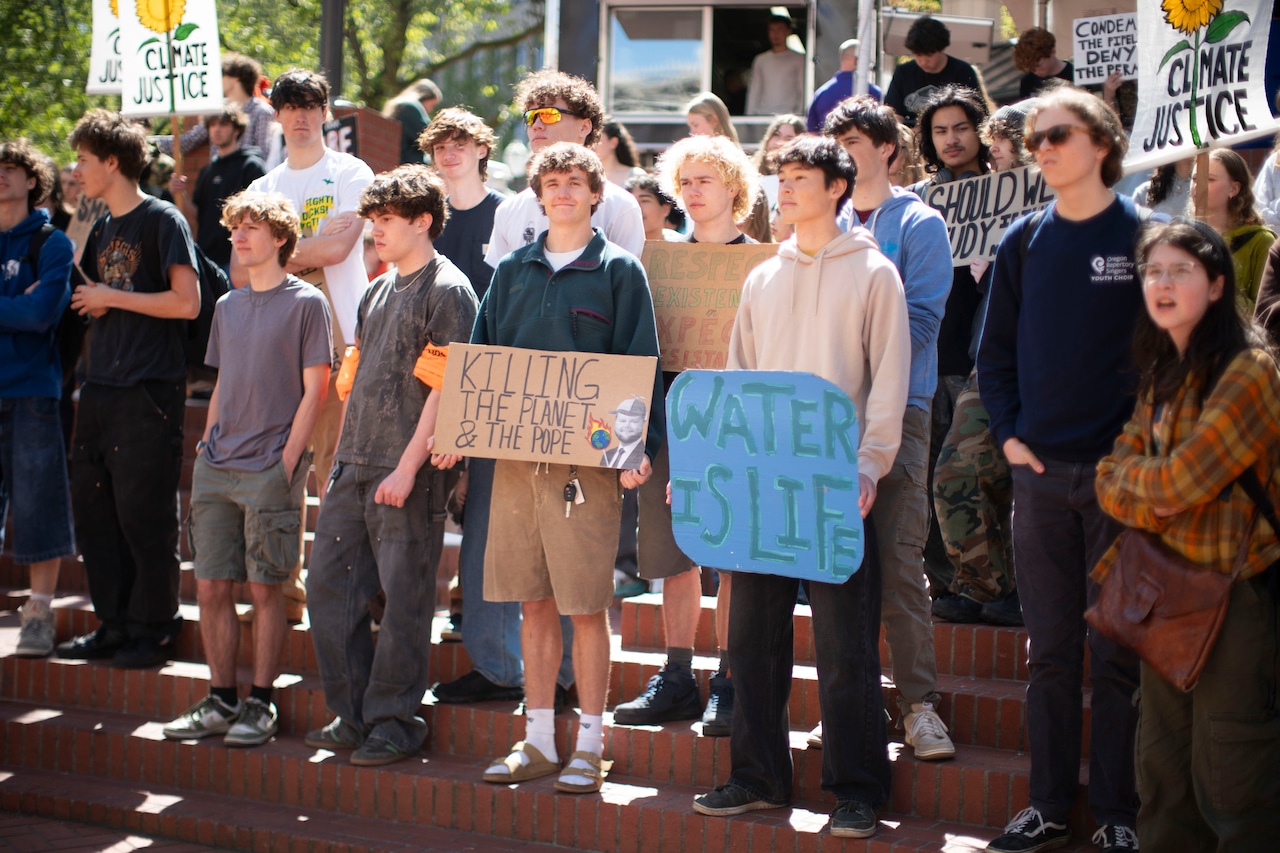
A network of students and teachers around the state have been working for years to get similar legislation passed, but have run into roadblocks over the costs of teacher training and curriculum updates, along with more existential questions about diluting the focus on academic basics, especially in lower grades.
Under the proposal that passed out of committee Wednesday, the State Board of Education would incorporate climate change education as they revise academic standards for the identified subject areas. Science is next due for a revision in 2029 and health in 2030, while new social sciences standards are scheduled to be phased in by 2026.
Oregon’s academic standards lay out what students should know at each grade level. They are set by the state Board of Education and are periodically revised, typically on a seven-year cycle. Schools are then expected to incorporate revisions into classroom teaching, via new curriculum and professional development for teachers.
The bill does not currently have any funding attached to it, unlike related legislation that has passed in other states. For example, California, New Jersey, Maine and Washington have set aside money for professional development on climate education.
Teachers who helped develop the legislation or have already begun teaching climate literacy say giving students a clear understanding of the environmental stakes is not only an academic imperative, but a moral one.
“As a school counselor, I often have students in my office suffering from anxiety. … They are very worried, angry and feel utterly helpless about the state of the planet, the water supply, pollution, fires, ash in the air, the plight of animals going extinct and about floods and droughts,” wrote Brinda Narayan-Wold, a middle school counselor from Eugene, in testimony supporting the bill.
“[This bill] would allow Oregon’s publicly educated students to feel less anxious and to talk out loud in age-appropriate and in scientific terms about what climate change is and what can be done about it.”
Sen. Noah Robinson, R-Cave Junction, who voted against advancing the bill, said he considered the topic of climate change less scientific and more political, and said he was concerned about “one-sided” classroom discussions.
But virtually all climate scientists agree that the planet is warming due to human actions. Leading scientific agencies also agree, though the Trump administration has moved to end federal funding for research into how climate change harms human health.
— Julia Silverman covers K-12 education for The Oregonian/OregonLive. Reach her via email at jsilverman@oregonian.com