MONTREAL (WCAX) – Plans are moving forward to open Vermont’s first overdose prevention center in Burlington. But questions remain about where it will be located, how it will operate, and whether it will be effective in the state’s battle against opioids. Reporter Ike Bendavid traveled to Montreal, where the centers are already up and running and in high demand.
A line of people queued up outside an alleyway door just off Montreal’s Sainte-Catherine Street commercial district on a recent weekday afternoon.
They’re waiting for the door to open so they can legally use drugs at Quebec’s first supervised injection site, one of five sites now operating in the city. CACTUS Montreal opened 36 years ago. It started as a needle exchange site during the HIV crisis, the first in North America. It became a supervised injection site in 2017.
“We are not here to pass the message that using drugs is safe in any context. We are there by saying a supervised consumption site… There is risk involved. Why don’t you do it under supervision?” said Alex Berthelot, the center’s director of community services. He says the site also offers drug testing and health supplies. People were knocking on the door to get in several hours before the 2 p.m. opening.
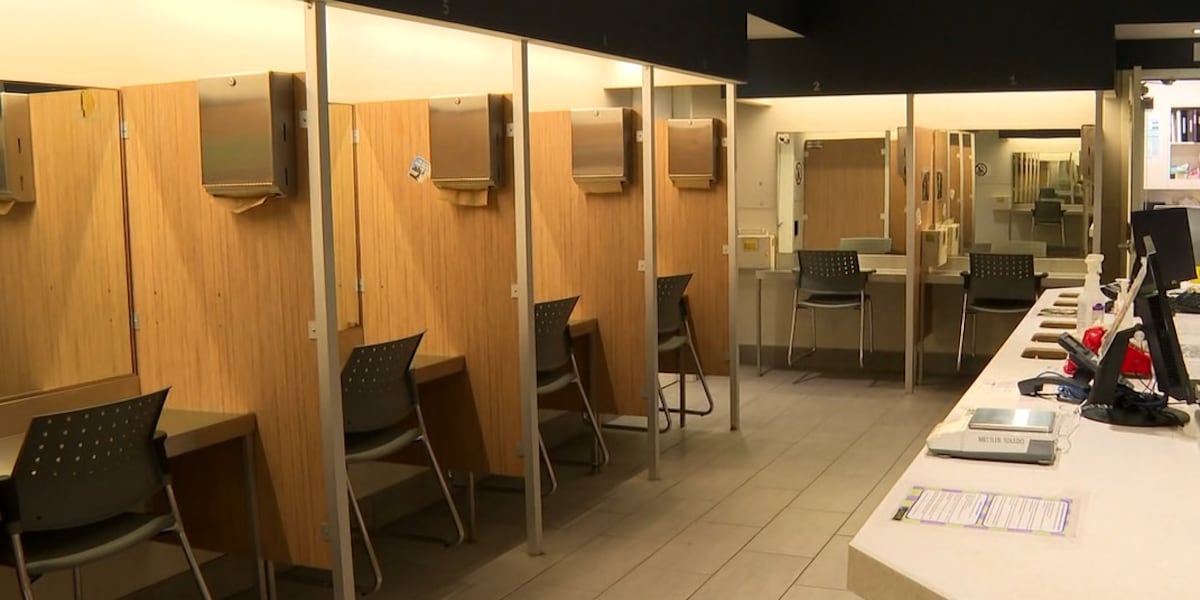
The needle exchange still exists in a front room, along with a lab to test drugs. The supervised injection rooms with trained clinical staff are in the back. “Sites like this don’t set up in an area where nobody is using drugs, where there’s not already a public health crisis,” Berthelot said. He says their clients don’t give personal information other than what drugs they have already taken that day and which drugs they plan to inject. “We build each kit custom for the specific user and what they are using.”
The clients then take a seat and prep their drugs. Berthelot says about 85 percent of the time they are shooting up fentanyl. “We have a total of 10 cubicles available here, and it’s insufficient. We normally have people waiting to get into the room,” he said.
The cubicles are sterilized after each use. Mirrors help staff keep tabs on those injecting drugs. They average about 80 visits during the 12 hours they are open. That includes people who come back multiple times. “The average visit is about three injections. So, that’s about 240 injections a day that happen in this room between 2 p.m. and 2 a.m,” Berthelot said.
Reporter Ike Bendavid: How often do people overdose in here?
Alex Berthelot: In this room? Probably somewhere between five to eight times a day.
Reporter Ike Bendavid: What happens? So you just Narcan them?
Alex Berthelot: No. Narcan in a setting like this is a last resort.
He says they first try to wake people up using verbal commands. If that fails, they get physical. And there is still no response, they get medical attention. “We will intervene in an overdose situation, and probably about one or two of those will require the use of Narcan,” Berthelot said.
After clients are done, many stick around, staying in their seats for up to 90 minutes or in the outpatient area.
Outside the supervised sites, overdose deaths have been rising in Montreal over the last four years, according to local health officials.
2020: 14.8 deaths/month (total: 178)
2021: 12.2 deaths/month (total: 146)
2022: 13.6 deaths/month (total: 163)
2023: 15.2 deaths/month (total: 182)
2024: 19.1 deaths/month (total: 229)
Berthelot says the injection centers are not contributing to those increasing numbers.
Reporter Ike Bendavid: How many people have died in this room?
Alex Berthelot: Zero
Reporter Ike Bendavid: Is that the goal?
Alex Berthelot: That is absolutely the goal. I mean, it’s the immediate goal. First and foremost, we’re going to prevent death, which, you know, kind of a big thing… people want to live, it’s that simple.
Berthelot says drug users shooting up in a secure spot means they not doing so publicly. “If we weren’t open, it would be happening on the sidewalk, would be happening in a public park, would be happening in an underground parking lot,” he said.
Just outside CACTUS, we found evidence of that — bloody napkins, needles, and crack pipes lining the block.
“It spills outside,” said Gaetane Lupien, who lives across the street from CACTUS. “We don’t feel secure. That’s one thing the women on the block, they don’t feel so secure.”
She says the site brought crime and more drug use to the area. “We have lots of crowds and people smoking crack in the street and injecting themselves with the drug in the street, fights.”
But others say they are happy to have this resource for those who need it. “A safe place for them and safe place for the community, then I think it’s a win-win situation,” said Dennis Lussier.
Blaise Cellucce says he doesn’t inject drugs at CACTUS but does use other services like drug testing. He also weighs his drugs and gets new crack pipes there. “It’s become a necessity, now we can’t go back,” he said.
Even after the site opened for the day, there was still a line to get in that was monitored by the police.
Berthelot says the site doesn’t make the drug problem worse, instead, it’s part of the solution. “Supervised consumption sites do not encourage drug trafficking, do not encourage additional drug use. What they do is provide a space for all that to happen outside of publicly,” he said. “And so for me, part of it is a personal crusade to try and keep the people I know alive.”
Copyright 2025 WCAX. All rights reserved.