Raj Bhakta pitched himself as something of a savior when he bought the 115-acre campus of Green Mountain College in Poultney at the beginning of the COVID-19 pandemic. The school had been a top employer in Poultney — a community of faculty, staff and students — until declining enrollment forced it to shutter in 2019. Its closure imperiled the very future of the place.
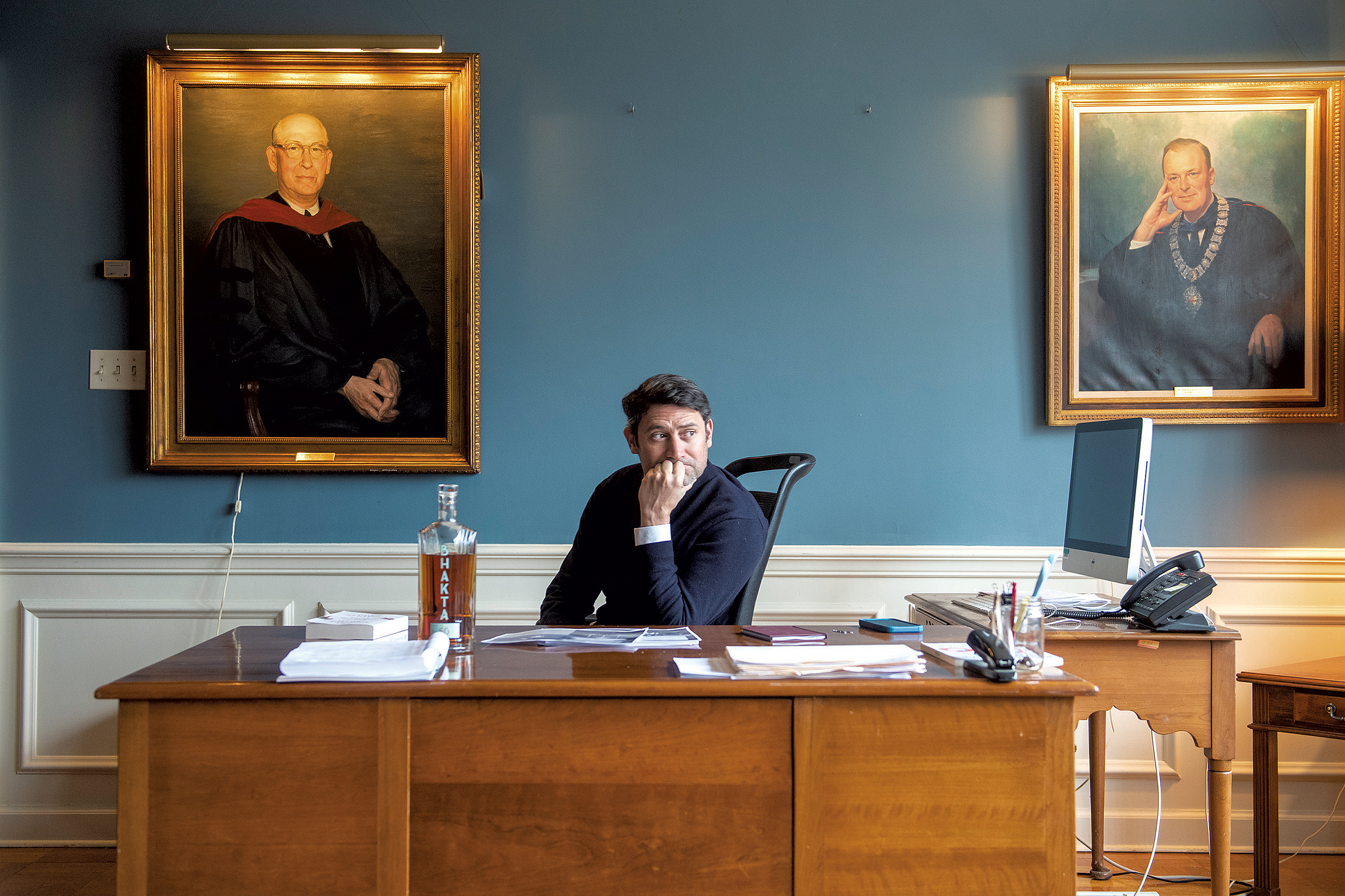
Bhakta brought business bona fides and outsize charisma to the challenge. The 44-year-old entrepreneur had founded Vermont-based WhistlePig Whiskey and turned it into a top-shelf liquor brand. He’d also been a reality TV contestant on “The Apprentice” under future President Donald Trump and an advocate for conservative GOP politics. During a failed bid for a Pennsylvania Congressional seat in 2006, he rode an elephant into the Rio Grande accompanied by a six-man mariachi band, a stunt that drew attention to the porous nature of the U.S.-Mexico border.
In August 2020 Bhakta snatched up the historic Vermont campus of stately red-brick Georgian-style buildings at auction for $4.5 million and immediately presented a grand vision to repurpose it. Promising economic revival and shared prosperity, he articulated a vision of world-class destination hotels, restaurants, luxury condos and a microdistillery with a tasting room. There would even be a free trade school for the spirits industry that Bhakta vowed would be the “greatest in the entire world” by the end of the decade.
None of that materialized in the six years that followed. Although Bhakta moved his wife and five children to Poultney, and claims to have invested $15 million in the project, the new kid in town “rubbed people the wrong way,” according to Cathy Howard, owner of the Rail Trail Eatery — and not just because he dressed like an English aristocrat, employed lofty superlatives and chose to park his collection of luxury cars on the glossy floor of the former college gym.
Raj just kind of rubbed people the wrong way, because he didn’t really support the community.
cathy howard
Early on, in a public meeting on Zoom, he appeared on-screen brandishing a cigar in front of a painting that appeared to depict him as Napoleon. He drove his own limousine in the town’s annual Fourth of July parade down Main Street and tossed small sample bottles of his liquor to the crowd — including kids.
Then, two months ago, Bhakta dropped a bombshell. Without notifying town officials, he issued a press release announcing his intention to donate the entire campus to a religious group, preferably Catholic, with a mission of reviving Western civilization and the United States through faith — a MAGA dog whistle aligned with an ideology known as Christian nationalism.
The Green Mountain College campus Credit: File: Caleb Kenna
When Seven Days asked Bhakta in an email why his project failed to launch, he responded: “Gifting the campus to a Christian cause dedicated to an American revival is not a failure but the realization of the promise of bringing the campus back to real life. Turning the campus over to God — over profit — is a victory.”
While getting to know his new neighbors, Bhakta appeared on conservative national media outlets such as Fox News and One America News to make the case for Trump’s “Make America Great Again” movement.
What happened? Seven Days interviewed sources and examined relevant public records and court documents spanning the years that Bhakta’s dream shimmered, sputtered and then soured. While no single piece of evidence indicates what motivated his change of plans, it’s clear that Bhakta sparred frequently with state and local officials, even as the town sought to grease the skids for his project. Last year, he wrote to Poultney residents blaming the town manager for the lack of progress on his vision and threatened to let the campus simply fall into ruin.
It’s unclear what sort of jobs or economic activity the campus might generate in the future. Its dormant buildings have remained mostly untouched since Bhakta bought them, and some unheated interiors are showing signs of water damage, mold and decay, according to a person who toured several buildings in late March.
Once again, Poultney — home to aging hippies, farmers, artists and college professors — finds itself at an economic crossroads not of its own choosing.
‘It All Began to Crumble’
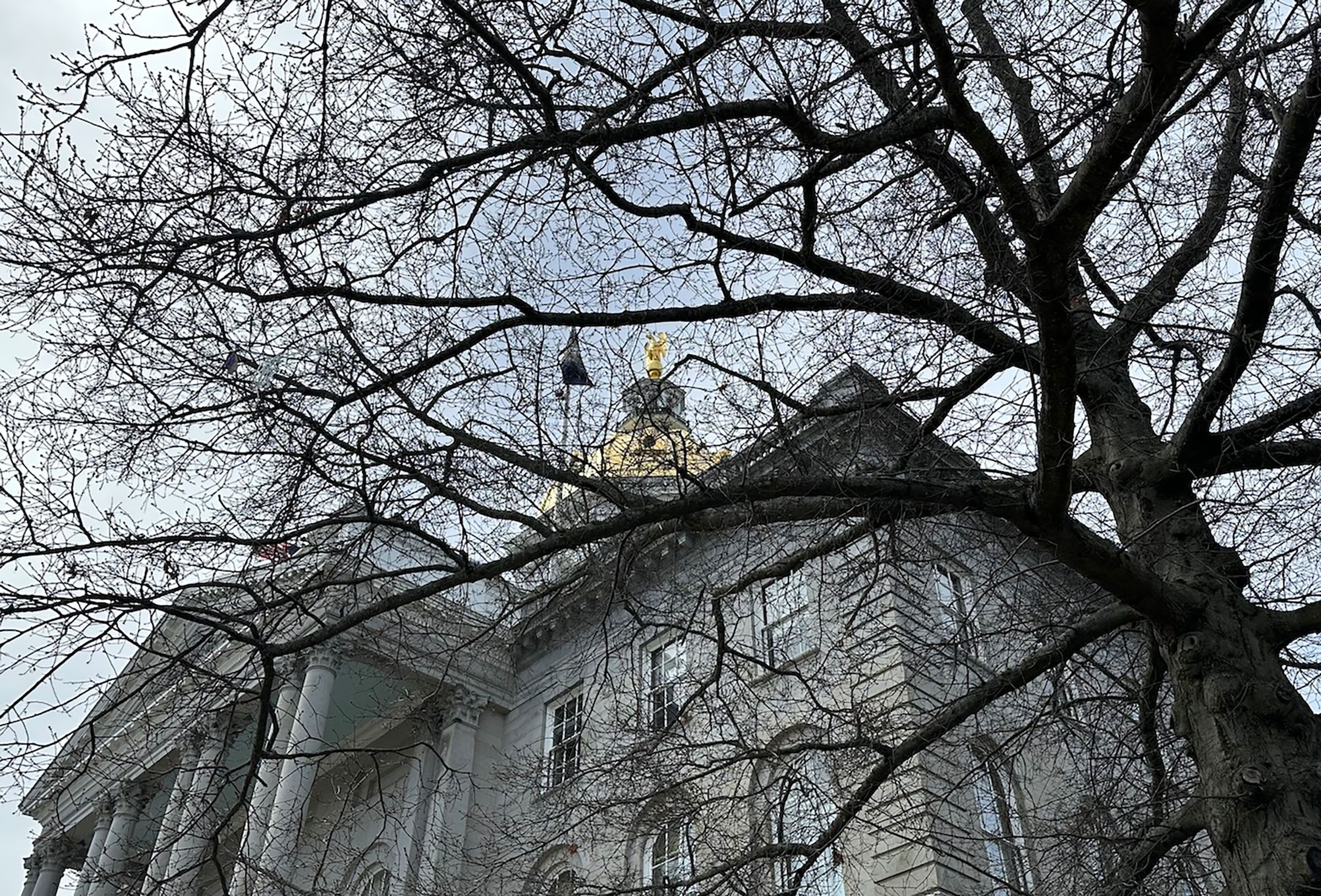
The clock that tops Green Mountain College’s iconic Ames Hall stopped a long time ago – at 11:30. It’s an eerie symbol of time frozen at an institution whose roots date back to 1834.
That’s when the campus’ first school, a Methodist institution, opened its doors. After several iterations, it became Green Mountain College in 1974. The liberal arts college offered four-year degrees with an emphasis on environmental literacy and a crunchy Vermont vibe until declining enrollment forced it to shutter in 2019. That left a gaping economic and cultural void in the heart of the town.
Poultney has a population of 3,000 or so and is situated by the New York state line in what is known as the Slate Valley. Some of its residents trace their lineage to Vermont’s earliest days, according to Nic Stark, publisher of the Poultney Journal, an online news source.
Walk down Main Street and you pass a few blocks of commercial buildings — including a cannabis dispensary, a former train station renovated into a restaurant, a hardware store and two bike shops that support a growing regional bike trail network. The street ends at the campus that anchors it. Beyond that is the Poultney River, where Bhakta closed local access to a popular swimming hole.
Across from the campus is the former college’s Two Editors Inn, named in part for the famous American journalist and abolitionist Horace Greeley, who as a young man came to Poultney to apprentice at the Northern Spectator newspaper before making his name in New York journalism and politics.
Credit: File: Caleb Kenna
How will Bhakta be remembered? Since assuming ownership, he has paid roughly $110,000 a year in property taxes. If a religious group were to take it over, the whole property could be tax exempt.
The town’s aging public water and sewer systems were built to serve the college. Former town manager Jonas Rosenthal, now deceased, warned in 2019 that without a customer as large as the college, rates would “go sky high,” according to the Mountain Times. Water rates jumped 15 percent in 2024. Meantime, nearly $6 million in repairs to the water and sewer system that voters approved last year are coming, and servicing that debt could make rates jump even further.
Town officials are reluctant to talk about Bhakta, his plans and what went awry. But plenty of townspeople were happy to share their theories.
“Raj wants to get his cash out, get out of town … and pay no taxes,” longtime Poultney resident Dick Turner said. “I think when he bought the campus, he didn’t really read the fine print.”
Nicole Austin owns the Original Vermont Store on Main Street and makes a living selling Vermonty stuff such as syrup, candles and soaps. She has owned the place since 2021, the year after Bhakta bought the campus.
“I had optimism in the beginning,” she said, “but then it all began to crumble. I began to have increasing concerns about his commitment to our community.”
Seven Days sought to ask Poultney Selectboard chair Sheryl Porrier, town manager Paul Donaldson and former town economic development coordinator Sarah Pelkey about Bhakta’s ambitions. All declined interview requests. So did Vermont Rep. Pattie McCoy (R-Poultney).
Donaldson, the subject of Bhakta’s ire in his letter to residents, said in a brief written statement that town officials had supported Bhakta’s vision and expedited zoning changes to accommodate his plan. Poultney expanded its designated downtown district to give Bhakta’s team access to potential tax credits, he wrote. Voters also authorized the selectboard to negotiate a tax-stabilization agreement with Bhakta. Lengthy talks did not produce one.
Seven Days attempted repeatedly to interview Bhakta for this article, but he did not make himself available. Later, Andrew Lohse, a former WhistlePig employee and owner of the Manhattan-based public relations firm Overton & Associates, said Bhakta would consider answering written questions. But after an initial round, Lohse and Bhakta stopped responding.
Tax Time
The 115-acre campus Bhakta bought includes 22 buildings dating from 1855 to 1969, including lecture halls, dormitories, a library, a pool, a gymnasium, an institutional kitchen, several single-family homes and a biomass-to-energy power plant. Totaling more than half a million square feet, the property was assessed at nearly $61 million by the town in 2019, with all but $1 million classified as tax exempt as an educational institution.
The town initially reset its assessment at $4.5 million — classified as taxable — to reflect the price Bhakta had paid.
But in July 2021, his development company, Regenerative Land Holdings, filed a grievance with the town seeking to reduce that assessment to $3.4 million. The town agreed to lower the assessment to $4 million while he worked to get his project off the ground.
Regenerative Land Holdings then filed an application in late 2021 with the Vermont Agency of Commerce and Community Development for a $1.5 million grant under a program meant to aid businesses adversely impacted by the COVID-19 pandemic.
A few months later, Regenerative Land Holdings began asking town officials to consider a tax stabilization agreement that could cap property taxes for up to 10 years; the town would ultimately receive a portion of revenue from the development.
On Town Meeting Day in March 2022, residents gave Bhakta a strong show of support by voting 468-44 to authorize the town selectboard to start negotiating that agreement.
A sign on the campus Credit: Brian Nearing
Six months later, in September, Bhakta took what turned out to be a consequential step: He transferred the former college president’s residence at Richardson House and three other college homes to Vivian Ventures, a limited liability corporation that he controlled. He proceeded to renovate Richardson House as his family residence.
Soon after, the state told Bhakta that it was denying his $1.5 million grant request under the COVID-19 program. Bhakta had submitted a letter from a company in Colombia called Armilla Capital that was headed by a man named José Robledo. Bhakta listed him as one of his partners for the Green Mountain College project, and he was a former member of WhistlePig’s board. The letter did not “indicate a sufficient loss of startup capital” to satisfy the program guidelines, the Agency of Commerce and Community Development informed Bhakta. “The letter from Armilla Capital is not sufficient since Jose Robledo is also a key partner in the development as per your application materials,” the agency wrote.
Two years after his arrival in Poultney, Bhakta still had not shown state commerce officials any evidence of investors committed to his campus project, according to the state denial letter. Since the program required private capital to match any state grant, the agency deemed his project ineligible for funding.
‘Delay and Obfuscation’
During 2022 and early the next year, the town granted Bhakta zoning approvals to allow construction of a resort. But then a full year went by before Bhakta filed development plans with the District 1 Environmental Commission, which enforces Act 250 land-use regulations. In June 2024, the commission determined that his application had failed to answer questions about project size, scope and uses. Bhakta was told to submit another application answering its questions.
Bhakta filed his revised application four months later, in November. A day later he sued Poultney to cut the campus property assessment some 25 percent, to $3.1 million. That would have trimmed about $40,000 a year from his property tax bill, a relatively small amount compared to a project envisioned to cost tens of millions of dollars.
The lawsuit initially put the tax stabilization negotiations with the town on hold, as the selectboard waited for its resolution. The state Attorney General’s Office, which helps municipalities defend valuations of unusual properties, stepped up to assist Poultney’s defense.
Several months later, in April 2025, Bhakta got bad news: His revised Act 250 application was still flawed. In a seven-page letter, regulators outlined a series of unanswered questions and said he had made “inconsistent representations” of his project. His application again was deemed “incomplete,” and he would need to file yet another one.
By summer, a round of private negotiations between Bhakta and Poultney’s town manager, Donaldson, nearly yielded a property tax agreement, according to emails that Seven Days obtained via a records request. A proposal would have capped the campus assessment at about $5.1 million.
“We’ll take the deal,” Bhakta wrote to Donaldson. “Let’s just get it done.” But that never happened. Donaldson followed up with Bhakta in August and September but got no response.
Meanwhile, Bhakta’s lawsuit was becoming increasingly contentious. Town officials who had been barred from the campus sought a court order allowing them to inspect the property, including Bhakta’s renovated home, to assist their case.
Bhakta was arguing that the value of the campus was in the buildings and property alone and not in items such as the collection of books held in the library. Bhakta’s evidence included a July 2021 claim to the town by Leo Gibson, a partner with Bhakta in Regenerative Land Holdings. Gibson wrote that the American University of Iraq-Baghdad had made “repeated offers” to buy the college’s entire library, including first editions and rare books, for a “substantial price.” The Iraqi university was founded in 2018 after Douglas Silliman, who was President Trump’s ambassador to Iraq, signed an agreement allowing it to open.
Asked in an email about the status of the library collection, Bhakta responded: “Our beautiful library stands where it has since it was built.” He did not respond to a follow-up question on the collection itself.
On the Act 250 front, Bhakta waved a white flag in September 2025, withdrawing his application, a signal that the project was in trouble.
The court case remained acrimonious. That summer, the town and state accused him of refusing to follow court-ordered discovery by withholding records. For his part, Bhakta sought a court order barring an inspection of his home, claiming it would violate his privacy. Last September, the lawyers for Vermont and Poultney told the judge that Bhakta’s company “continues its pattern of delay and obfuscation … it has not produced a single page of relevant documentation.”
State and town lawyers then argued that legal tactics used by Bhakta’s attorneys were wasting taxpayer resources. In November, they filed a motion seeking to have Bhakta’s attorneys cover about $4,400 in public legal expenses.
Both sides ultimately agreed to halt legal proceedings until early March while they negotiated a potential solution.
Legal filings do not reveal the course of those discussions. But on February 17, Bhakta’s press release and website announcing his donation of the campus surprised town officials. Eight days later, Bhakta’s lawyer moved to dismiss his tax lawsuit, while still insisting that he should not have to pay legal fees to the state and town.
College Applicants
Those interested in taking over the Green Mountain College campus got a chance to look it over on March 12; the tour was by invitation only. Seven Days was not allowed to attend. Offers were due by the end of March, with a “selection announcement” initially set for Monday, April 20. That left very little time for potential recipients to assess the condition of the campus and formulate plans.
Those deadlines have been extended, with a selection announcement date “to be determined,” according to greenmountainfrp.com, the applications portal. An update on the site says, “As we received a large number of proposals, we are only able to respond to short-listed submissions.”
Although Bhakta provided a list of evaluation criteria on that website for potential new owners, Poultney’s economic benefit was not among them. Asked why, Bhakta responded: “Over the last five years, we have invested over $15 million, here in Poultney, to keep the campus up — that’s definitely been good for the town, and when more good things happen here, which is our aim, it will spread forth.”
As part of the donation plan, Bhakta’s public relations firm, Overton & Associates, announced that the campus was “estimated to be worth in excess of $20 million in value by prior Maltz Auctions assessments.” That’s despite Bhakta’s ongoing legal contention that the town’s assessment of $4 million is too high.
If Bhakta donates the campus to a religious institution, he could get a corresponding income tax deduction. Seven Days asked Bhakta if he was exploring the potential of such a deduction. He did not respond.
Asked if he had consulted with the Catholic Diocese of Burlington before deciding to make his donation announcement, Bhakta responded that the diocese was “aware” of his plan. The diocese is currently in a bankruptcy proceeding prompted by sexual abuse claims against some of its priests.
Adirondack chairs on the former campus Credit: Brian Nearing
Hints about which “Christian cause” Bhakta might favor can be found in his appearances on national conservative media outlets that align with Trump’s MAGA movement. MAGA proponents, including Vice President JD Vance, have placed Christian nationalist revival at the forefront of its declared efforts to defend Western civilization in the United States and Europe.
Shortly after Trump was elected president in November 2024, Bhakta appeared as a guest on a podcast hosted by Joe Lonsdale, a venture capitalist associated with tech billionaire and Trump backer Peter Thiel. Together, Lonsdale and Thiel cofounded the data-mining firm Palantir, which is assisting in the Trump administration’s migrant deportation crackdown.
The podcast shows Bhakta and Lonsdale chatting amicably at Lonsdale’s offices at the 5-year-old University of Austin, a new institution of higher learning in the Texas capital committed to freedom of inquiry, debate and intellectual diversity; it’s not yet accredited. They recalled socializing together at Trump’s postelection celebration in Washington, D.C., earlier that month. “It’s a great day in America,” Bhakta said.
University of Austin was cofounded by Lonsdale and Bari Weiss, a controversial former political commentator who has targeted so-called “woke” culture from her new perch as editor-in-chief of CBS News. In 2025, a number of faculty left after Lonsdale announced a Trump-aligned “America First” road map for the university.
Later on Lonsdale’s podcast, Bhakta talked of his desire to create a “flame of revival” of “God and profit for the creation of large, God-fearing families.” Bhakta continued: “We’ll produce the babies, which will produce the troops, if you don’t have enough drones.”
Asked by Seven Days if he was moving to Austin, Bhakta responded: “Personally, I’ve been based out of Texas for some time now, though my work requires me to be on the ground in several states and Europe.”
Asked if he should have done anything differently in Vermont, he added, “I’d likely have started this gifting process much earlier. But hindsight is 20/20.”
Back to the Future
The people of Poultney may not get a say in what happens to the former Green Mountain College. But they have plenty of ideas and opinions.
“Everyone wants it to be a college again,” said Leah Romine, president of the Poultney Area Chamber of Commerce. That’s unlikely, given the struggles of small New England schools, including Saint Michael’s College in Colchester.
“It should be a trade school, maybe focused on sustainability, timber framing, car repair, things like that,” said James Johnson, owner of Analog Cycles, a well-stocked bike shop on Main Street.
We are a resilient community, and no matter what happens with the college, we will soldier on.
Courtney Behnkin
The development of a rail-trail system has boosted Poultney’s recreational economy, fostering businesses such as Johnson’s, said Courtney Behnken, director of operations at the not-for-profit Slate Valley Trails. Begun in 2015, the network has grown to 60 miles of trails in Poultney and two adjoining towns. It draws about 13,000 users a year, and its annual economic impact is more than $1.4 million, she said.
Other new businesses have opened on Main Street, according to Stark, the Poultney Journal publisher. “The town itself hasn’t been sitting around waiting for someone to save it,” he wrote in an email.
Behnken echoed Stark’s sentiment. “If I had my way, the town would own the campus for a community-oriented use,” she said. “We are a resilient community, and no matter what happens with the college, we will soldier on.” ➆
The original print version of this article was headlined “A Dream Deferred | Raj Bhakta had an ambitious vision for the Green Mountain College campus when he bought it six years ago. Now he’s giving it away. What happened?”
This article appears in April 15 • 2026.