A century ago this month, author A.A. Milne released his now-classic “Winnie-the-Pooh,” the story of a stuffed bear and his animal friends — Tigger, Piglet, Eeyore, Owl, Kanga and Roo — and their adventures in the 100 Acre Wood.
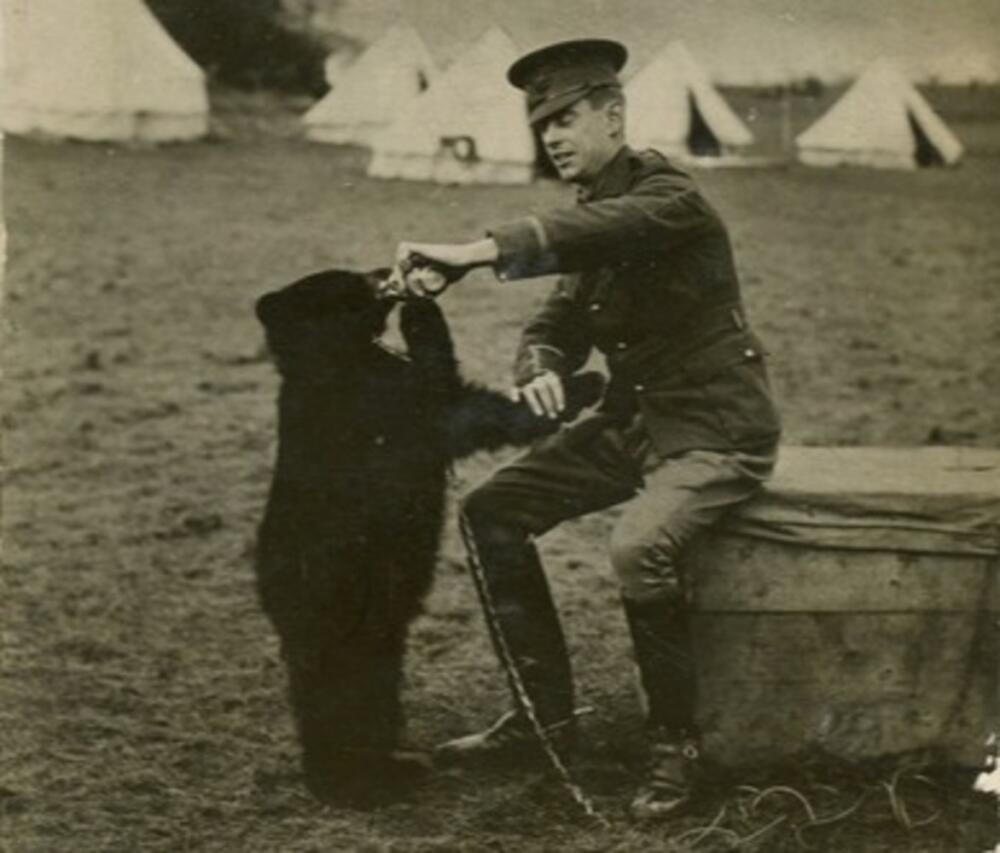
The animals, of course, all under the watchful eye of their human boy, Christopher Robin. It was 12 years earlier, though, in 1914, that Canadian veterinarian and soldier Harry Colebourn headed off to join World War I. On his train journey to the east coast, he met a trapper on a railway platform who sold him a tiny bear cub for $20.
He named her Winnie (after his hometown of Winnipeg) and shipped off to training in England with his regiment, bear in tow. Winnie became the regiment mascot and Coleborne’s constant companion until he was deployed to the front.
Fearing for Winnie’s safety, he brought Winnie to the London Zoo, where she became a favorite among kids, including Christopher Robin (author Milne’s son), who was allowed to play in her enclosure.
The rest is literary history. Harry Coleborne’s great-granddaughter, Lindsay Mattick, tells Winnie’s story in “Finding Winnie: The True Story of the World’s Most Famous Bear.” She joins host “Robin Young” to tell her great-grandfather’s story and discuss Winnie’s powerful legacy.
Christopher Robin and Winnie the bear cub. (Courtesy of Lindsay Mattick)Christopher Robin and Winnie the bear cub, illustrated in “Finding Winnie: The True Story of the World’s Most Famous Bear.” (Courtesy of Lindsay Mattick)Canadian veterinarian and soldier Harry Colebourn with Winnie the bear cub. (Courtesy of Lindsay Mattick)Harry Colebourn’s diary from August 1914 when he bought Winnie. (Courtesy of Lindsay Mattick)
This segment aired on October 6, 2026.