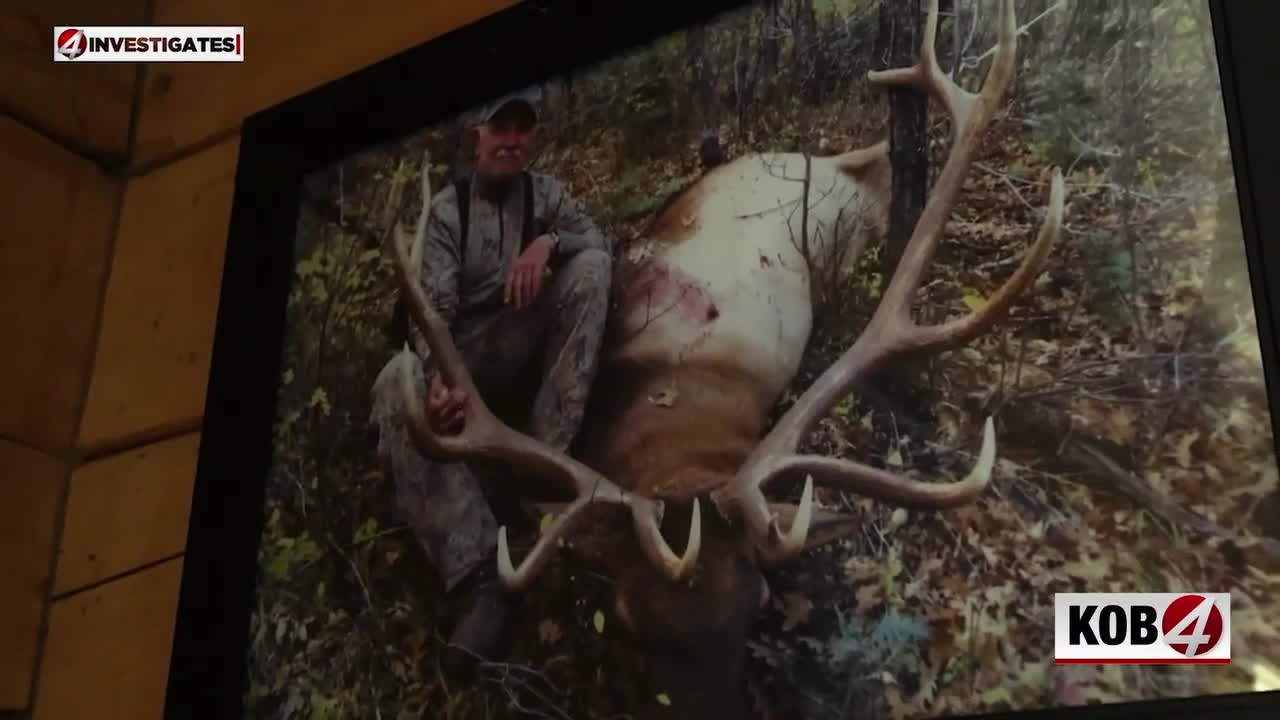
Amid the stunning wilderness of New Mexico, a fierce debate brews over how to protect elk populations and who gets to hunt them. The state’s unique system for allocating elk hunting tags has divided landowners, hunters and conservationists.
CHROMO MOUNTAIN, N.M. – Amid the stunning wilderness of New Mexico, a fierce debate brews over how to protect elk populations and who gets to hunt them. The state’s unique system for allocating elk hunting tags has divided landowners, hunters and conservationists.
Steve Gooding family’s ranch is thousands of acres on the New Mexico Colorado border. He wants future generations to experience the thrill of hunting and the beauty of wild lands. He worries about the loss of healthy forests and invests heavily in habitat improvement.
“We spend about $50,000 a year of our money to better the habitat,” Gooding said.
The EPLUS program
New Mexico’s EPLUS program rewards landowners who opt-in and maintain elk habitat with hunting tags. The better the land, the more tags they receive. Gooding sells some of his tags to out-of-state hunters and uses the proceeds for further habitat work.
“Half of my licenses or authorizations that I receive I turn into habitat improvement,” Gooding said.
On the other side of the fence is Jesse Deubel. He owns 80 acres in the Manzano Mountains but refuses to hunt it on principal. He leads the New Mexico Wildlife Federation, a wildlife activist group pushing for reforms.
“I would go so far as to say I hate the system,” Deubel said.
Deubel’s main frustration is with small landowners selling high-priced tags that allow hunting on vast public lands, in what’s called “unit-wide” tags.
“My biggest frustration with E+ is when you have a landowner that’s got five or 10 or 12 acres of property that have no elk on the property during hunting season, they’re selling a tag for $25,000 or whatever the highest bidder is willing to pay. And that tag is good on hundreds of thousands of acres of public land,” Deubel said.
He believes this practice giving private landowners access to hunt on public land, creates tension and unfairness, especially near the Gila region.
In a webinar put on the Western Landowner Alliance, Aaron Jones presented EPLUS data that shows
Alleged fraud and federal scrutiny
Federal prosecutors recently exposed an alleged elk tag fraud scheme in the Gila area. Ry Ellison, who led the prosecution, described the scope of the fraud.
“I think that most people would be surprised to learn that the scope of this fraud involved hundreds of thousands of dollars,” Ellison said.
According to Ellison, the accused created fake doctors notes to transfer tags to out-of-state hunters, who believed they were buying valid tags.
“These out-of-state hunters did not know that they were participating in fraud on the system. They thought that they were purchasing valid landowner tags,” Ellison said.
The NM Wildlife Department said they’ve made some changes since the fraud scheme was first revealed including checking for duplicate accounts, and cross checking with other state databases, like the MVDs in NM and surrounding states to identify potential fraud.
By the numbers
- One in five New Mexicans successfully draw a tag in the public draw.
- More than one third of all elk tags in New Mexico go to out-of-state hunters, according to the New Mexico Wildlife Federation.
- More tags go to landowners in New Mexico than in any other western state, according to the New Mexico Wildlife Federation.
A system under fire
Some see weaknesses in the current system, and the debate often pits hunters without land against landowners. Gooding urges critics to consider the broader impact.
“I tell that guy, you might want to stand back and take a look at the big picture. Because if you start taking those tags away from that landowner, they may not be as incentivized to do the habitat improvement. You may see your elk numbers really crash,” Gooding said.
Deubel counters that no other western state has a system like EPLUS, yet elk populations thrive elsewhere.
“There’s a lot of times this fear mongering that happens and say, well, if you get rid of E+, elk populations are going to just completely plummet. They’re going to be going to disappear. If you love elk, you better have E+. Well, no other state in the country has E+, but every other western state has a whole bunch of elk,” Deubel said.
Finding common ground
Despite the division, both sides share a passion for elk and the outdoors.
“I want my grandchildren, I want everyone to have the ability and the opportunity to see elk,” Gooding said.
“On the flip side, hunters need to recognize and appreciate the benefits that private landowners provide to our public wildlife,” Deubel said.
The challenge for New Mexico is finding balance in a system that supports both wildlife and access for all residents. The future of elk hunting and conservation in the state depends on how this balance is achieved.
- For Related Stories: 4 Investigates Ryan Laughlin