Your support helps us to tell the story
From reproductive rights to climate change to Big Tech, The Independent is on the ground when the story is developing. Whether it’s investigating the financials of Elon Musk’s pro-Trump PAC or producing our latest documentary, ‘The A Word’, which shines a light on the American women fighting for reproductive rights, we know how important it is to parse out the facts from the messaging.
At such a critical moment in US history, we need reporters on the ground. Your donation allows us to keep sending journalists to speak to both sides of the story.
The Independent is trusted by Americans across the entire political spectrum. And unlike many other quality news outlets, we choose not to lock Americans out of our reporting and analysis with paywalls. We believe quality journalism should be available to everyone, paid for by those who can afford it.
Your support makes all the difference.Read more
Rising sea temperatures are drawing venomous jellyfish and sharks towards South Korea’s coastline in growing numbers, threatening swimmers, divers, and the fishing industry as the summer season peaks.
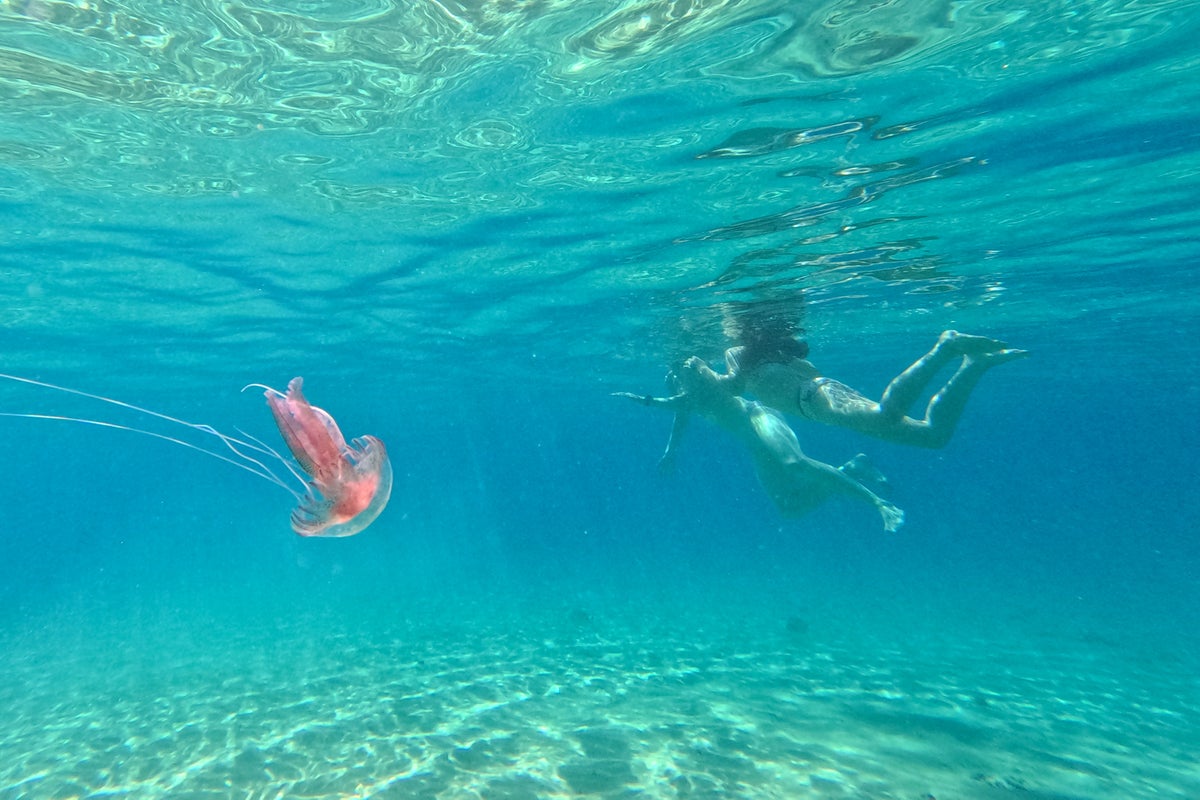
Marine experts say the biggest concern is Nomura’s jellyfish, a giant species that can span 2m across and weigh up to 200kg.
It breeds in waters off China and is carried into Korean waters by ocean currents, where its tentacles deliver painful stings to anyone who comes into contact with them.
Monitoring data from South Korea’s National Institute of Fisheries Science showed the proportion of survey sites reporting the species went from under 3 per cent in mid-June to over 11 per cent by late June.
Around Jeju Island in the south, eight in 10 monitoring personnel had spotted the species this year, more than double the rate recorded a decade ago.
The problem extends beyond the beach. Jellyfish of this size can overwhelm fishing nets, spoil catches and significantly raise operating costs for fishermen working along the coast.
Sand tiger shark with a banded hound shark in its mouth at COEX Aquarium (Getty)
Scientists link the increase directly to warmer water temperatures, which allow the species to survive and spread more easily than in cooler years.
Sharks are also being drawn closer to shore. Residents in Gangneung on the east coast received an emergency phone alert on Saturday after sharks were spotted 4km off Anmok Beach, according to South Korean media.
Sightings were also confirmed near Gyeongpo Beach and local authorities advised swimmers and divers to exercise caution.
The National Institute of Fisheries Science had counted 46 large sharks in Korean waters by late June, nearly four times the number recorded at the same point last year.
Coastal authorities responded by installing offshore safety nets at popular beaches and urging the public to follow local advisories throughout the summer.
Sea surface temperatures in Korean waters rose by about 1.11C between 1968 and 2015, almost 2.5 times the global average increase over the same period, according to South Korea’s submission to the UN.
Warmer seas alter the distribution and behaviour of marine species, drawing warm-water animals further north and closer to shore.
Scientists say without significant reductions in greenhouse gas emissions, sea surface temperatures around the peninsula will continue to rise, making seasonal surges in jellyfish and shark activity an increasingly routine feature of Korean summers.