Your support helps us to tell the story
From reproductive rights to climate change to Big Tech, The Independent is on the ground when the story is developing. Whether it’s investigating the financials of Elon Musk’s pro-Trump PAC or producing our latest documentary, ‘The A Word’, which shines a light on the American women fighting for reproductive rights, we know how important it is to parse out the facts from the messaging.
At such a critical moment in US history, we need reporters on the ground. Your donation allows us to keep sending journalists to speak to both sides of the story.
The Independent is trusted by Americans across the entire political spectrum. And unlike many other quality news outlets, we choose not to lock Americans out of our reporting and analysis with paywalls. We believe quality journalism should be available to everyone, paid for by those who can afford it.
Your support makes all the difference.Read more
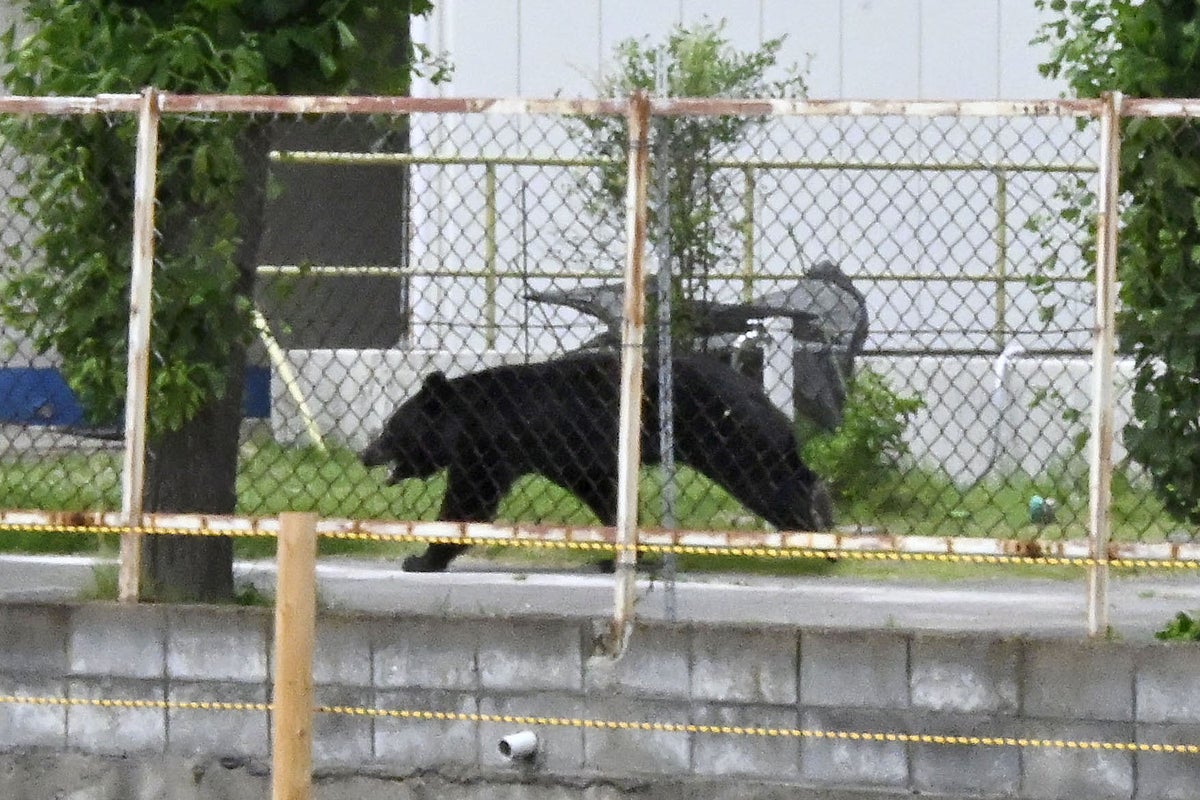
Four climbers had to be rescued by helicopter from a mountain in Japan after a brown bear blocked their descent and left them stranded for over three hours.
The group became trapped on Saturday afternoon after one of them, a man in his 60s, spotted a bear nearly 50m ahead on a trail while descending a 2,141m mountain in Hokkaido, northern Japan.
Three other climbers caught up with him and they were unable to continue.
One of them called emergency services at around 4.50pm local time and all four were airlifted to safety. No one was injured. The bear was described as being around 1.5m tall.
The incident occurred the same day that Mount Rausu on Hokkaido’s Shiretoko Peninsula, a Unesco World Natural Heritage site, opened to climbers for the first time since last August, when a 26-year-old hiker was killed in a bear attack there. Nearly 50 city officials and climbers attended a ceremony on Sunday morning to mark the reopening.
Also on Sunday, an 83-year-old man was attacked by a bear while picking mountain vegetables in Akita prefecture in northeastern Japan.
He suffered injuries to his head and face but was able to communicate when taken to hospital, police said.
The incidents add to a sharp rise in bear encounters across Japan. At least five people have been killed by bears since 1 April, following a record 13 deaths in the last fiscal year.
Japan has begun installing more than 800 cameras in its northern mountains as part of a nationwide bear population survey and authorities in several cities have distributed anti-bear sprays and set up deterrent devices at schools and community facilities.
A sign showing bear deterrent measurements is pictured next to a robotic wolf-shaped deterrent device outside a convenience store at a rural area in Kiryu city in Gunma prefecture (AFP/Getty)
Bear sightings have climbed to an exceptionally high level, with the Tohoku region recording the greatest concentration of incidents.
Scientists attribute the rise to a combination of factors – increase in bear populations, decline of rural communities removing the buffer between bears and towns, poor harvests of mountain food sources such as acorns and beech nuts that push bears to seek food at lower elevations and in suburban areas.
Climate change is also shortening hibernation periods, extending the months in which bears are active and encounters are possible.
Authorities have recommended that hikers travel in groups, carry bear spray and attach bells to their bags, although some researchers have raised questions about whether bells might, in some cases at least, attract rather than deter bears.
The environment ministry uses a four-level alert system for brown bear activity, and bear sighting maps updated in real time are now widely used by hikers and rural residents planning outdoor activities.