Your support helps us to tell the story
From reproductive rights to climate change to Big Tech, The Independent is on the ground when the story is developing. Whether it’s investigating the financials of Elon Musk’s pro-Trump PAC or producing our latest documentary, ‘The A Word’, which shines a light on the American women fighting for reproductive rights, we know how important it is to parse out the facts from the messaging.
At such a critical moment in US history, we need reporters on the ground. Your donation allows us to keep sending journalists to speak to both sides of the story.
The Independent is trusted by Americans across the entire political spectrum. And unlike many other quality news outlets, we choose not to lock Americans out of our reporting and analysis with paywalls. We believe quality journalism should be available to everyone, paid for by those who can afford it.
Your support makes all the difference.Read more
The Chinese government’s ban on drinking at official and Communist Party events has dealt an unexpected blow to major wine producers around the world.
In May, lawmakers in Beijing banned drinking alcohol at government and party events as part of the nation’s ongoing austerity measures, the Wall Street Journal reports.
The move comes against the background of other challenges to California’s vintners including the effects of President Donald Trump’s global trade wars.
In 2025, U.S. exports of sparkling wine to China reportedly increased by 52.9 percent in the first nine months of 2025.
However, the website Vinetur reported that U.S. wine exports overall ended up dropping by 31.4 percent by the end of 2025, with a loss of $300 million, the steepest drop of any of the world’s major wine producers and nearly three times worse than that of Australian winemakers. According to data compiled by Del Ray AMW, the U.S. downturn was particularly pronounced in the Chinese and Canadian markets.
The Chinese government has enacted a drinking ban for officials conducting business, which has resulted in a sharp decline in red wine imports into the mainland (Getty)
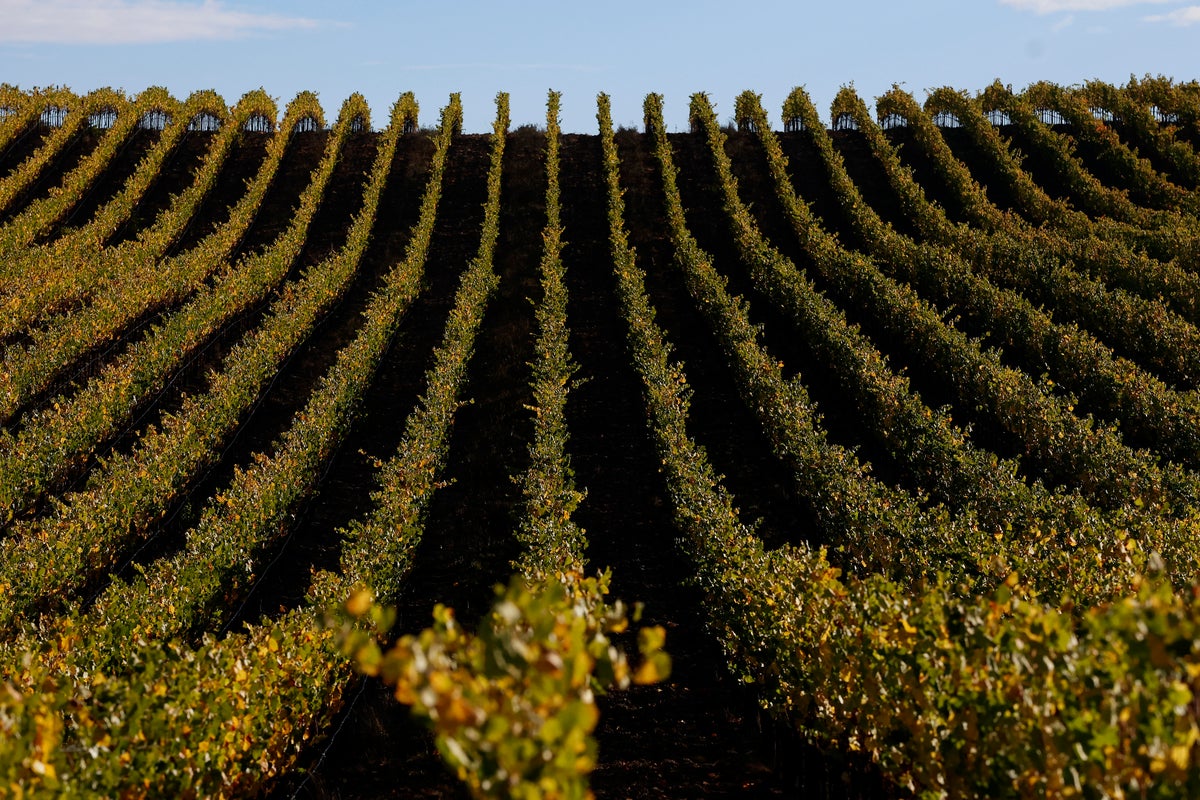
This month The Independent reported that winemakers in the Napa and Sonoma valleys were having to close facilities and lay off hundreds of workers for a variety of reasons – including that Americans themselves are drinking less wine.
While the drinking ban isn’t necessarily meant for the broader Chinese public, a USDA report from 2025 examining the ban noted that there is a culture of “over-enforcement” in China, where policies like the drinking ban are adopted locally.
“Some regions interpret “no alcohol during working hours” as a full weekday ban, and in some cases, officials must seek approval to drink on weekends or holidays,” the report notes. “This over-compliance strengthens the regulation’s impact and accelerates broader shifts in China’s drinking culture, particularly in high-end hospitality and banquet sectors.”
The report further noted that “high-end wine segment is directly affected because it has traditionally relied on formal, high-status banquets,” and added that “initial wine sales fell by 50 percent” after the policy was enacted, and that the drop could be worse for red wine exporters.
China began increasing its imported wine in the mid-2000s. By 2017, its global wine imports grew from less than 1 percent to 8 percent.
Wining and dining was standard operating procedure for many Chinese officials, but austerity watchdogs began cracking down on the practice last year. Nine officials even faced disciplinary measures after a local official in Henan province died from overdrinking during a banquet in the middle of the day.
It’s not just officials cutting back. Because of wine’s association with banquets and official functions, younger Chinese people don’t typically turn to it for nights out or celebrations.
One Chinese woman, Wang Nan, 26, told the WSJ she drinks as little red wine as possible because it stains her lips and she doesn’t enjoy the taste. She said she never serves red wine at events she hosts.
Australian winery Treasury Wine Estates said it would hold off on future shipments to China, and European drink companies Pernod Ricard and Diageo both said they were logging double-digit drops in their Chinese sales as a result of the ban.
Chinese wine imports have been falling in recent years. They are currently at half of China’s peak wine-importing year, 2018, when the nation bought $3 billion worth of foreign wine.
According to the WSJ, Borambola Wines, based in Australia, earned 40 percent of its profit from Chinese sales as recently as 2019. Over the last year, it has not recorded a single sale. Tim McMullen, the owner of the winery, told the paper that the dip in sales has forced him to leave 30 percent of his fruit to rot on the vine as a result.
He said that China previously was a strong market, but “it’s all changed.”