(function(w,q)w[q]=w[q])(window,”_mgq”);
Editor’s note: This is a developing story.
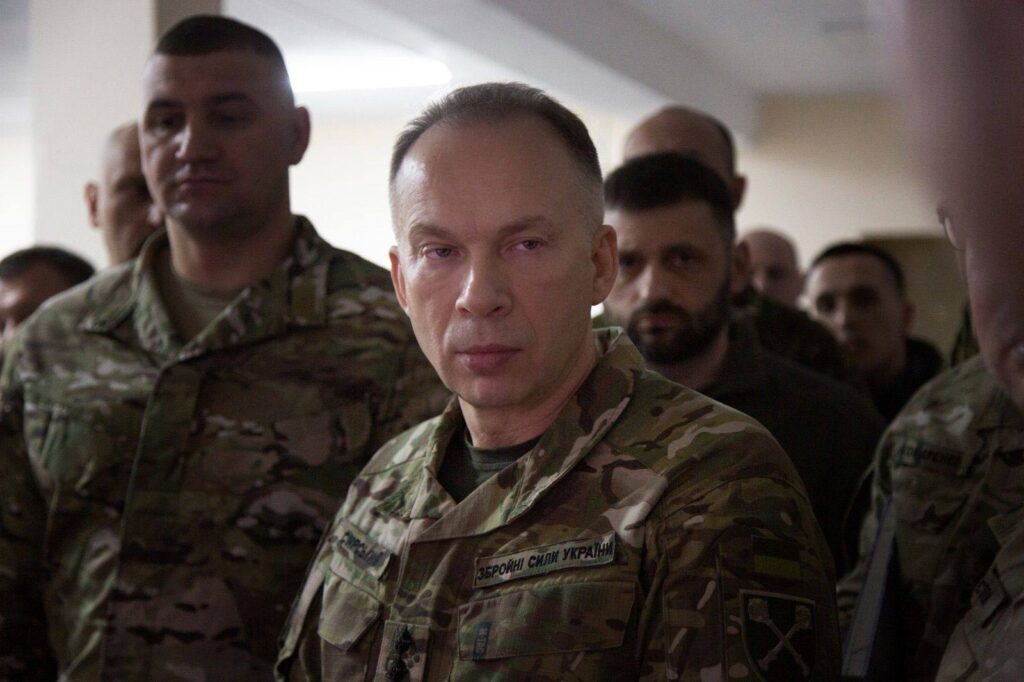
Ukrainian President Volodymyr Zelenskyy announced on 21 July that Major General Mykhailo Drapatyi will become Ukraine’s next commander-in-chief, replacing Oleksandr Syrskyi in the most significant shake-up of the country’s military leadership since the start of Russia’s full-scale invasion.
Syrskyi’s replacement follows a week of upheaval that began with Zelenskyy’s dismissal of the popular reformist Defense Minister Mykhailo Fedorov. The move exposed deep divisions over military reform and battlefield strategy, with Fedorov publicly criticizing Syrskyi’s leadership and the decision prompting several days of protests across Ukraine.
Zelenskyy said the decision followed consultations with Drapatyi, SBU special operations commander Yevhen Khmara, and presidential office deputy head Pavlo Palisa on restructuring the General Staff.
He thanked Syrskyi for leading Ukraine’s defense during the Battle of Kyiv, the 2022 Kharkiv counteroffensive, and the Kursk operation, adding that he, Syrskyi, and Chief of the General Staff Andrii Hnatov had also discussed the transition and their future roles.
“Tomorrow we will formalize all the decisions,” Zelenskyy said in his evening address. “Ukraine must emerge stronger from this situation, and it must become harder for Russia.”
Zelenskyy also said he met with Fedorov today and offered him a new role in government focused on bringing together Ukraine’s technological capabilities and supporting their development. The president did not specify the position.
Drapatyi thanks Zelenskyy and Syrskyi
Drapatyi thanked Zelenskyy for his trust and Ukraine’s Defense Minister for their support, saying that serving Ukraine during the war of independence carries “absolute responsibility.”
He also thanked Syrskyi for his work in strengthening the Armed Forces, saying he had grown professionally under Syrskyi’s leadership.
“I will work responsibly, with focus, and with respect for the people who are defending our state today,” Drapatyi wrote on Facebook.
Ukraine’s new Commander-in-Chief of the Armed Forces Mykhailo Drapatyi. Photo: Mykhailo Drapatyi on Facebook
Fedorov welcomes Drapatyi’s appointment
Former Defense Minister Mykhailo Fedorov welcomed Drapatyi’s appointment, calling it “new air and new hope” in Ukraine’s fight for independence and justice.
Fedorov said the new military leadership would need to meet high expectations with a clear vision for ending the war, a strong team, and actions focused on preserving soldiers’ lives, expanding battlefield robotics, carrying out asymmetric strikes, and weakening Russia’s economy.
He also thanked Syrskyi for his role in defending Kyiv Oblast, the Kharkiv counteroffensive, and other major battles, calling them an important part of Ukraine’s history. At the same time, Fedorov said Ukraine needed to move faster and correct past mistakes.
A week of turmoil
Syrskyi’s dismissal comes less than a week after Zelenskyy removed Fedorov in the most significant government reshuffle since the start of the full-scale war.
The move quickly evolved into a public confrontation over the future direction of Ukraine’s military. Zelenskyy acknowledged that relations between the Defense Ministry and the Armed Forces’ leadership had broken down, saying he ultimately had to choose between Fedorov and Syrskyi because the two could no longer work together effectively.
Fedorov accused Syrskyi of blocking reforms
Following his dismissal, Fedorov publicly confirmed he had been in conflict with Syrskyi, accusing the commander-in-chief of obstructing military reform and resisting changes needed to adapt Ukraine’s armed forces to modern, drone-centric warfare.
He said initiatives developed by the Defense Ministry were systematically blocked after Zelenskyy decided to keep Syrskyi in command. Fedorov also accused the general of fueling internal divisions rather than focusing on defeating Russia, while stressing that he respected the president’s authority as supreme commander.
The former defense minister argued that Ukraine needed fundamental changes to its military leadership to gain an advantage over Russia, framing the dispute as one between reform and the preservation of existing command structures.
At its core, the dispute represented a clash between two visions for Ukraine’s military future: a faster transition toward a technology-driven force centered on drones and innovation, and a more traditional command approach focused on established military structures and battlefield experience.
Then-Defense Minister Mykhailo Fedorov (center) during a visit to the TNO defense research center in the Netherlands, one of the partnership trips he highlighted in his farewell message. Photo: Mykhailo Fedorov / Telegram
Rare wartime protests spread across Ukraine
Fedorov’s dismissal sparked the largest public protests seen in Ukraine since Russia’s full-scale invasion began.
Demonstrations began in Kyiv before spreading to cities including Lviv, Odesa, Dnipro, and others, with protesters demanding Fedorov’s reinstatement and Syrskyi’s removal. Many argued that replacing the architect of Ukraine’s defense technology reforms risked slowing military innovation at a critical stage of the war.
The protests continued across Ukraine on 21 July, with demonstrators again calling for Fedorov’s reinstatement and Syrskyi’s dismissal. Protesters carried signs reading “Bring Fedorov back” and “Syrskyi out,” accusing the military leadership of resisting reform.
Protesters at the Taras Shevchenko monument in Lviv on 20 July 2026, the fifth straight day of rallies over the government reshuffle. Cardboard signs read “To be handed personally into Ze’s paws!”—mimicking the wording of a hand-delivered letter to President Volodymyr Zelenskyy—alongside “There are no vacations in war,” a jab at lawmakers on summer recess, and “Vova, can you hear?”, using the president’s diminutive. Photo: Euromaidan Press
Zelenskyy consulted military leaders as pressure mounted
As pressure mounted following Fedorov’s dismissal, Zelenskyy launched consultations on the future leadership of Ukraine’s Armed Forces.
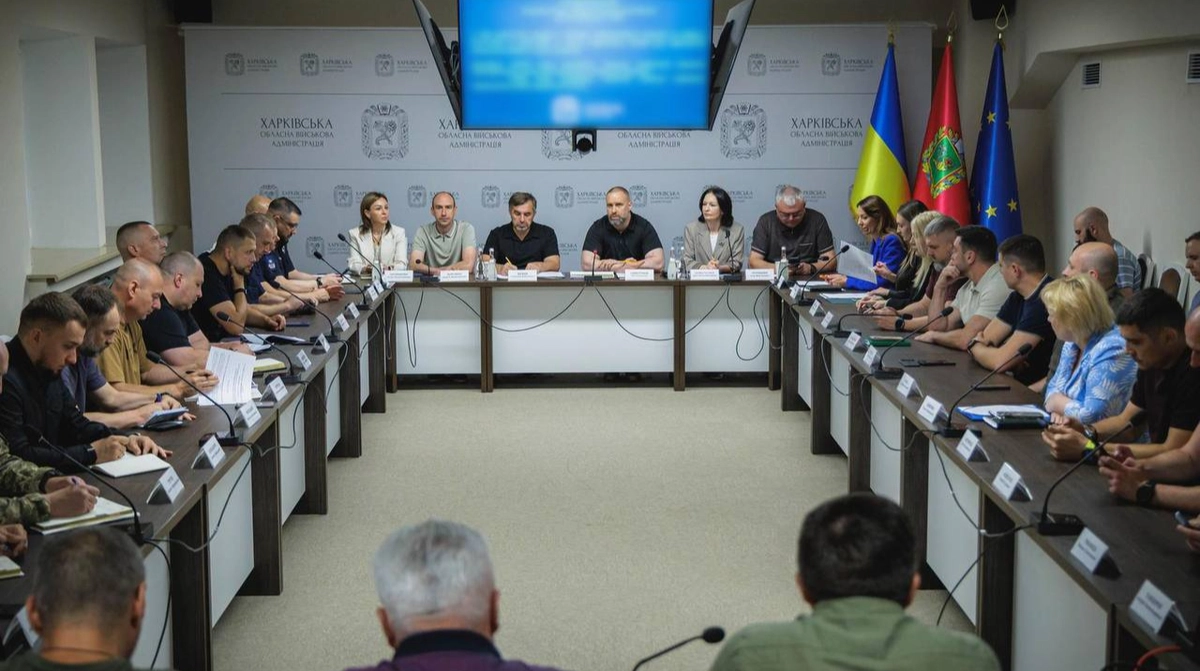
Over the last several days, the president met with senior military commanders, government officials, and representatives of the defense sector, but did not confirm that the consultations were related to changes in the military’s command structure.
He said the discussions focused on improving coordination, accelerating battlefield innovation, and strengthening Ukraine’s ability to respond to Russia’s evolving tactics.
The consultations came amid growing public debate over the direction of Ukraine’s armed forces, with supporters of Fedorov arguing that the military needed to accelerate reforms and expand its use of emerging technologies, particularly drones and autonomous systems, while others stressed the need for continuity in wartime command.
Read also
-
Oil exports from Europe’s second-largest external supplier thrown into crisis by Black Sea tanker attacks
-
Secret German-Russian meeting on Ukraine war took place in Baku without authorities’ knowledge, Aliyev says
-
Russian MiG-29 jet and the Pantsir air defense meant to protect it both hit in Ukrainian strike on Kursk airfield
(function(w,q))(window,”_mgq”);