(function(w,q)[];w[q].push([“_mgc.load”]))(window,”_mgq”);
Ukraine became the world’s largest recipient of major arms in 2021–25, absorbing nearly 10% of all global arms transfers as Russia’s invasion drove the dramatic shift in the global weapons trade in decades, according to a new fact sheet from the Stockholm International Peace Research Institute (SIPRI). Russia’s own arms exports collapsed, and Europe rearmed at a pace unseen since the Cold War’s 1960s.
As Russia’s full-scale invasion has entered its fifth year, Ukraine’s rise to the top of the global arms import rankings reflects a coordinated effort by dozens of states to sustain the Kyiv resistance while Europe’s arms imports have reached their highest share of global transfers in six decades.
Ukraine: from near zero to number one
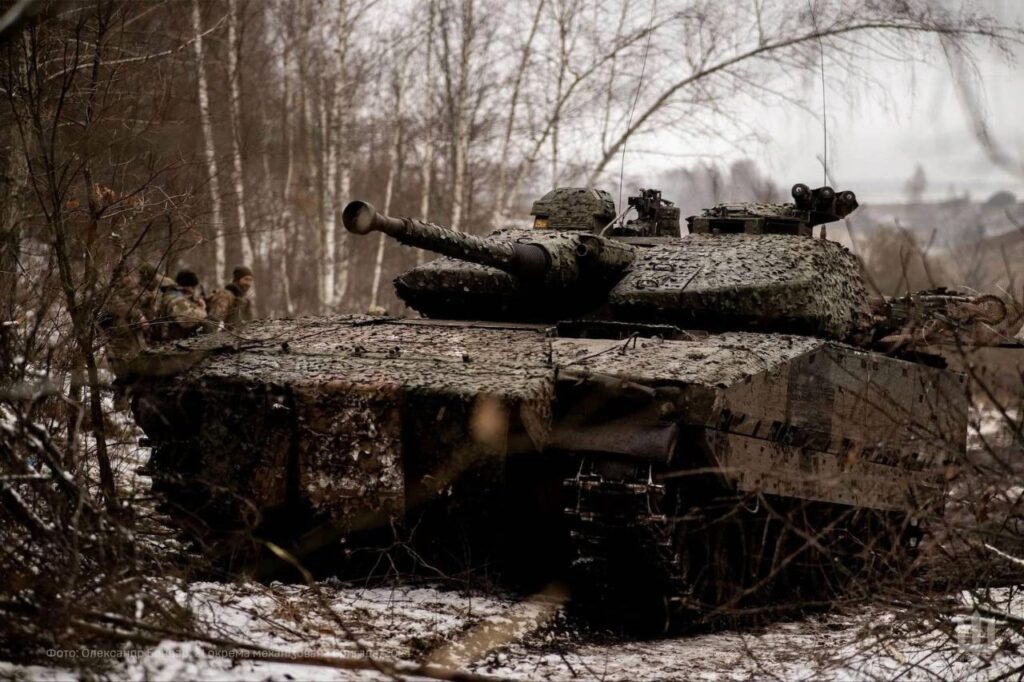
Ukraine’s share of global arms imports soared from 0.1% in 2016–20 to 9.7% in 2021–25 — a rise of 11,896%. At least 36 states supplied Ukraine with major weapons after Russia launched its full-scale invasion in February 2022. The USA covered the largest portion — 41% of Ukrainian imports — followed by Germany (14%) and Poland (9.4%).
The 10 largest recipients of major arms and their main suppliers, 2021–25. Infographic: SIPRI Arms Transfers Database, March 2026
2025: US pulls back, Europe fills the gap
Arms deliveries to Ukraine fell substantially in 2025 compared to 2023 and 2024. SIPRI notes a significant increase in secrecy around US arms transfers to Ukraine that year, but publicly available information indicates the Trump administration reduced US military aid. European states, Canada, and Australia stepped up large-volume deliveries and pledged to continue in coming years.
Global share of imports of major arms by the 10 largest recipients, 2021–25. Chart: SIPRI Arms Transfers Database, March 2026
A key mechanism cushioning the gap: in 2025, at least 25 states agreed to purchase major arms from the USA for transfer to Ukraine through the Prioritized Ukraine Requirements List (PURL) — a NATO-US program that lets allies pool funds to buy weapons from American stockpiles for direct delivery to Kyiv. SIPRI counts those purchases — including air defense missiles and guided bombs — as US arms exports to Ukraine. PURL, launched in July 2025, had attracted over $4.5 billion in allied commitments by February 2026.
Russia: global arms exporter in freefall
Russia remained the world’s third-largest arms exporter in 2021–25, but its position weakened sharply. Its share of global arms exports fell from 21% to 6.8% — a drop of 64% in volume. It was the only supplier in the global top 10 whose exports declined. Major clients — Algeria, China, and Egypt — all reduced purchases. Nearly three quarters of Russia’s exports went to just three states: India (48%), China (13%), and Belarus (13%).
Changes in the volume of exports of major arms since 2016–20 by the 10 largest suppliers in 2021–25. Chart: SIPRI Arms Transfers Database, March 2026
Russia’s pending export orders are far thinner than those of the USA, France, or most other top-10 suppliers, SIPRI noted. On the import side, Russia brought in one-way attack drones and missiles from Iran and artillery and missiles from North Korea to sustain its war.
Europe rearms — fast
Arms imports by European states more than tripled between the two periods (+210%), pushing Europe to 33% of global arms imports — its highest regional share since the 1960s. European NATO states’ combined imports grew 143%, with the USA supplying 58% of that total. Poland led all European NATO importers, with arms purchases up 852%, drawing mainly on South Korea (47%) and the USA (44%). Denmark’s arms exports rose 739%, with half directed to Ukraine.
Global trade: biggest jump in a decade
Global arms transfers grew 9.2% between 2016–20 and 2021–25 — the steepest increase since 2011–15. The USA accounted for 42% of all global arms exports (up from 36%), and for the first time in two decades its largest export destination was Europe (38%). France, Germany, Italy, South Korea, and Israel all increased their exports in the period.
Read also
-
Brent at $100, Urals at $91: the Iran war handed Moscow its best oil week in years
-
Britain joins PURL: $205 million for US-made weapons as NATO aims to raise $15 billion for Ukraine in 2026
-
“Sleeping giant” awakens: EU launches €6 billion Drone Alliance with Ukraine as US shifts to Indo-Pacific
(function(w,q)[];w[q].push([“_mgc.load”]))(window,”_mgq”);