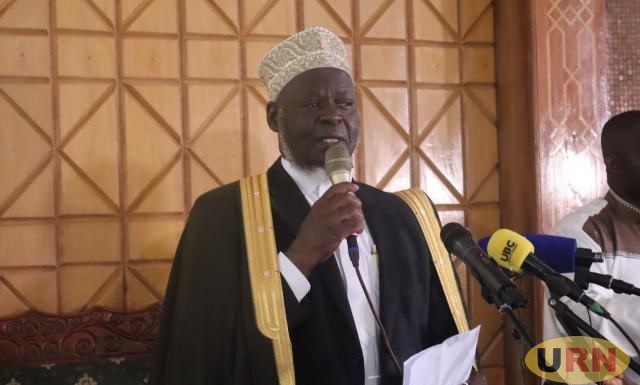
The Mufti of Uganda His Eminence Shiekh Shaban Ramadhan Mubaje
Kampala, Uganda | URN | The Mufti of Uganda, Sheikh Shaban Ramadhan Mubaje, has accused some officials involved in organizing Hajj pilgrimages of commercializing the sacred Islamic journey, warning that the growing profiteering is fueling confusion, exploitation, and repeated travel failures among Ugandan pilgrims.
His remarks come amid fresh controversy surrounding this year’s Hajj arrangements, where several intending pilgrims reportedly failed to travel to Saudi Arabia despite paying millions of shillings for the pilgrimage.
Speaking during Eid prayers at Old Kampala National Mosque, Mubaje said Hajj management in Uganda has increasingly drifted away from its religious purpose and turned into what he described as a “business enterprise.”
The Mufti alleged that some individuals entrusted with coordinating the pilgrimage were exploiting intending pilgrims for personal gain and frustrating attempts to reform the system.
Mubaje further revealed that although President Yoweri Museveni had allocated 100 Hajj slots to the Uganda Muslim Supreme Council this year, only 17 beneficiaries reportedly travelled.
“The 83 slots were grabbed by people claiming to represent the state. As we speak, they are in Mecca with their loot,” he said.
Mubaje said Muslim leaders would now engage both government officials and President Museveni to reform and streamline the Hajj management system.
This year, Uganda sent more than 1,000 pilgrims for Hajj, but the exercise has again exposed longstanding concerns over coordination, transparency, travel clearances, and the allocation of pilgrimage slots.
The latest dispute has also intensified the ongoing power struggle between the Uganda Muslim Supreme Council and the Uganda Bureau of Hajj Affairs over who should officially coordinate Hajj activities in Uganda.
In response to the growing complaints, Minsa Kabanda, Kampala Central MP and Minister-designate for Kampala Metropolitan Affairs, pledged that the government would investigate the recurring failures and engage all stakeholders to streamline the process.
“We need to sit and understand the problem and have an answer. We need to improve this. We will work with my sister, Lukia Nakadama, and find a solution,” Kabanda, who represented the government on Eid prayers, said.
For years, Ugandan Muslims have complained about soaring Hajj costs, last-minute travel cancellations, visa delays, and incidents in which intending pilgrims allegedly lost millions of shillings after failed travel arrangements.
The crisis has been compounded by an ongoing power struggle between the Uganda Muslim Supreme Council and the Uganda Bureau of Hajj Affairs over control of Hajj operations in Uganda.
In recent months, UMSC moved to suspend the activities of UBHA, accusing the body of mismanagement, irregularities, and inflating operational costs, while reasserting itself as the sole institution mandated to oversee Hajj affairs.
Muslim leaders argue that placing Hajj coordination under one authority would reduce confusion, improve accountability, and shield pilgrims from exploitation. However, the standoff between the two bodies has instead deepened uncertainty and triggered administrative delays that have affected many intending pilgrims.