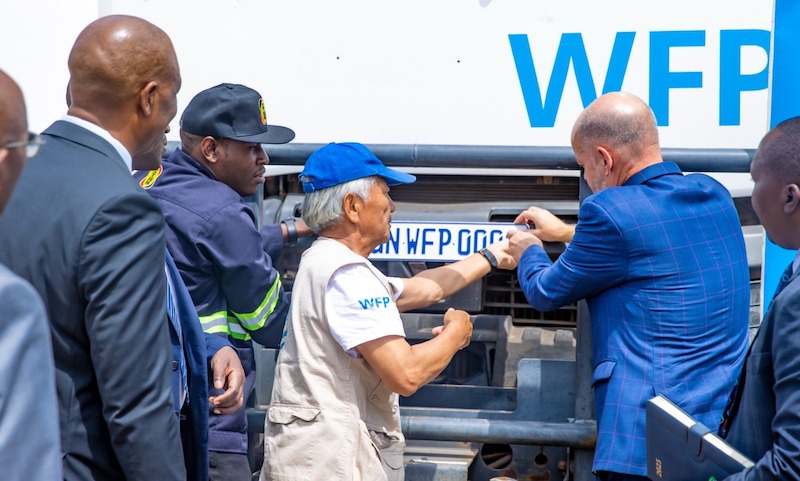
Uganda and the United Nations World Food Programme (WFP) have signed a landmark agreement to establish a Global Fleet Emergency Hub in Kampala, marking a major step in strengthening humanitarian response capabilities across the African continent.
The world’s largest humanitarian organisation will use the Kampala hub to rapidly deploy emergency assistance across Africa, saving lives and supporting communities recovering from conflict, natural disasters, and the growing impacts of climate change.
In 2024 alone, WFP Uganda delivered 173,745 metric tons of food assistance to 545 locations nationwide, reaching more than two million people. The agency also transported 10,000 metric tons of relief supplies for partners and moved an additional 33,000 metric tons to neighbouring countries, including Burundi, the Democratic Republic of Congo, Kenya, South Sudan, and Ethiopia.
With the new Global Fleet Hub, WFP expects its regional capacity to expand dramatically. WFP Uganda country director Marcus Prior said the Kampala hub will serve as a rapid deployment centre for humanitarian emergencies across Africa.
“When conflicts displace populations in the Great Lakes region, Kampala will be the launch point for a coordinated response,” said Prior.
He added that working with partners, WFP will ensure that when crises strike on the continent, “help will arrive faster, reach further, and save more lives.”
Works and Transport minister Gen Edward Katumba Wamala emphasised Uganda’s strategic logistical advantage in hosting the hub.
“Uganda’s geographic position at the heart of East Africa, combined with our robust transport infrastructure and progressive trade facilitation policies, makes Kampala the natural choice for this continental logistics hub,” said Katumba.
Under the agreement, UN/WFP fleet vehicles will receive specially designed number plates manufactured in Uganda through the Intelligent Transport Monitoring System (ITMS) Programme.
The plates integrate advanced hardware, software, and security features to streamline humanitarian fleet movement.
The fleet will have special number plates
“The distinctive UN/WFP plates represent more than administrative efficiency; they symbolise our collective commitment to ensuring that emergency supplies reach those in need without delay,” Katumba said.
The new plates eliminate lengthy deregistration and re-registration procedures at border points, ensuring seamless cross-border movement.
By reducing bureaucratic delays and aligning with regional transport frameworks, Uganda and WFP aim to cut costs, speed up delivery times, and strengthen the broader regional logistics ecosystem.
Damir Makhmutov, ITMS project manager and provider of the special plates, commended Uganda’s leadership. He said it is encouraging to see Uganda emerge as a key player in international programmes across the continent, adding that they are “very proud of the government’s strategy and determination in developing the transport sector,” which he believes will accelerate national and regional development.
Minister of Foreign Affairs Jeje Odongo said Uganda has long been at the forefront of humanitarian efforts, hosting Africa’s largest refugee population while maintaining its commitment to regional solidarity.
“By hosting the WFP Global Fleet Hub, we are extending our humanitarian leadership beyond our borders. This agreement demonstrates that when we invest in logistics infrastructure and remove bureaucratic barriers, we save lives not just in Uganda, but across the entire continent.”