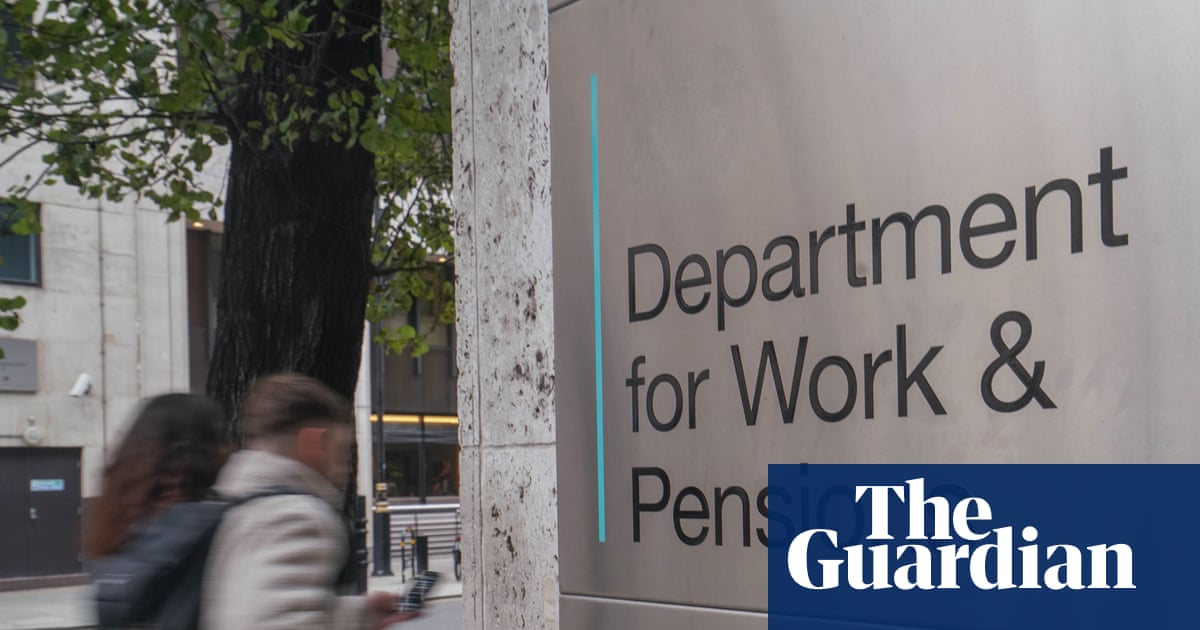
The Department for Work and Pensions has confirmed it was the subject of a cyber-attack, a day after benefits and pension services were taken offline.
The DWP took down several systems on Friday. Many still appeared to be offline 24 hours later. A spokesperson confirmed the attack on Saturday afternoon, adding: “Alongside the National Cyber Security Centre and Government Cyber Coordination Centre, we are working to understand the cause of an attempt to gain unauthorised access to our systems.”
Anyone trying to check their state pension, make an application for disability benefits or claim universal credit was unable to do so after the government took its portal down on Thursday after detecting “unusual activity”.
Officials said there was no evidence of any personal details being compromised, and pensions and benefit payments continued to be made as normal.
The DWP makes about 2.5m regular payments a day and it is understood that reported delays are not related to the incident. The department urged people to be alert to any scams related to the outage and stressed that the government would never ask people to confirm bank details or click on a link.
DWP insiders said payments for Friday would already have been sent earlier in the week, but there could be a backlog of manual payments running into tens of thousands due early next week which would have to be processed over the weekend. Internal DWP systems were restored on Friday, allowing officials to begin working again, but the public-facing portal remained offline.
It also said people should contact their benefit helpline if they were having urgent difficulties and confirmed that no one would face a sanction for not meeting conditions while the system was offline.
Pat McFadden, the work and pensions secretary, said on Friday that all regular benefit payments were still being made, but many claimants said they were worried about delays in applying for emergency payments after some appointments were cancelled and individuals were unable to access their accounts.
McFadden added there was a “constant effort” to ensure systems were secure. “When an incident like this happens, the most important thing is to take the system offline as early as possible to protect it, then to investigate the causes, and at the same time to make sure that payments to the public can continue as normal.”
Internal DWP systems were restored on Friday, allowing officials to begin working again, but the public-facing portal remained offline.
Sarah Merritt, a 23-year-old graduate, said her jobcentre appointment was cancelled because of the outages. “I get to my appointment only to hear all appointments are cancelled because of the cyber-attacks – as all services went offline, people with appointments were not able to be informed. This means I had to walk there and back in the rain for no reason. Although I know it’s not the staff’s fault, you would hope that these situations would be better prevented.”
Downing Street has said there was no evidence a “malicious actor” had targeted other government departments.
skip past newsletter promotionFree newsletter |Average of 2-3 times a day
Sign up to Breaking News UK
Sign up for the Breaking News UK email to get newsletter alerts direct to your inbox
after newsletter promotion
The breach is the latest in a series of cybersecurity incidents to hit the UK and comes days after the government issued a warning of an increased risk of Russian sabotage attacks in the UK, particularly against businesses supporting Ukraine.
Earlier this month, a number of UK meat suppliers said their fridges heated up overnight as they were affected by hacks targeting software used by supermarkets across Europe.
In recent weeks, fashion retailers Next and Asos have separately flagged incidents that saw unauthorised access gained to some data.
Senior MPs have called on the government to redouble its efforts to protect its systems. Chi Onwurah, the Labour MP who chairs the Commons science and technology committee, said it should be a “wake-up call” for the government and public bodies.
She said: “My committee has repeatedly warned that the government cannot achieve its digital transformation of public services without addressing weaknesses in its digital infrastructure and improving standards of data hygiene.”