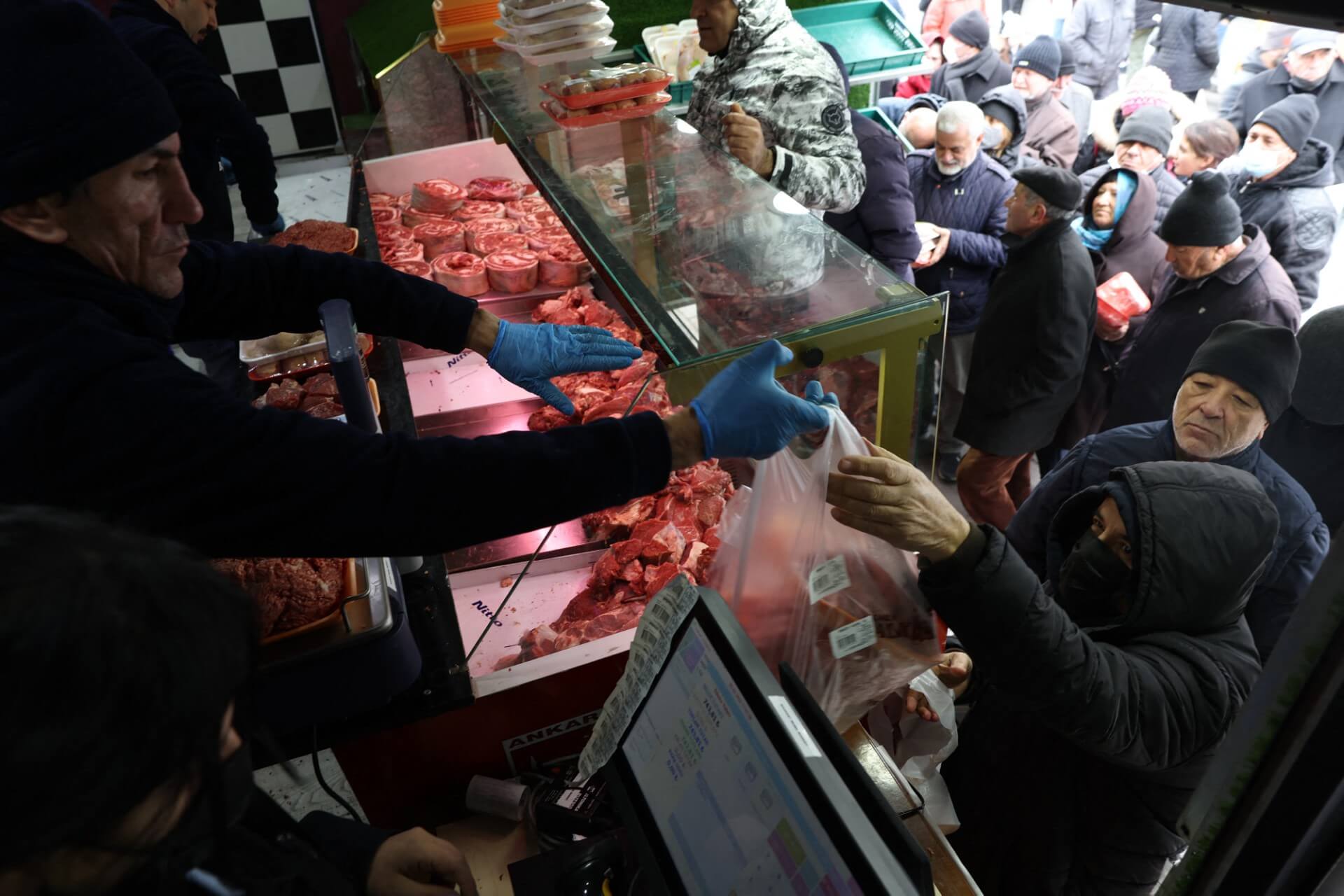
Food prices in Turkey rose 31.69 percent year-on-year in January, nearly 12 times the 2.7 percent annual increase recorded in the eurozone’s food, alcohol and tobacco category, according to data from the Turkish Statistical Institute (TurkStat) and Eurostat.
The gap was also wide in overall consumer prices. Turkey’s annual inflation stood at 30.65 percent in January, down from 30.89 percent in December and the lowest since November 2021, while the eurozone’s annual rate fell to 1.7 percent from 1.9 percent in December. Turkey’s headline inflation was about 18 times the eurozone average.
Food and non-alcoholic beverages drove Turkey’s monthly increase of 4.84 percent. The food category rose 6.59 percent in a single month, adding 1.61 percentage points to headline inflation, according to TurkStat. That one-month increase alone was about 2.4 times the eurozone’s annual food inflation rate.
Transportation costs rose 5.29 percent on the month. Housing, water, electricity, gas and other fuels climbed 4.43 percent.
The January data reflected revised methods for calculating consumer prices by TurkStat. The agency reset the base year to 2025 and adopted a new international classification system for household spending categories used by the European Union. The weight of food and non-alcoholic beverages in the basket was reduced to 24.44 percent from 24.96 percent, while the number of items tracked increased to 428 from 407.
Turkey leads OECD in food inflation
Turkey’s food prices have outpaced those of other Organisation for Economic Co-operation and Development (OECD) member countries. Data released by the OECD for November 2025, the most recent month available, showed Turkey’s food inflation at 27.4 percent, more than four times the rate of Estonia at 6.5 percent and nearly seven times the OECD average of 4.0 percent.
By January Turkey’s food inflation had climbed to 31.69 percent, widening the gap with other advanced economies.
Economists say food surge is structural
Economist İris Cibre said in a post on X that the food price increases are structural rather than seasonal. She shared a chart based on TurkStat index data showing that meat, fruit and vegetable prices have risen faster than the overall consumer price index since January 2020, with meat showing the steepest rise.
Economist İnan Mutlu, citing data compiled from the Union of Turkish Agricultural Chambers, said the price of a kilogram of beef rose 2,853 percent between January 2020 and January 2026, from 31.20 lira to 921.38 lira. Zucchini prices increased 1,949 percent over the same period. Lamb rose 1,784 percent, pistachios 1,562 percent, rice 958 percent, olive oil 871 percent, butter 830 percent and chicken 698 percent, according to the data.
Mutlu added: “TurkStat didn’t hide the item basket for nothing,” referring to the agency’s decision to stop publishing detailed item-level price lists in 2022. A court ordered TurkStat to release the data, but the agency has not complied. The Confederation of Progressive Trade Unions of Turkey (DİSK) has published archived copies of the lists on its website.
Debate over revised inflation calculations
TurkStat’s revisions have drawn criticism from economists who argue the changes reduce the measured impact of food prices on headline inflation. The restructuring expanded the number of main spending categories from 12 to 13 by adding insurance and financial services as a separate group. It also shifted the basis for category weights from household budget surveys to national accounts data.
The Independent Inflation Research Group (ENAG), a group of indenpendent Turkish experts who challenge the official inflation data, reported that consumer prices rose 6.32 percent month-on-month and 53.42 percent year-on-year in January, higher than the official figures.
Turkey has battled high inflation for years, with consumer prices peaking above 85 percent in 2022. The Central Bank of the Republic of Turkey raised its key interest rate to 50 percent through a series of hikes beginning in mid-2023. It began cutting rates in December 2024 as inflation eased. Analysts have said pressure from food and services prices could complicate further rate cuts, particularly ahead of Ramadan, which begins in mid-February and often brings higher demand for food.