Bünyamin Tekin
Turkey’s new defense pact with Saudi Arabia and Pakistan is unlikely to draw Ankara directly into a war with Iran or India unless the three countries build joint command and troop structures, former Turkish diplomat Mustafa Enes Esen told Turkish Minute.
Esen’s assessment followed a public warning by retired ambassador Selim Kuneralp, who said the pact could expose Turkey to conflicts arising from Pakistan’s rivalry with India and Saudi Arabia’s confrontation with Yemen’s Houthis and their main supporter, Iran.
Mekke’de imzalanan anlaşmanın NATO’nun meşhur Beşinci maddesi gibi bir ülkeye yapılan saldırı diğerlerine yapılmış sayılır maddesi içerdiği açıklandı. Pakistan nedeniyle Hindistan’a, Suudi nedeniyle Husiler vasıtasıyla İran’la savaşa sürüklenme ihtimalimiz gerçekten mevcutmuş.
— Selim Kuneralp (@kuneralpS) August 7, 2026
Mustafa Enes Esen is a former Turkish diplomat. He earned his master’s degree from Georgetown University. His areas of interest are Turkish foreign policy, the Middle East and international security issues. He is currently a researcher at InstituDE.
“It turns out that the possibility of our being dragged into a war with India because of Pakistan, and with Iran through the Houthis because of Saudi Arabia, is real,” Kuneralp wrote on X after the agreement was signed on Friday. Hours earlier, he had criticized the lack of information released about its terms.
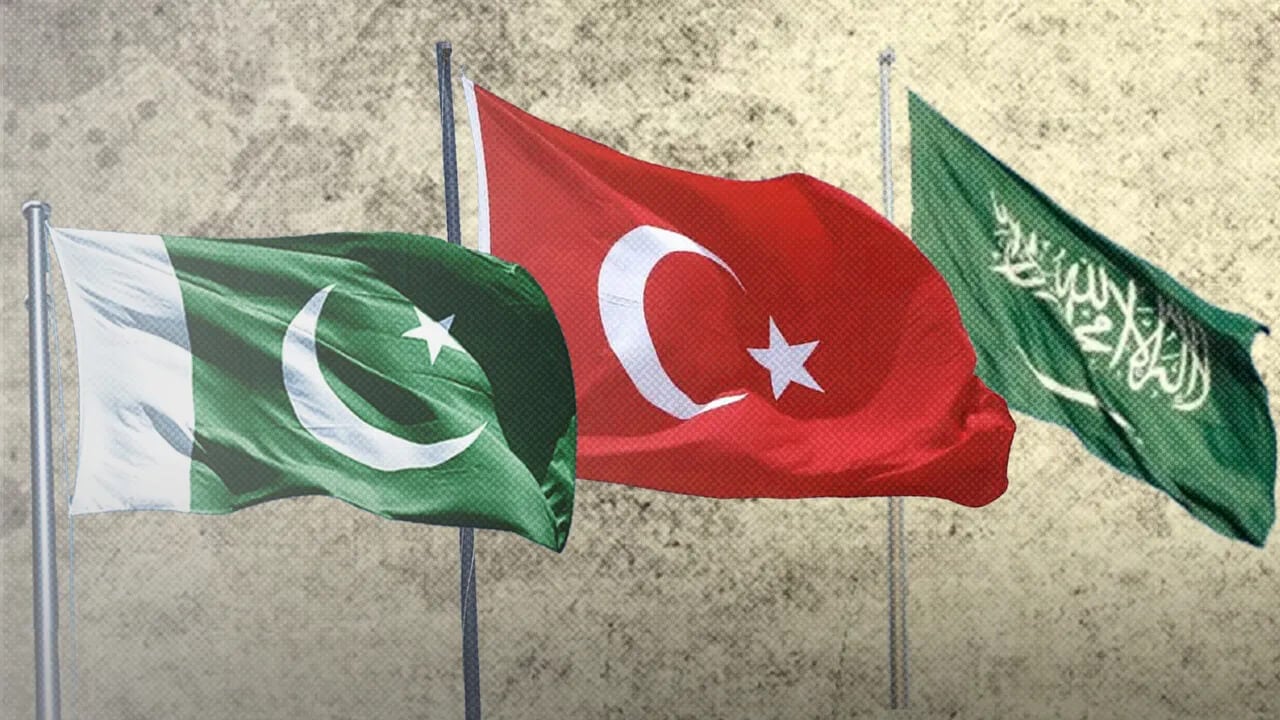
President Recep Tayyip Erdoğan, Saudi Crown Prince Mohammed bin Salman and Pakistani Prime Minister Shehbaz Sharif signed the Mecca Joint Defense Agreement in Saudi Arabia. The joint declaration says an armed attack against any one of the three countries will be regarded as an attack against all three, language resembling Article 5 of the North Atlantic Treaty.
“If the agreement is followed to the letter, then yes, that would present a problem,” Esen said. “On paper, it binds the sovereignty of these nations together, in that an attack against one is to be considered an attack against all.”
Esen said, however, that the collective defense clause remains largely symbolic. An attack would not trigger an automatic military response, nor have these countries established the structures needed to carry one out.
Even Article 5 does not automatically send every member to war. It requires each ally to take the action it considers necessary, which may or may not include armed force. The provision has been invoked only once, after the September 11, 2001, attacks on the United States. NATO later led the international security mission in Afghanistan, but its members retained control over their contributions.
Esen said NATO members would be unlikely to follow Turkey into a war of choice in the Middle East, particularly when the stakes were high.
The Mecca pact is intended primarily to deter attacks on Saudi Arabia, specifically by Iran and its allies, Esen said. Turkey already belongs to NATO, while Pakistan has nuclear weapons, meaning neither required another alliance to reinforce its defense.
The signing came as Saudi Arabia faced missile and drone attacks from Iran and Iran-backed groups, including the Houthis, following US and Israeli attacks on Iran on February 28. The conflict has disrupted shipping through the Strait of Hormuz and the Red Sea.
Saudi Arabia and Pakistan had already signed the Strategic Mutual Defense Agreement on September 17, 2025, declaring that external aggression against either would be treated as aggression against both. Pakistan has since deployed about 8,000 troops, fighter aircraft, drones and an air defense system to Saudi Arabia but has not entered the fighting with Iran or the Houthis, according to Reuters.
“Pakistan has no intention of being drawn into the conflict,” Esen said, pointing to Islamabad’s role as a mediator in negotiations between Iran and the United States.
Turkey is similarly unlikely to enter a war with neighboring Iran, Esen said. A direct conflict would cause damage on both sides, while Ankara has judged from the beginning that Iran’s government would survive its confrontation with the United States and has sought to mediate an end to the fighting. That position has not changed, he added.
Esen said the most plausible explanation for Turkey’s participation was a desire to signal to Iran that Ankara opposed an expansion of the conflict through attacks on Gulf countries. He also linked the decision to Turkey’s effort to demonstrate goodwill toward Saudi Arabia and secure funding from the kingdom.
Even if the regional conflict escalates, Ankara will probably avoid becoming a direct party, according to Esen.
“Should these countries develop joint defense mechanisms, joint command centers and coordinated troop movements, we will have to reassess our position,” he said. “But as it stands, the agreement remains largely symbolic.”
The governments have not released the full agreement or explained what assistance each signatory must provide. A Turkish official said the pact was defensive, targeted no country and did not replace Turkey’s existing commitments, according to Reuters.
India said Friday that it was “closely following” the agreement. New Delhi fought a four-day exchange of missile and drone strikes with Pakistan in May 2025 before a ceasefire took effect.