Turkey’s Defense Ministry said Wednesday that Ankara was ready to sign a maritime boundary agreement with Egypt, claiming that Cairo would gain more than 15,000 square kilometers of additional maritime jurisdiction compared with a possible agreement with Greece, the state-run TRT Haber reported.
The renewed offer comes amid improving Turkish-Egyptian relations but also renewed disagreement over Ankara’s maritime accord with Libya, which Cairo says infringes on its sovereign rights.
Greece and Egypt signed a partial maritime boundary agreement in 2020, which Turkey rejects as null and void. Athens and Cairo are now discussing extending that agreement eastwards toward Cyprus.
In its weekly press briefing, the Turkish ministry reiterated its readiness to conclude an agreement with Egypt “in line with mutual interests.”
It also welcomed the Libyan House of Representatives’ October 20 approval of the 2019 Turkey-Libya maritime memorandum, describing the vote as support for Ankara’s approach to maritime boundaries based on international law and equity.
The ministry did not announce negotiations with Egypt or a timetable for an agreement. The estimate of additional maritime jurisdiction was Turkey’s assessment.
Egypt rejected the Libyan parliament’s ratification last week, saying the Turkey-Libya memorandum violated its rights within its exclusive economic zone and continental shelf and carried no legal consequences for Cairo.
Egyptian Foreign Minister Badr Abdelatty reiterated that position during talks with Turkish Foreign Minister Hakan Fidan in İstanbul on Friday, according to Egypt’s State Information Service.
The Egyptian account said Abdelatty rejected actions based on the memorandum that conflicted with Egypt’s declared maritime boundaries. It said Fidan expressed understanding of Cairo’s concerns and supported continued consultations.
The Turkey-Libya agreement defines a maritime boundary that both countries use to support claims to offshore oil and gas exploration rights. Greece argues that it disregards the maritime rights of Greek islands, particularly Crete, which lies between the Turkish and Libyan coasts.
Egypt, Bahrain and the United Arab Emirates joined Greece in condemning the accord on Monday. A joint statement delivered at UN headquarters also represented Cyprus and the European Union.
President Recep Tayyip Erdoğan dismissed objections as lacking a legitimate basis after a cabinet meeting the same day, saying Turkey was defending its maritime rights and interests.
The dispute persists despite rapprochement between Ankara and Cairo. The two countries restored ambassador-level relations in July 2023 after a decade of strained ties following the military overthrow of Egyptian president Mohamed Morsi, an ally of Erdoğan.
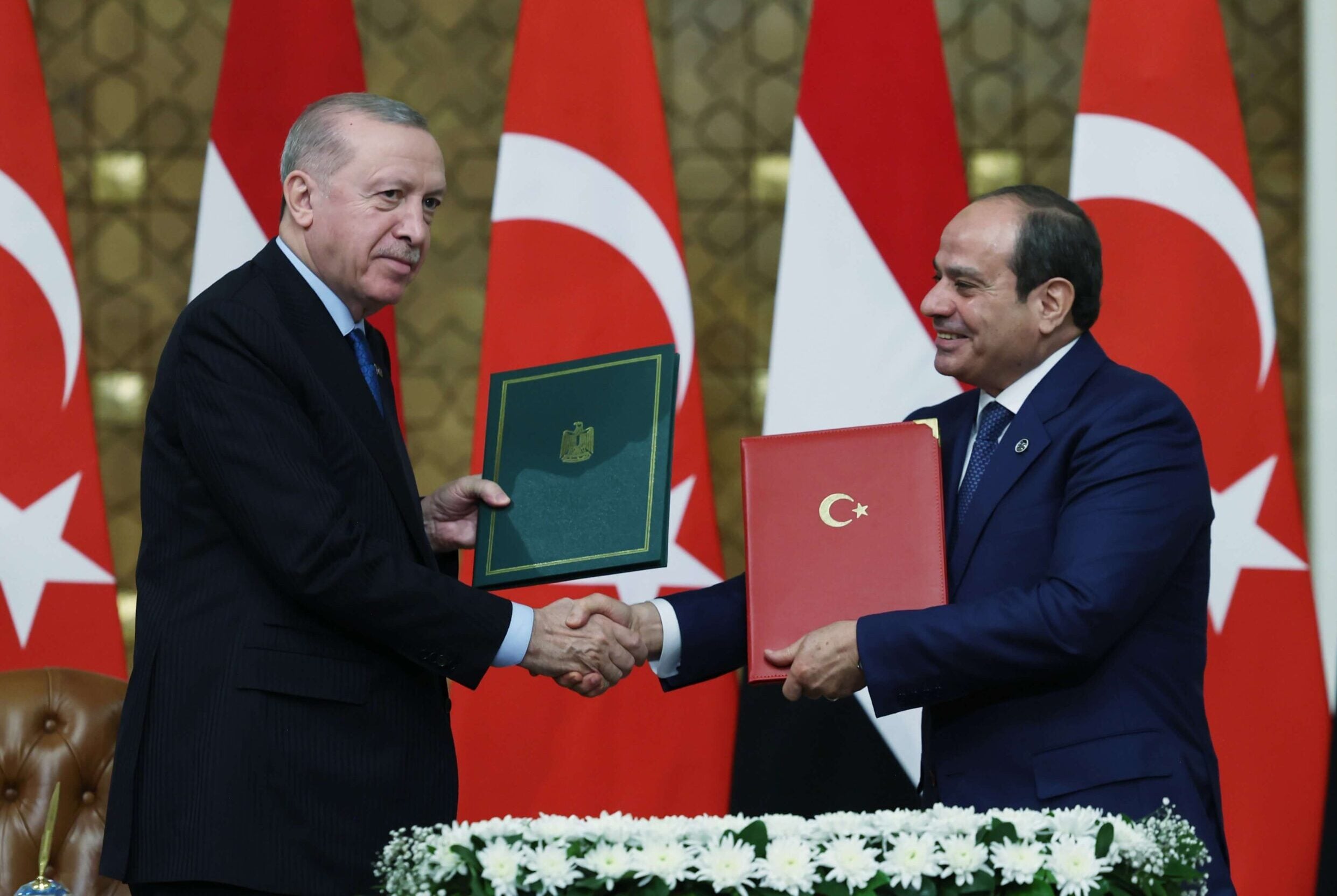
Erdoğan visited Cairo in February 2024, when he and Egyptian President Abdel Fattah el-Sisi pledged to strengthen trade and diplomatic cooperation. Sisi reciprocated with a visit to Ankara in September 2024, during which the two leaders signed 17 cooperation agreements and set a goal of increasing annual bilateral trade to $15 billion.
The countries historically supported opposing sides in Libya, with Turkey backing the Tripoli government and Egypt supporting eastern commander Khalifa Haftar.
Ankara has since expanded contacts with Haftar’s camp while maintaining its relationship with Tripoli.