Turkey has issued a new navigational warning extending seabed surveys in the eastern Mediterranean through December 31 for a planned natural gas pipeline connecting Turkey to the Turkish Cypriot-administered north of Cyprus, the Cyprus Mail reported on Monday.
The warning was issued through NAVTEX, a system that broadcasts navigation and safety information to ships. It asks vessels passing through the survey area to keep a safe distance from the four ships conducting the work: the Denar Pathfinder, Denar Echo, Denar Explorer and Kirici.
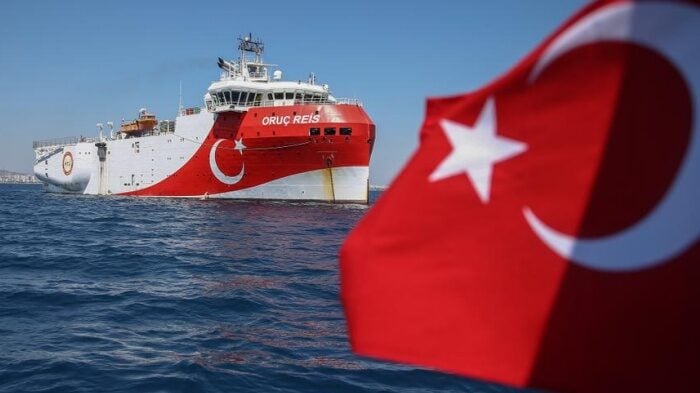
The notice follows two earlier phases of survey work. Turkey issued a NAVTEX in July for seismic surveys by the Oruç Reis research vessel, followed by another covering October 1 to 25 that named the Oruç Reis and three support vessels.
Turkish Vice President Cevdet Yılmaz and Turkish Cypriot Prime Minister Ünal Üstel signed the pipeline agreement on July 10. The project would connect Anamur in Turkey’s southern province of Mersin to the Teknecik power station near Kyrenia in northern Cyprus, spanning 101 kilometers, with 97 kilometers beneath the Mediterranean Sea and four kilometers on land.
The plan calls for two parallel pipelines, each 22 inches in diameter, capable of carrying natural gas in both directions. Turkey plans to supply gas to power plants in northern Cyprus that currently burn liquid fuel. Turkish Energy and Natural Resources Minister Alparslan Bayraktar has also said the system could eventually transport gas found around Cyprus to Turkey and potentially onward to Europe.
Turkey aims to complete the engineering work by the end of this year and bring the pipeline into operation in 2028, Bayraktar said. Turkey already supplies water to northern Cyprus through an undersea pipeline, and the gas project would create another infrastructure link between the two.
The Republic of Cyprus opposes the project, arguing that the agreement violates its sovereignty and international law. Maria Michael, its permanent representative to the United Nations, complained to UN Secretary-General António Guterres in August, describing the agreement as “null and void” and arguing that the Turkish Cypriot administration lacks the legal status to enter into international agreements.
Üstel rejected the complaint, arguing that the Greek Cypriot government had no authority to determine how Turkish Cypriots cooperate with Turkey on energy projects. The Turkish Cypriot side has the right to make decisions about its own development and energy security, he argued.
The European Union has also called on Turkey to respect the Republic of Cyprus’s sovereignty. EU foreign policy chief Kaja Kallas made the appeal in July, while Turkish Cypriot officials have defended the pipeline as a way to strengthen energy security in the north.
Cyprus has been divided since 1974, when Turkey invaded its northern third following a coup aimed at uniting the island with Greece. The Turkish Republic of Northern Cyprus (KKTC), declared in 1983, is recognized only by Turkey. The internationally recognized Republic of Cyprus, an EU member state, disputes the Turkish Cypriot administration’s authority to enter into international agreements.