A senior figure in the outlawed Kurdistan Workers’ Party (PKK) has said Turkey’s renewed peace process with the group is effectively “frozen,” accusing the government of failing to take sufficient political and legal steps despite moves by the PKK to end its decades-long armed campaign.
The initiative, launched in October 2024, aims to end the four-decade conflict between the Turkish state and the PKK through the group’s dissolution and abandonment of armed activities, along with legal measures to facilitate the transition to peaceful politics.
The PKK announced its dissolution in May 2025, but disagreements remain over the legal and political steps needed to complete the process.
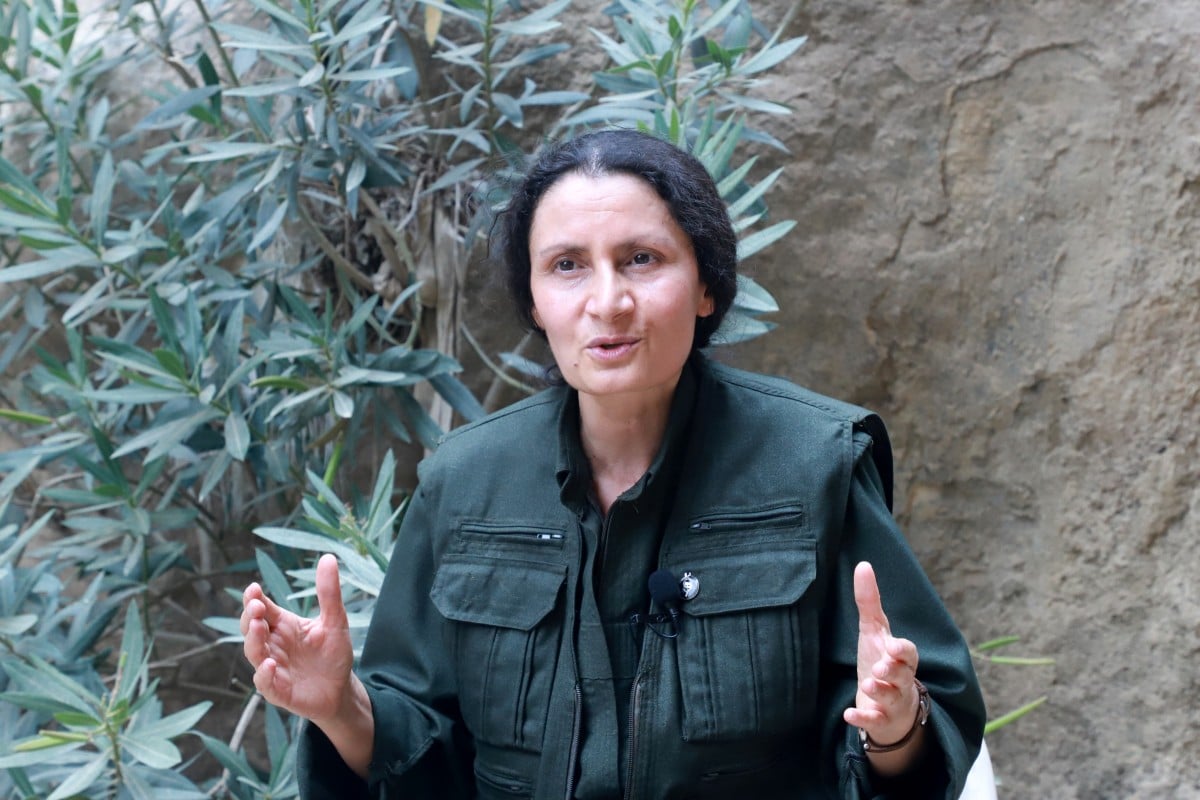
Bese Hozat, co-chair of the Kurdistan Communities Union (KCK), an umbrella organization that includes the PKK, told the PKK-affiliated Medya Haber television station that the process had stalled because of the government’s approach.
“There is no serious step from the state in response,” Hozat said. “You asked whether there’s a deadlock. It may be too early to describe it exactly that way at this stage, but there really is a frozen state.”
“The reason for this is the attitude of the state and the government,” she added.
Her remarks come after the PKK announced earlier this month that it had withdrawn its remaining armed fighters from Turkey and vacated four positions in the Metina region of northern Iraq. Turkish intelligence subsequently confirmed the withdrawal from the four bases.
The PKK has described the withdrawals as evidence of its commitment to ending armed conflict and transitioning to democratic politics, while accusing Ankara of failing to reciprocate.
Hozat also criticized Mehmet Uçum, a senior adviser to President Recep Tayyip Erdoğan, over his recent statements concerning imprisoned PKK leader Abdullah Öcalan.
Uçum said on October 15 that any role assigned to Öcalan in a subcommittee overseeing the peace process would neither change his status as a convicted prisoner nor suspend the enforcement of his sentence.
In September Uçum had said Öcalan would be given a role in a subcommittee overseeing the PKK’s transition away from armed activity.
Hozat accused Uçum of representing hardliners within the government who oppose a peaceful resolution to the Kurdish conflict and favor continued military policies and the denial of Kurdish rights.
“There has been no change whatsoever in Leader Apo’s conditions at present. The isolation continues,” Hozat said, using a name by which Öcalan is known among his supporters.
Öcalan, who has been imprisoned on İmralı Island near İstanbul since 1999, has had increased contact with family members, lawyers and lawmakers during the peace process. However, Kurdish political figures continue to call for greater freedom of movement and communication for him.
“None of the things our leader wanted have happened,” Hozat said, citing unfulfilled plans for journalists, academics, politicians and advisers to meet with Öcalan and the absence of any formal change to his legal status.
The PKK leadership has repeatedly demanded greater freedom for Öcalan, arguing that he must be able to play an active role in negotiations for the process to advance.
Hozat also linked the future of the peace initiative to political reforms in Turkey, criticizing what she described as increasing pressure on opposition groups, workers and the media.
“The government needs to take democratic steps in this regard. It needs to undertake very serious democratization in the legal, political and social spheres,” she said.
She claimed that the government’s increasingly authoritarian approach was incompatible with efforts to secure broader public support for the peace initiative.
“This process can neither gain broader social support nor advance in this manner. The progress of this process depends on Turkey’s democratization. There are currently no signs of this,” she said.
Peace process and government response
The latest peace initiative began in October 2024, when far-right Nationalist Movement Party (MHP) leader Devlet Bahçeli, a key Erdoğan ally, called on imprisoned PKK leader Öcalan to urge the group to lay down its arms and dissolve itself.
Öcalan issued such an appeal in February 2025. The PKK subsequently declared a ceasefire, announced its dissolution in May and burned weapons at a symbolic ceremony in northern Iraq in July before beginning to withdraw its fighters from Turkey.
In August 2026 parliament passed legislation allowing certain PKK-related criminal proceedings and prison sentences to be suspended once authorities formally verify that the group has ended its activities and surrendered its weapons. The law took effect on August 18, but its main provisions remain subject to verification. A government board has also established four subcommittees to oversee implementation.
The PKK and Kurdish political figures say these steps fall short, particularly regarding Öcalan’s status and broader democratic reforms. Earlier this month the PKK accused Ankara of failing to reciprocate its withdrawal, while Tuncer Bakırhan, co-chair of the pro-Kurdish Peoples’ Equality and Democracy Party (DEM Party), criticized the lack of progress on political rights.
The PKK, designated as a terrorist organization by Turkey and its Western allies, launched an armed campaign in 1984 that has claimed tens of thousands of lives. A previous peace process collapsed in 2015, triggering renewed fighting and a crackdown on Kurdish political groups.