Tonga has ratified the Comprehensive Nuclear-Test-Ban Treaty (CTBT), becoming the 179th country to do so and completing universal adoption of the treaty across the Pacific region.
The move strengthens the region’s longstanding commitment to a world free of nuclear testing and reinforces Tonga’s support for international nuclear non-proliferation efforts.
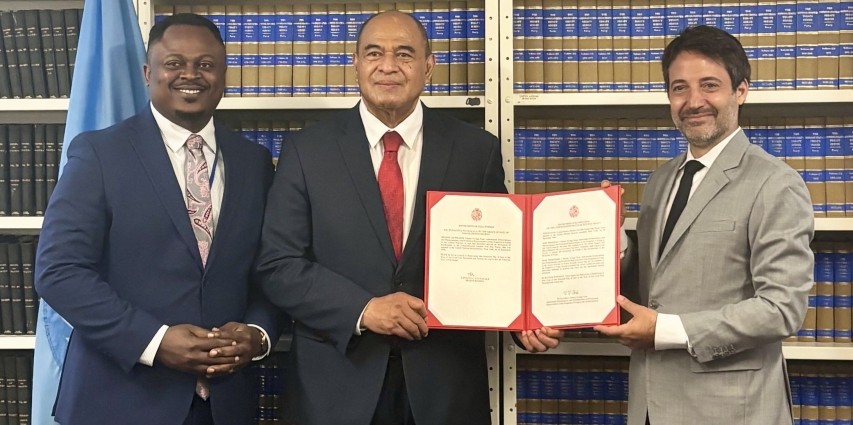
The instrument of ratification was formally deposited on Tuesday during a ceremony at United Nations Headquarters in New York by Tonga’s Permanent Representative to the United Nations, Ambassador Viliami Va’inga Tōnē, alongside officials from the UN Office of Legal Affairs and the Comprehensive Nuclear-Test-Ban Treaty Organization (CTBTO).
Tōnē said the move carried symbolic weight for a region long affected by nuclear testing.
“For Tonga, this is not simply a legal formality. It is a statement of who we are and what we stand for,” he said.
“The Pacific has felt the pain of nuclear testing. Ratifying CTBT is our contribution to ensuring that no one, anywhere, has to go through that again.”
CTBTO Executive Secretary Robert Floyd described the ratification as “a proud moment for the Pacific”, noting the region’s history of nuclear testing and Tonga’s longstanding support for disarmament initiatives.
Tonga is already a party to the Treaty of Rarotonga, which established the South Pacific Nuclear-Free Zone in 1985, and the Treaty on the Non-Proliferation of Nuclear Weapons. The latest ratification aligns the Kingdom with every other Pacific nation under the CTBT framework.
Although the treaty now enjoys near-universal support, it has not yet entered into force globally because nine of the 44 specific states required under its Annex 2 provisions have yet to ratify it.
Nevertheless, Tonga’s decision marks an important diplomatic milestone for the Pacific and reinforces the region’s collective advocacy for nuclear disarmament and international security.