Editorial — Tonga Independent News
Tonga Independent News recently asked several government ministries to respond to findings contained in the Auditor General’s 2023/24 Financial and Compliance Audits report. Some responded. Many did not.
Under Tonga’s current framework, they were under no legal obligation to do so.
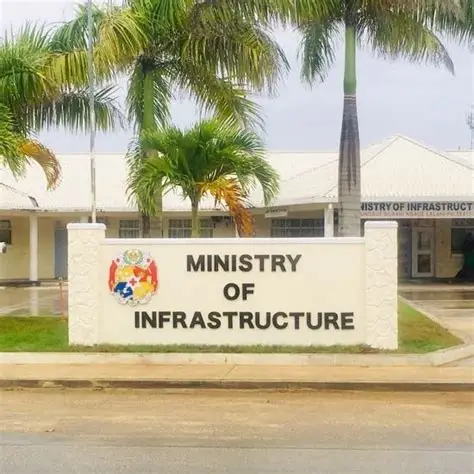
That single fact is worth sitting with for a moment. The Auditor General has found that almost $10 million worth of road contracts at the Ministry of Infrastructure were awarded without following required procurement procedures, on the direction of the then Minister. The public has a legitimate interest in knowing what happened as a result. Yet there is currently no law in Tonga that requires the Ministry to explain itself, no process through which a citizen can compel that explanation, and no consequence for remaining silent.
This is not a criticism of individual chief executives or public servants. It is a statement of the limits of a framework that was not designed to guarantee public access to information. And it points to what may be the most important governance reform Tonga has not yet made.
The gap the audit process cannot close
The Auditor General identifies problems. The media reports them. Members of Parliament debate them. The public discusses them. But there is often no formal mechanism through which citizens can obtain the explanations necessary to understand whether corrective action has actually occurred.
Accountability is not achieved merely by identifying deficiencies. Accountability requires explanation.
If procurement rules were bypassed, what was done to address it? If recommendations were made, were they implemented? If public funds were spent improperly, what corrective action followed? If the same findings reappear year after year, why?
These are not hostile questions. They are fundamental questions of public administration. And they are questions that Tongan citizens currently have no guaranteed legal right to have answered.
What comparable countries do differently
In many comparable democracies, citizens have a legal right to information held by their government.
Australia’s Freedom of Information framework, New Zealand’s Official Information Act and Fiji’s access-to-information legislation, however imperfectly implemented in some cases, all recognise a simple principle: information held by government belongs, in most circumstances, to the people. Governments may withhold information where legitimate reasons exist, including national security, privacy or commercial sensitivity. The starting point, however, is disclosure rather than silence.
Tonga currently operates on a different model. Citizens may ask questions, journalists may seek comment and Members of Parliament may raise concerns. Access to information, however, depends upon the willingness of individual agencies to engage. Where agencies decline, there is little that can be done.
That gap sits at the centre of Tonga’s accountability problem. And it is a gap that no amount of audit reporting, media scrutiny or parliamentary debate can fully close on its own.
Why this matters now
This matters particularly now because of the scale of what is at stake.
Public expenditure in Tonga now measures in the hundreds of millions of pa’anga. The 2023/24 Financial and Compliance Audits report examined a government that received more than $123 million in development fund receipts from foreign donors in a single year, that holds assets it claims are worth $737 million, and that manages contracts, programmes and development partnerships of growing complexity.
As the scale of public administration expands, so too does the need for transparency. A governance framework designed for a smaller, simpler system of public administration may not be adequate for the one Tonga now operates.
The Auditor General’s office has kept pace with that growth. The quality and detail of audit reporting has improved. The findings are more specific, the recommendations more targeted and the public interest implications more clearly articulated than in previous years.
The accountability framework surrounding that reporting has not kept pace. It remains dependent on voluntary engagement, institutional goodwill and the willingness of individual agencies to respond when asked. When that willingness is absent, the system has no answer.
Democracy without guardrails
There is a broader context to this accountability gap that Tonga’s policymakers and public deserve to confront directly.
When Tonga transitioned to a more democratic system of government in 2010, it made a historic and necessary choice. Representative democracy replaced a system in which power was concentrated in the hands of a small number of nobles and the Crown. More voices entered Parliament. More communities gained representation. The principle that government derives its authority from the people it serves was formally enshrined.
What did not come with that transition, at least not immediately and not completely, were the institutional safeguards that functioning democracies around the world have learned, often through hard experience, are essential.
Tonga has been building that architecture, but slowly and with gaps that remain significant.
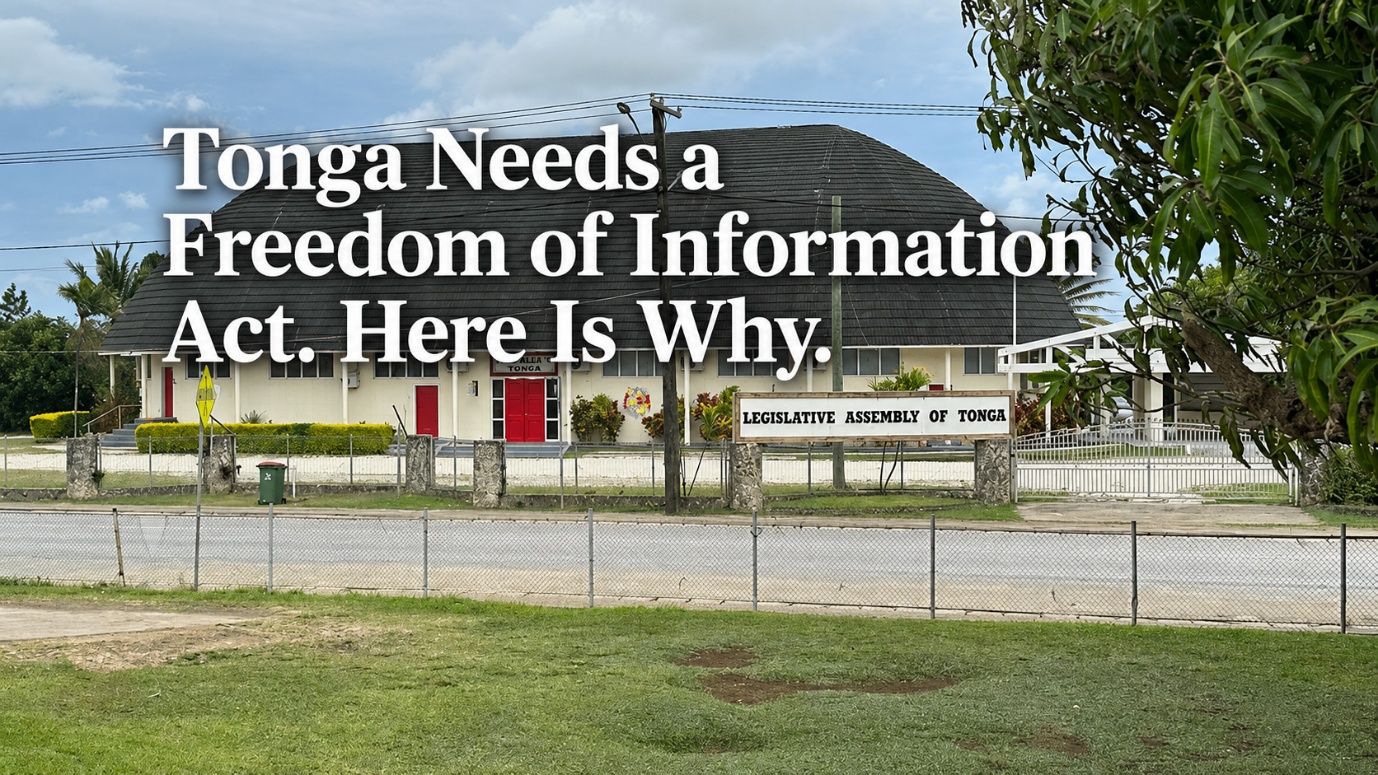
The Anti-Corruption Commission was established by law in 2007 but did not become operational until mid-2024 — a seventeen-year gap that itself speaks to the pace of institutional development. Whistleblower protection legislation was passed only last year. Freedom of information legislation does not yet exist. And the parliamentary oversight mechanism that could provide some of what both a freedom of information framework and a strong Public Accounts Committee would deliver, something equivalent to Australia’s Senate Estimates Committee with the power to summon ministers, demand documents and place findings on the public record, has not been created.
The result is a democracy that has the form of accountability without all of its substance. The Auditor General can identify problems. The media can report them. Members of Parliament can raise them. But the citizen who wants to know what happened next, who wants to follow the pa’anga from the budget to the outcome, has no guaranteed legal right to that answer.
That is not a sustainable position for a modern democratic state. And it is not a position that Tonga’s democratic partners, Australia, New Zealand and the broader Pacific community, should be comfortable with either, given the scale of the development assistance they provide and the expectations of transparency and accountability that come with it.
Tonga chose democracy. That was the right choice. The task now is to finish building what democracy requires.