A 32-year-old man has been ordered to serve two years in prison after repeatedly assaulting another man, striking him with a machete and later returning with a fishing spear while threatening to burn down the victim’s family home.
Acting Lord Chief Justice Lord Afeaki said the increasing use of machetes and other weapons in violent offences in Tonga was no longer a series of isolated incidents but a growing threat to public safety.
“Those who choose to arm themselves during disputes must expect terms of imprisonment,” he said.
Moʻui He ʻOfa ʻOfanoa pleaded guilty on 17 March to serious causing bodily harm and common assault arising from an alcohol-fuelled attack at Patangata in August 2025.
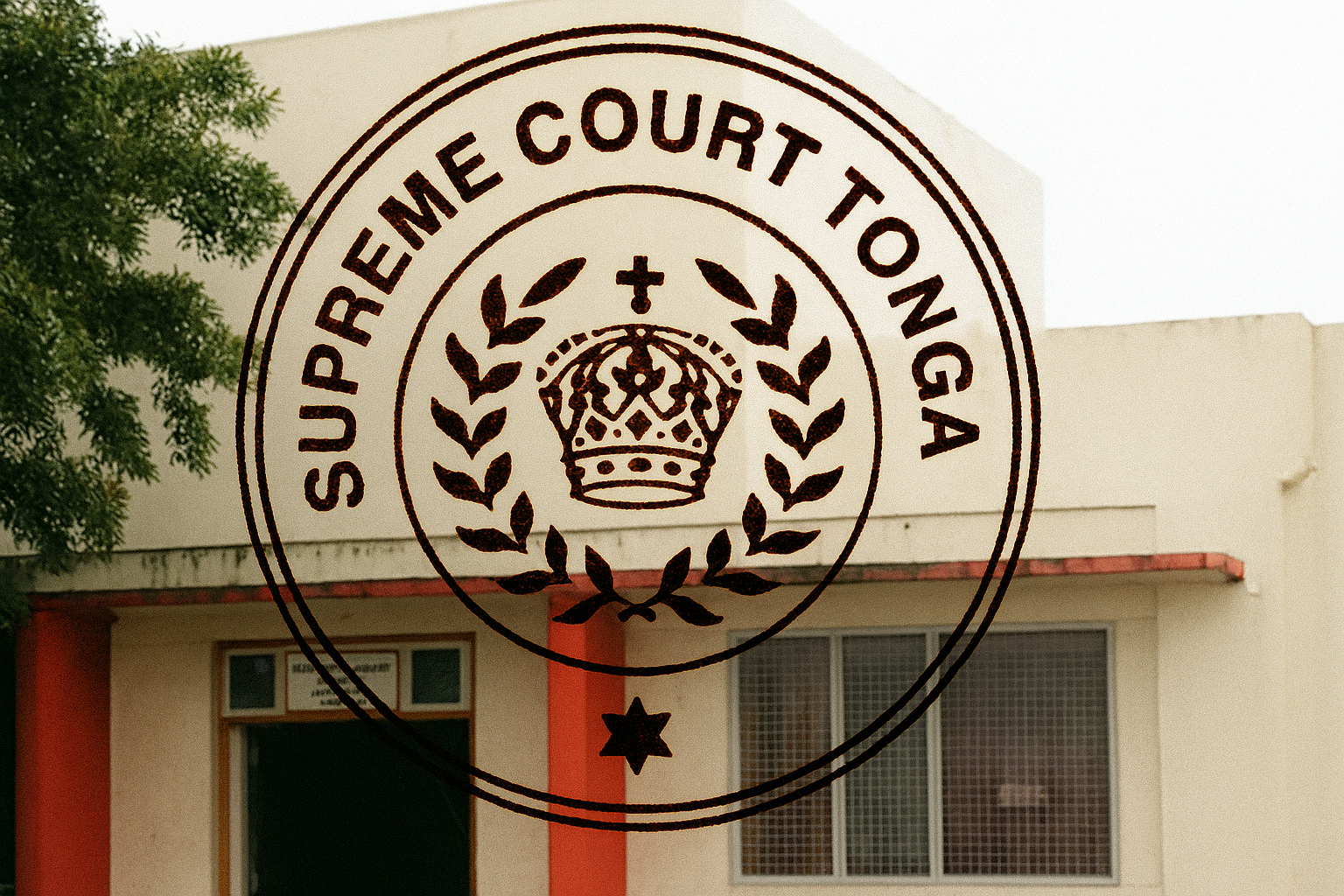
He was sentenced in the Supreme Court at Nukuʻalofa on 1 July.
Victim attacked repeatedly
The court heard that ʻOfanoa and the victim, who were both 32 and living at Patangata, had been drinking alcohol with other people on the evening of 9 August.
An argument broke out during the early hours of the following morning and escalated into violence.
ʻOfanoa threw the victim to the ground, causing his head to strike a rock, before repeatedly punching him—even after he had stopped moving.
A witness attempted to intervene, but ʻOfanoa armed himself with a machete and continued challenging the victim.
The victim apologised and discarded a stick he had been holding, but ʻOfanoa struck him on the right leg with the machete.
ʻOfanoa later returned carrying a fishing spear, threatened to burn down the victim’s family home and entered the house while still armed before eventually leaving.
The victim was taken to hospital with deep cuts to his forehead and head, injuries to his nose, mouth, knees and neck, and a machete wound to his right leg.
Although the injuries eventually healed, Lord Afeaki said the attack created a risk of far more serious harm.
“The law does not wait until a victim suffers permanent disability or death before treating such conduct as grave,” he said.
Machete violence concerns court
Lord Afeaki described the attack as serious, sustained and violent, saying ʻOfanoa had several opportunities to stop but instead continued escalating the confrontation.
“A machete is a dangerous weapon capable of causing catastrophic injury or death,” he said.
“The later decision to arm himself with a fishing spear further increased the risk of serious violence.”
The judge said Tonga’s courts were seeing an increasing number of violent crimes involving machetes and other weapons.
“These are no longer isolated incidents,” Lord Afeaki said.
“They present a growing threat to public safety and have become an unacceptable feature of violent offending before this Court.”
Lord Afeaki said alcohol had plainly contributed to the attack, but voluntary intoxication neither excused the offending nor reduced ʻOfanoa’s culpability.
“Our community needs to be safe from alcohol-crazed behaviour,” he said.
“If a person attacks another with a weapon, they must go to jail, unless there are extenuating circumstances. In this case, there are none.”
Pesticide and wine consumed
According to a pre-sentence report, ʻOfanoa claimed that the victim attacked him first and that he responded violently.
He admitted his conduct was aggravated by intoxication and told the probation officer that he had consumed a mixture of wine and chemical pesticide before the incident.
ʻOfanoa expressed remorse, accepted responsibility and indicated that he was willing to participate in rehabilitation programmes.
The victim said ʻOfanoa had not personally apologised, although he would have forgiven him because he believed ʻOfanoa had been heavily intoxicated.
The probation officer assessed ʻOfanoa as posing a moderate risk of reoffending. His substance abuse, previous violent offending and use of a machete were identified as significant risk factors.
However, his remorse, maturity and strong family support were considered positive indications that he could be rehabilitated.
Final months suspended
Lord Afeaki adopted a starting point of three years and six months in prison for the serious bodily harm charge.
He reduced the sentence by 12 months to reflect ʻOfanoa’s early guilty plea, remorse, family support and clear record since 2009.
ʻOfanoa received a sentence of two years and six months for serious causing bodily harm. The final six months were suspended for two years, leaving him required to serve two years in prison.
He was also sentenced to four months for common assault, to be served concurrently.
The suspension is subject to several conditions. After his release, ʻOfanoa must remain free of further imprisonable offending, serve 12 months on probation, report to the probation office within 48 hours and complete drug and alcohol awareness courses.
He must also live wherever directed by his probation officer during the probationary period.
Failure to comply could result in the suspension being cancelled and ʻOfanoa being required to serve the remaining six months.