Your support helps us to tell the story
From reproductive rights to climate change to Big Tech, The Independent is on the ground when the story is developing. Whether it’s investigating the financials of Elon Musk’s pro-Trump PAC or producing our latest documentary, ‘The A Word’, which shines a light on the American women fighting for reproductive rights, we know how important it is to parse out the facts from the messaging.
At such a critical moment in US history, we need reporters on the ground. Your donation allows us to keep sending journalists to speak to both sides of the story.
The Independent is trusted by Americans across the entire political spectrum. And unlike many other quality news outlets, we choose not to lock Americans out of our reporting and analysis with paywalls. We believe quality journalism should be available to everyone, paid for by those who can afford it.
Your support makes all the difference.Read more
Nigeria’s government has banned the export of raw shea nuts, an essential raw material in many cosmetic products, in a bid to grow the country into a global supplier of refined shea butter and other skincare ingredients.
The immediate ban on the crop will be in place for six months and then reviewed, Vice President Kashim Shettima said.
Nigeria follows a growing list of other West African countries, including Burkina Faso, Mali, Togo, Ivory Coast and Ghana, that have banned or restricted export of the crop in the past two years.
“The ban will transform Nigeria from an exporter of raw shea nut to a global supplier of refined shea butter, oil, and other derivatives,” Shettima said Tuesday.
He added that the decision was not “an anti-trade policy but a pro-value addition policy designed to secure raw materials for our processing factories” and boost income and jobs for rural workers.
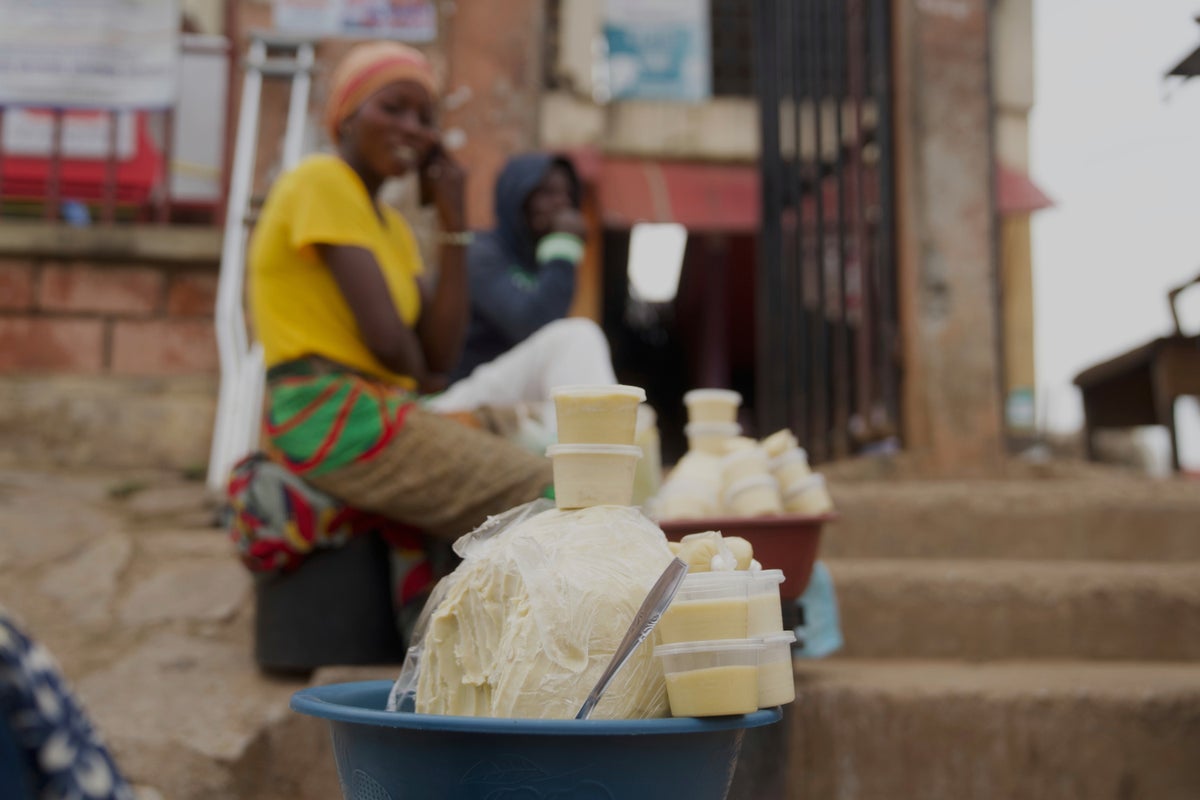
Raw shea nut is pulverized and processed to produce shea butter, a key ingredient for manufacturing products like lotion, shampoos, conditioners and moisturizers.
“It is one of the most important bases for skincare, especially now that a lot of people are tilting toward nontoxic skincare,” said Zainab Bashir, an Abuja-based dermatologist.
While Nigeria accounts for 40% of the world’s supply of the crop, it contributes to just 1% of the $6.5-billion global market share in shea products, according to the vice president.
The measure came weeks after the northern Niger state opened a shea butter processing plant that officials described as one of Africa’s largest.
Authorities said that if the export ban remains in force, it is expected to generate $300 million in the short term and $3 billion by 2027.
Experts have argued that such efforts must come with more investment to grow domestic industries.
“The ban seems to suggest that the government has identified a supply-gap issue, but an export ban does little actually to lock in current in-country production solely for Nigerian processors,” Ikemesit Effiong, a partner at SBM Intelligence, a Lagos-based risk advisory firm, told The Associated Press.
The move appeared to contradict the long-standing trade policy of Nigeria’s President Bola Tinubu, who has positioned the country as a free-market economy by removing a series of subsidies on essential commodities such as fuel and electricity. Tinubu has also floated the country’s currency and reversed a ban on the import of dozens of items by the former government.