Vietnam’s First Lady dazzled Bangkok in traditional Thai dress as President To Lam secured key agreements and a royal audience. But behind the diplomacy, a bigger story emerged: Vietnam is rapidly closing the economic and tourism gap with Thailand.
As Vietnamese First Lady Ngo Phuong Ly captured headlines in Bangkok in traditional Thai dress, President To Lam’s visit exposed a far bigger story. Behind the royal audiences, cultural diplomacy and newly signed agreements lies an intensifying regional contest as Vietnam rapidly closes the economic gap with Thailand and gains ground in the race for investment, growth and tourists. The images symbolised friendship, but the visit also highlighted a shifting balance of power in Southeast Asia.
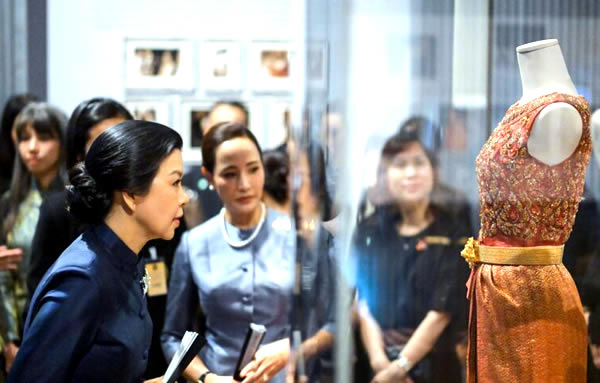
Vietnam’s First Lady drew attention in Bangkok, but the bigger story was Hanoi’s rise as it narrows the economic gap with Thailand and intensifies regional competition. (Source: Khaosod)
Vietnamese First Lady Ngo Phuong Ly drew considerable attention in Bangkok on Thursday after appearing in traditional Thai dress during a cultural tour of the capital. The appearance formed part of President To Lam’s official visit to Thailand.
Moreover, it provided one of the most widely photographed moments of a trip marked by diplomacy, cultural outreach and high-level meetings.
Throughout the day, Ngo Phuong Ly was hosted by Thananon Charnvirakul, the wife of Thai Prime Minister Anutin Charnvirakul. First, the pair visited the Temple of the Emerald Buddha within the Grand Palace complex.
First lady explores grand palace landmarks and textile heritage during Bangkok cultural visits
There, they paid respects to the Emerald Buddha, Thailand’s most revered Buddhist image. Afterwards, they toured the temple grounds and viewed the site’s intricate architecture. In addition, they examined ornate decorations that remain among Thailand’s best-known cultural treasures. Consequently, the visit placed Thai heritage at the centre of an important diplomatic programme.
The cultural tour then continued at the Queen Sirikit Museum of Textiles, located within the Grand Palace grounds. There, exhibitions highlighted Thai silk production and traditional craftsmanship. Furthermore, the displays showcased techniques and skills preserved across generations.
Thai silk remains one of the country’s most recognisable cultural products. Likewise, textile craftsmanship continues to feature prominently in Thailand’s international cultural promotion efforts. As a result, the museum visit underscored an area frequently highlighted by the government as an important source of national soft power.
Later, Thananon hosted a luncheon in honour of the Vietnamese First Lady at Wang Chakrabongse. During the gathering, the two women exchanged views on people-to-people diplomacy.
Luncheon discussions on diplomacy and cultural cooperation accompany wider bilateral agreements
They also discussed the role women can play in strengthening international ties. Meanwhile, they explored opportunities for future cultural cooperation between Thailand and Vietnam. The discussions came as both countries prepare to mark the 50th anniversary of diplomatic relations. Consequently, the meeting carried significance beyond its ceremonial character.
However, the visit was not limited to cultural engagements. It also delivered concrete diplomatic outcomes. During the trip, Thailand and Vietnam signed a number of significant Memorandums of Understanding covering areas of bilateral cooperation.
Furthermore, the agreements reflected increasingly active relations between the two Southeast Asian neighbours. At the same time, extensive media coverage followed developments throughout the visit. Reports appeared widely across both Thai and Vietnamese news outlets. As a result, the trip attracted substantial public attention in both countries.
The most prominent ceremonial event occurred on Thursday evening. Then, President To Lam and Ngo Phuong Ly were granted an audience with the King and Queen at Dusit Palace in Bangkok. The royal audience represented one of the highest-profile engagements of the visit. Consequently, it reinforced the importance attached to the trip by both governments.
Royal audience highlights the importance as Vietnam continues closing economic gap with Thailand
Yet the significance of the visit extended beyond diplomatic protocol. It took place against a backdrop of growing economic competition between Thailand and Vietnam. Both countries are actively seeking foreign direct investment.
However, their recent economic performances have differed considerably. In recent years, Vietnam has consistently recorded annual GDP growth of between 6 and 8 per cent. By contrast, Thailand has generally achieved growth of between 1 and 2 per cent. As a result, the gap between the two economies has narrowed steadily.
The latest figures illustrate the trend. In 2024, Thailand’s GDP stood at US$526 billion. Meanwhile, Vietnam’s economy reached US$476.3 billion. Consequently, Vietnam moved significantly closer to Thailand in overall economic size.
The numbers have intensified discussion about Vietnam’s economic rise. Moreover, they have highlighted the increasing competitiveness of the Vietnamese economy within Southeast Asia.
Tourism competition intensifies as Vietnam gains momentum and narrows Thailand’s long-held lead
Tourism presents another area where competition has become increasingly apparent. Historically, Thailand has dominated regional tourism and attracted far larger visitor numbers than its neighbours.
However, Vietnam has expanded rapidly in recent years. At the same time, it has positioned itself as a lower-cost destination for international travellers. Furthermore, Vietnam has invested heavily in developing man-made attractions aimed at foreign visitors. As a result, the country has strengthened its appeal across several tourism markets.
The competition can be seen clearly in visitor targets and arrival figures. Vietnam set a target of attracting 25 million foreign visitors in 2025. By comparison, Thailand’s estimated figure stood at 36 million.
Nevertheless, final results revealed notable differences in momentum. Vietnam welcomed 21.2 million foreign visitors during 2025. Importantly, that represented a year-on-year increase of 20.4 per cent. Thailand, meanwhile, recorded 32.97 million foreign arrivals. However, that figure represented a decline of 7.23 per cent compared with 2024.
Visitor growth figures reveal shifting regional dynamics as Vietnam outpaces Thailand markedly
The contrast was striking. While Thailand maintained a substantial lead in total arrivals, Vietnam recorded much stronger growth. Consequently, the gap narrowed further. Moreover, Vietnam strengthened its position among Asia’s fastest-growing tourism destinations.
The figures also reflected broader economic trends visible across the region. While Thailand continues to hold significant advantages in several sectors, Vietnam has demonstrated faster rates of expansion.
Against this backdrop, the Bangkok visit carried significance on several levels. On one hand, it showcased cultural ties and diplomatic goodwill.
Cultural diplomacy unfolds alongside intensifying rivalry for investment growth and visitors
On the other hand, it unfolded during a period of increasingly intense competition for investment, growth and international visitors. Throughout the visit, images of Ngo Phuong Ly in traditional Thai attire featured prominently in media coverage. Meanwhile, reports focused on newly signed agreements, cultural exchanges and high-level meetings.
Vietnam’s President visits King and Queen at Dusit Palace in Bangkok. Five decades of ties celebrated
Prime Minister Paetongtarn visits Vietnam this week as Hanoi readies to surpass Thailand’s ailing economy
Consequently, the visit combined symbolism with substantive outcomes. It highlighted a relationship that continues to deepen as both countries approach 50 years of diplomatic relations.
At the same time, it underscored the changing balance within Southeast Asia’s economic landscape. Cultural diplomacy, economic ambition and regional competition were all visible during the visit. Together, they ensured that the trip attracted attention well beyond ceremonial protocol and official pageantry.
Join the Thai News forum, follow Thai Examiner on Facebook here
Receive all our stories as they come out on Telegram here
Follow Thai Examiner here
Further reading:
Vietnam’s President visits King and Queen at Dusit Palace in Bangkok. Five decades of ties celebrated
Business chiefs warn of worst year for the economy in 30 years. Vietnam on track to overtake Thailand
Political parties are getting serious about Thailand’s lack of babies problem with new policies unveiled
By 2074, Thailand’s population will fall to 30 million people even based on the current birth rate which is still falling
Thailand in crisis as population declined by over 500k over the last four years according to the latest data
Thailand’s days of GDP growth in excess of 5% may be a thing of the past as it has grown too old
Cabinet in pension move as the number of working Thais to over 60s is set to half in 20 years
Thailand- the first large country with a fertility problem yet without wealth to easily fund healthcare for the old
Inequality has been rising in Thailand since 2015 as the kingdom becomes officially an aged society in 2021
Outlook for the Thai economy is bleak and will get bleaker due to its rapidly ageing population – biggest issue