
Your support helps us to tell the story
From reproductive rights to climate change to Big Tech, The Independent is on the ground when the story is developing. Whether it’s investigating the financials of Elon Musk’s pro-Trump PAC or producing our latest documentary, ‘The A Word’, which shines a light on the American women fighting for reproductive rights, we know how important it is to parse out the facts from the messaging.
At such a critical moment in US history, we need reporters on the ground. Your donation allows us to keep sending journalists to speak to both sides of the story.
The Independent is trusted by Americans across the entire political spectrum. And unlike many other quality news outlets, we choose not to lock Americans out of our reporting and analysis with paywalls. We believe quality journalism should be available to everyone, paid for by those who can afford it.
Your support makes all the difference.Read more
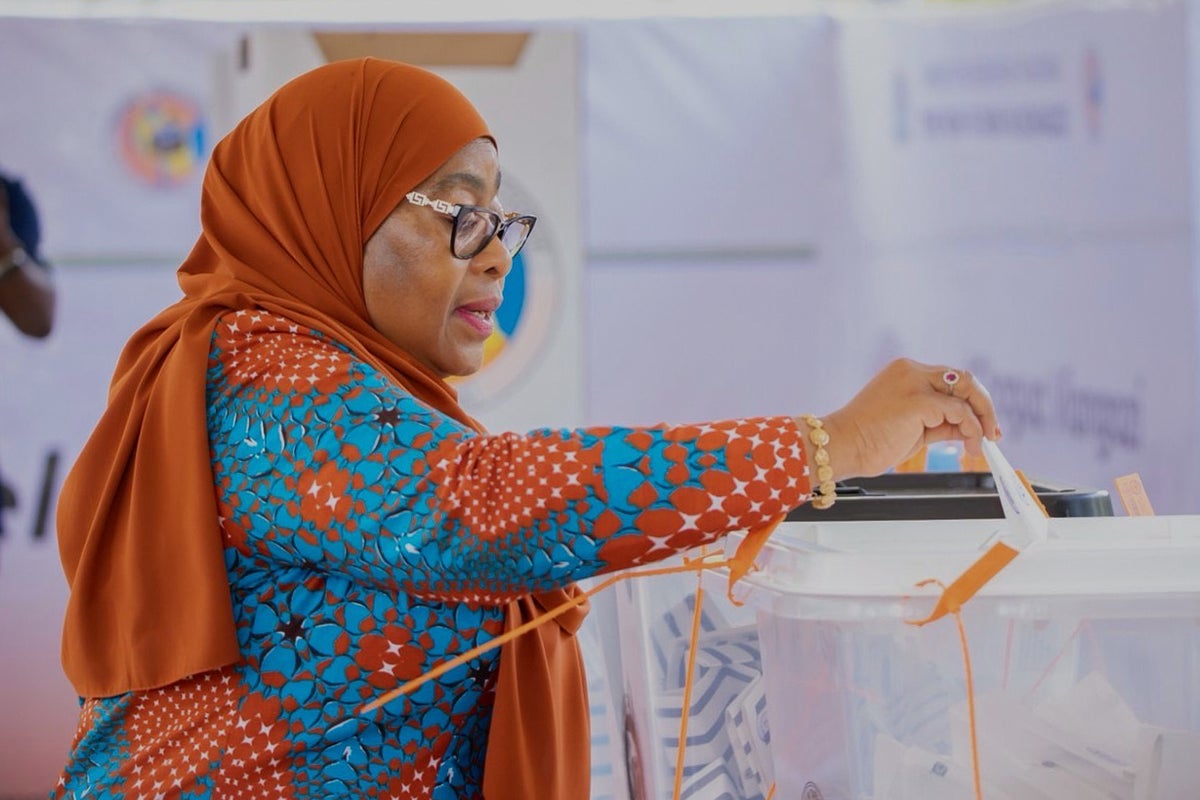
Tanzania’s President Samia Suluhu Hassan was sworn into office on Monday, following a contentious election marred by deadly protests and the barring of two key opposition candidates.
The ceremony, held on government grounds in the administrative capital of Dodoma, was restricted to invited guests.
This marked a significant departure from previous inaugurations, which typically took place in packed football stadiums open to the public.
Tension remained high in the commercial capital, Dar es Salaam, following three days of election protests. Gas stations and grocery shops were closed with streets were nearly empty as government employees continued to work from home. In Dodoma, most people stayed home.
open image in gallery
The election sparked violent protests across the country (AP)
The Oct. 29 election was marred by violence as demonstrators took to the streets of major cities to protest the poll and stop the counting of votes. The military was deployed to help police quell riots. Internet connectivity has been on and off in the East African nation, disrupting travel and other activities.
The protests spread across Tanzania, and the government postponed the reopening of universities, which had been set for Nov. 3.
Tanzanian authorities have not said how many people were killed or injured in the violence. A spokesman for the U.N. human rights office, Seif Magango, on Friday told a U.N. briefing in Geneva by video from Kenya that there were credible reports of 10 deaths in Dar es Salaam and Shinyanga and Morogoro towns.
The election results were rejected by the main opposition party, Chadema.
“These results have no basis in reality, as the truth is that no genuine election took place in Tanzania,” the party’s statement read in part.
Chadema party leader Tundu Lissu has been imprisoned for several months after being charged with treason for calling for electoral reforms that he said were necessary for a free and fair vote. Another opposition figure, Luhaga Mpina of the ACT-Wazalendo Party, was barred from running.
The presidents of Mozambique, Zambia, Burundi, and Somalia attended the swearing-in on Monday.
Kenya’s President William Ruto issued a statement on Monday urging Tanzanians to maintain peace and calling for dialogue among stakeholders to maintain national stability. Ruto did not travel to Dodoma on Monday and was represented by his vice president.
The election violence in Tanzania led to a closure of the border crossing with Kenya at Namanga, where agricultural goods in trucks have been rotting for six days.


